← All topics
Turns, Lane Changes and PassingCalifornia DMV written test guide
These 24 points cover turns, lane changes, merging and passing. Each one pairs a California Class C practice question with its answer, a short explanation and an original diagram, taken from the DriveRoad iPhone app.
Advance signaling before a street turn
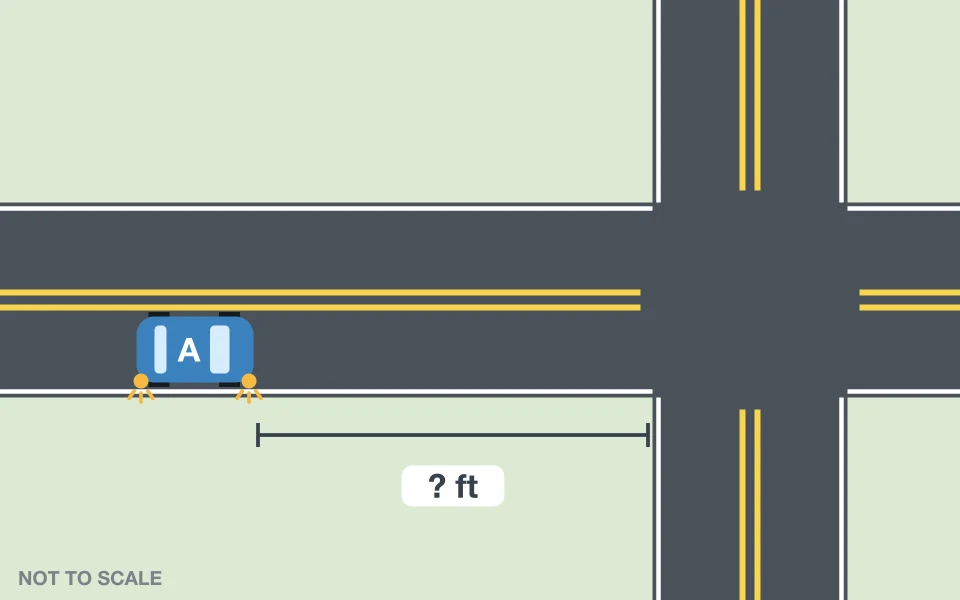
For a moving approach to a street turn that may affect other traffic, what minimum continuous signaling distance does the rule specify?
Answer: At least 100 feet.
In this moving-approach scenario, signal continuously during the final 100 feet before turning. Advance notice does not give the turning driver priority.
Wheel position while waiting for a left turn
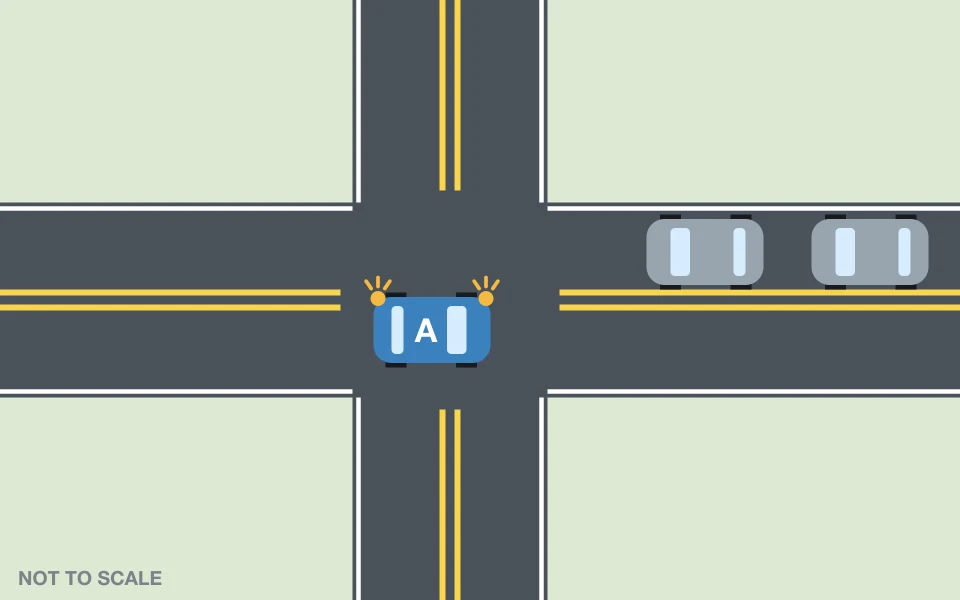
While waiting to turn left across oncoming traffic, where should the front wheels point?
Answer: Straight ahead.
Straight wheels reduce the chance that a rear impact pushes the waiting vehicle into oncoming traffic.
Entering a bike lane for a turn
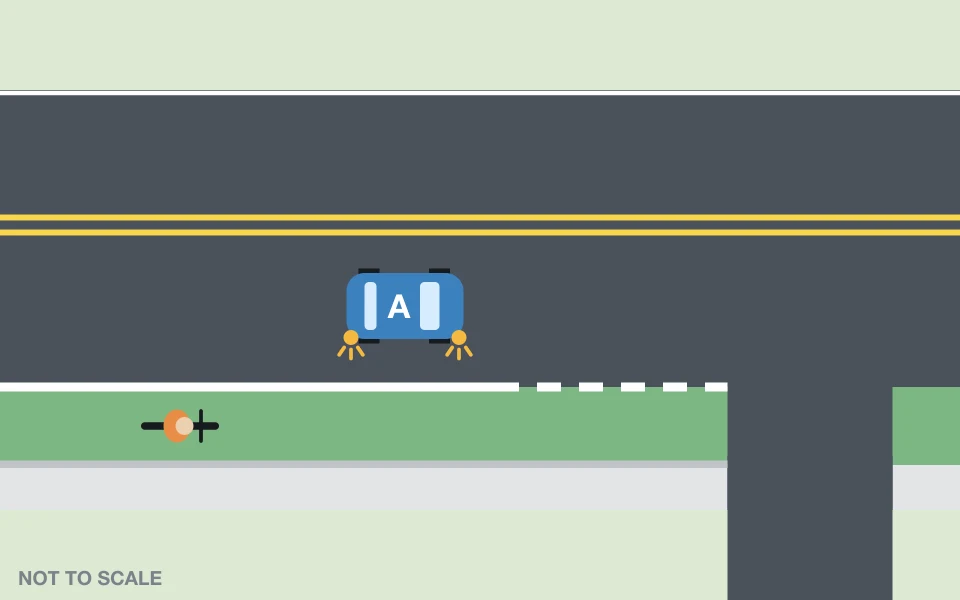
A permitted right turn is 150 feet ahead beside a bike lane. What must the driver do before entering that lane to turn?
Answer: Check for cyclists and merge only when safe.
A bike lane can be entered for a turn within 200 feet, but that exception does not remove the duty to protect cyclists.
Priority when entering a freeway
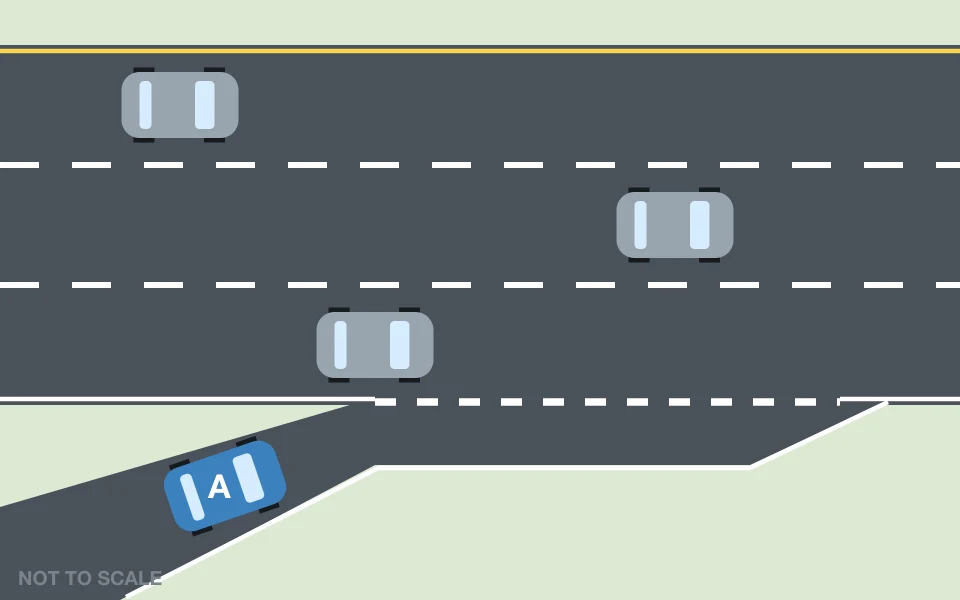
Which vehicles have priority when a vehicle enters a freeway from an on-ramp?
Answer: Vehicles already traveling on the freeway.
The entering driver chooses a safe gap and adjusts speed rather than forcing freeway traffic to yield.
Passing off the traveled roadway
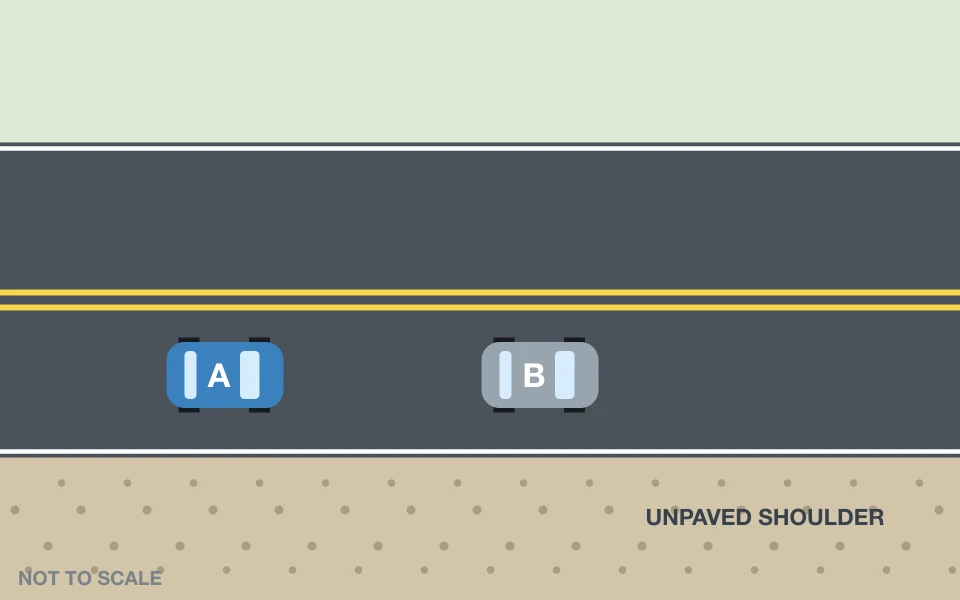
May a driver leave the traveled roadway onto an unpaved shoulder to pass a slower car?
Answer: No; wait for a lawful passing opportunity on the roadway.
Driving off the paved or main-traveled roadway is not a permitted way to pass.
Center turn lane travel distance
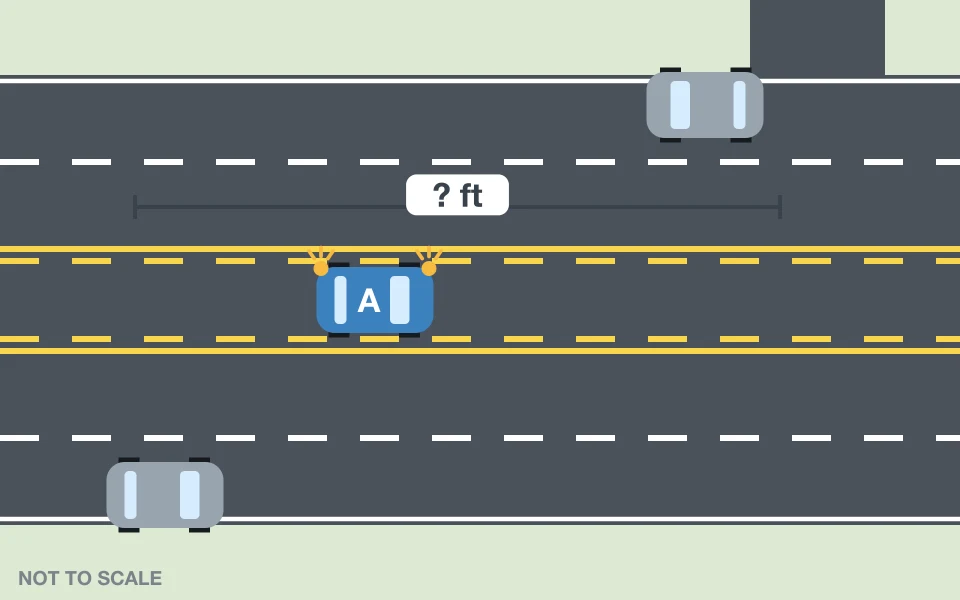
Which statement correctly describes center turn lane travel distance?
Answer: Use it for a turn, for no more than 200 feet.
Use it for a turn, for no more than 200 feet.
Opposing traffic in a center turn lane
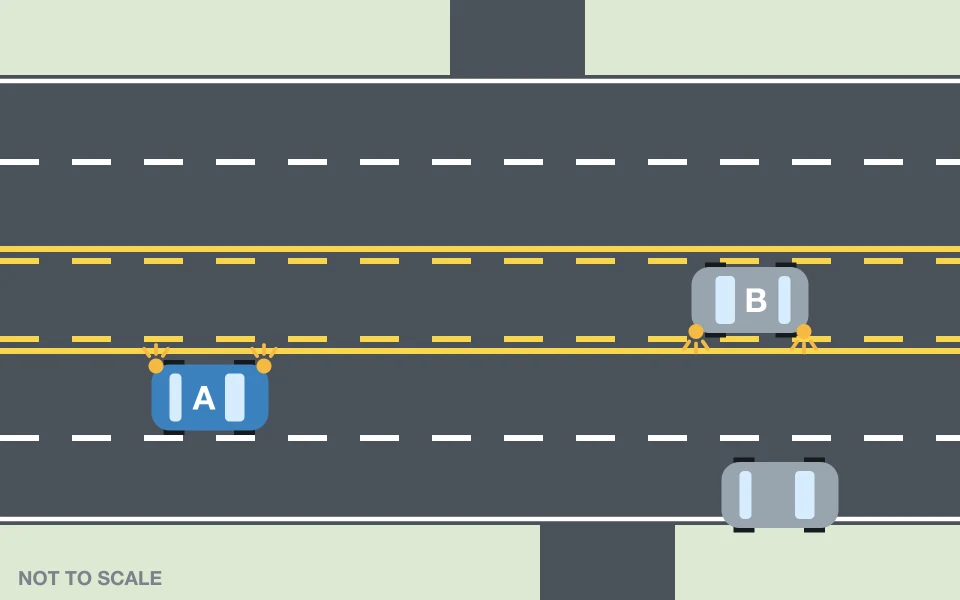
Which statement correctly describes opposing traffic in a center turn lane?
Answer: Check for vehicles approaching in the same center turn lane before entering.
Check for vehicles approaching in the same center turn lane before entering.
Backing while turning
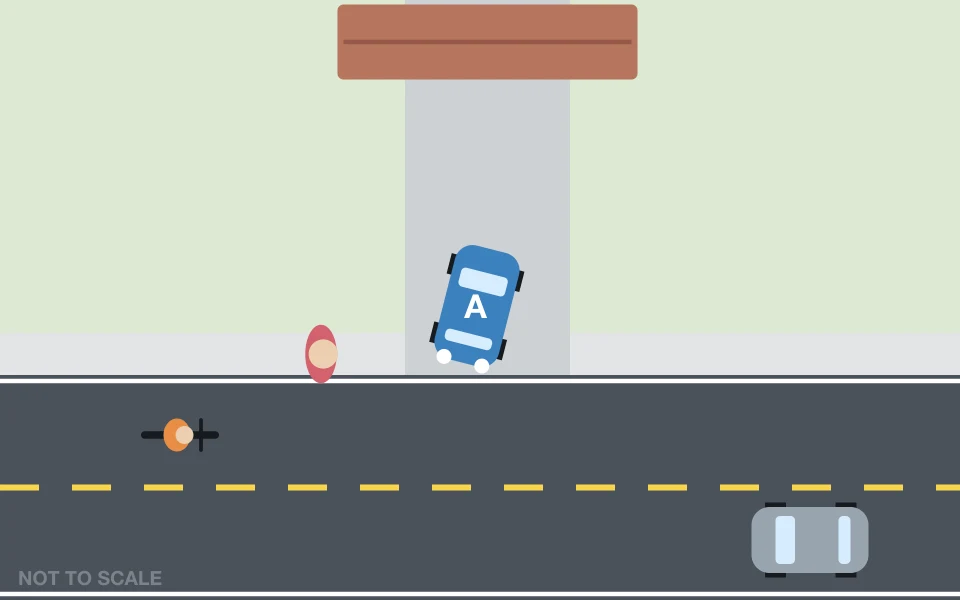
Which statement correctly describes backing while turning?
Answer: Look behind and steer at a controlled speed, checking for people and vehicles.
Look behind and steer at a controlled speed, checking for people and vehicles.
Checking before a lane change
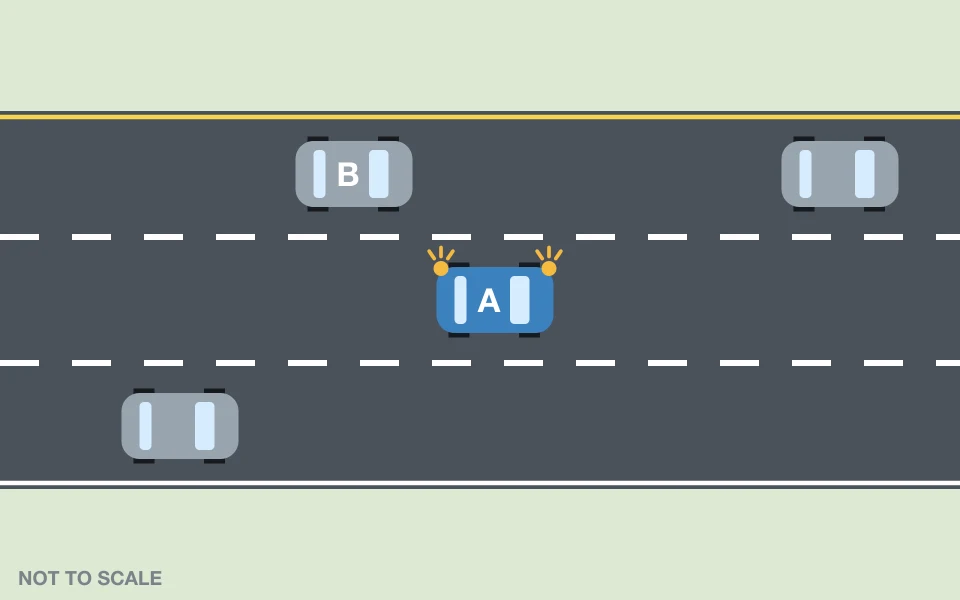
Which statement correctly describes checking before a lane change?
Answer: Signal, check mirrors and blind spots, and enter only a sufficient clear gap.
Signal, check mirrors and blind spots, and enter only a sufficient clear gap.
Ordinary right-turn lane placement
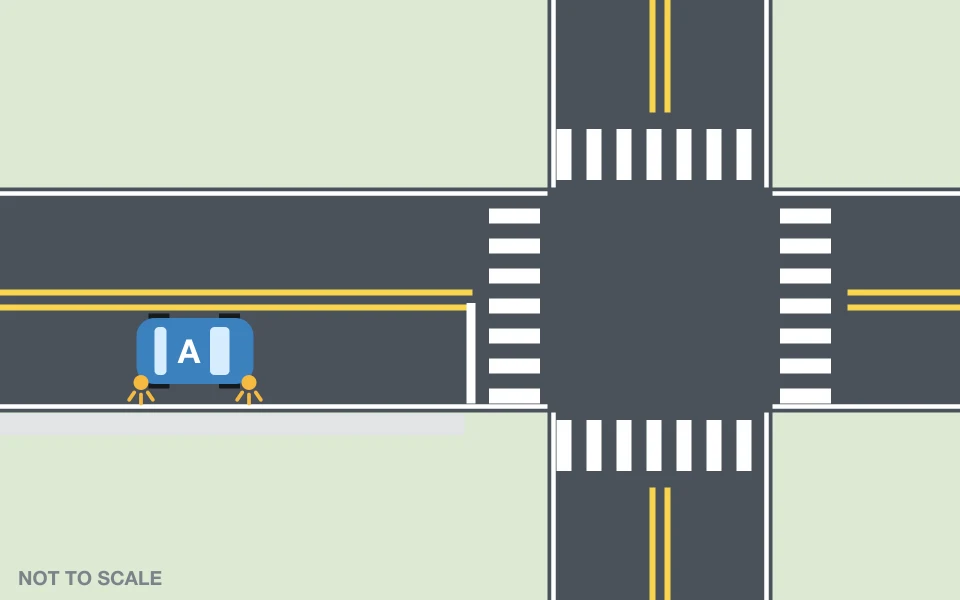
Which statement correctly describes ordinary right-turn lane placement?
Answer: Begin near the right edge and finish in the right lane unless markings direct otherwise.
Begin near the right edge and finish in the right lane unless markings direct otherwise.
Crossing a bus-only lane to turn
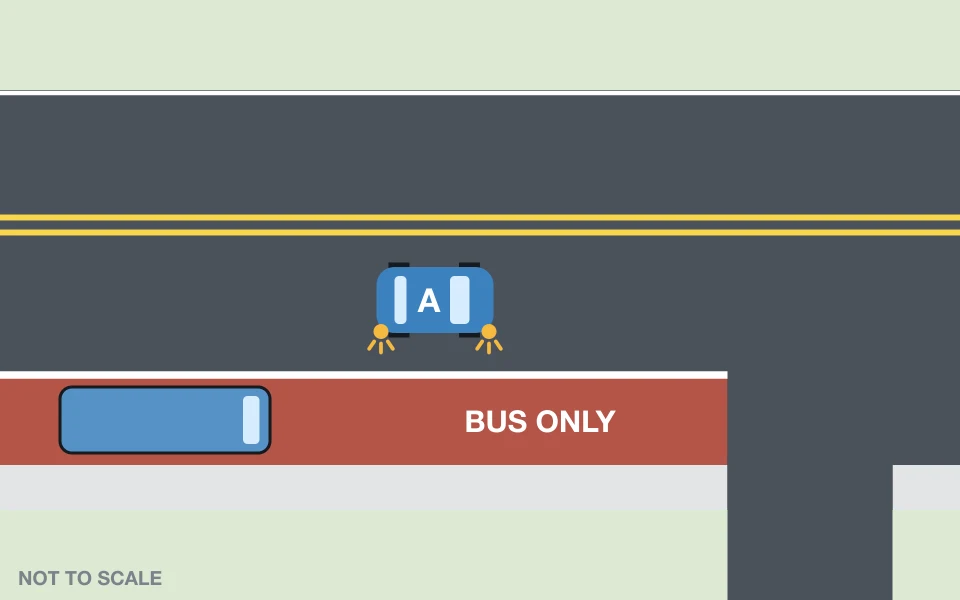
Which statement correctly describes crossing a bus-only lane to turn?
Answer: You may cross the bus lane to make a right turn while checking that it is safe.
You may cross the bus lane to make a right turn while checking that it is safe.
Ordinary left-turn starting lane
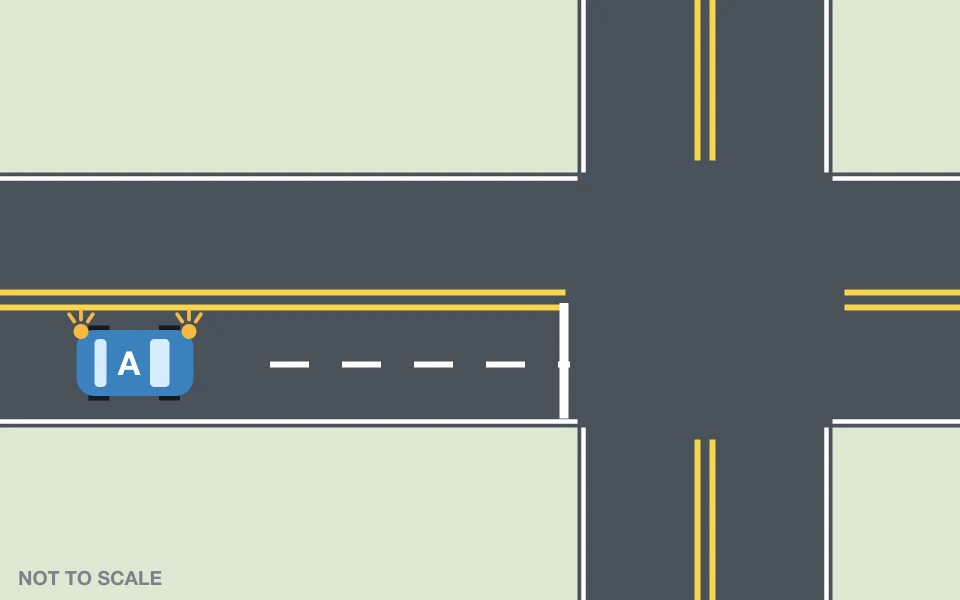
Which statement correctly describes ordinary left-turn starting lane?
Answer: Approach close to the center divider or use the designated left-turn lane.
Approach close to the center divider or use the designated left-turn lane.
Starting a left turn
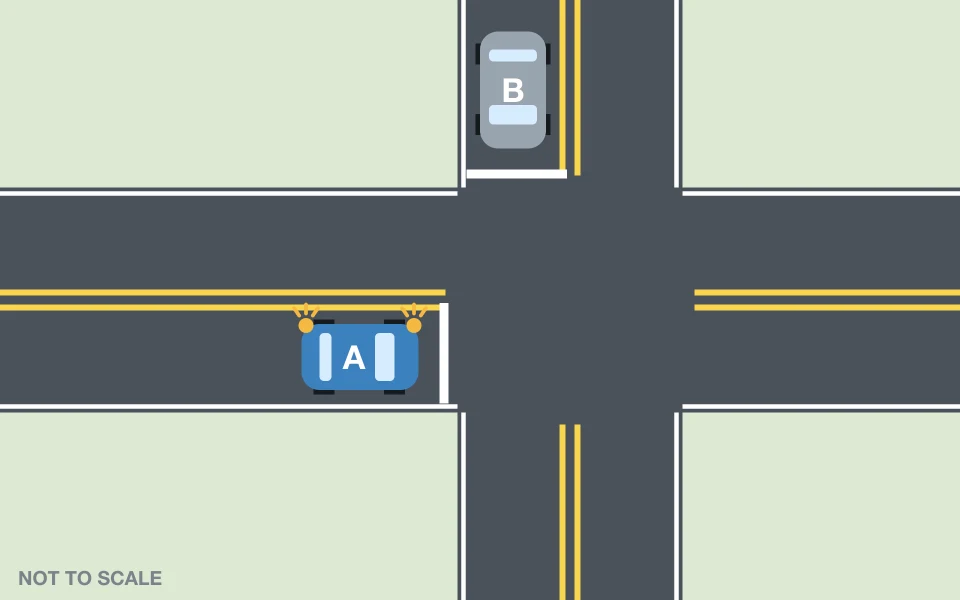
Which statement correctly describes starting a left turn?
Answer: Avoid cutting the corner into an opposing lane.
Avoid cutting the corner into an opposing lane.
Left turns on a circular red signal
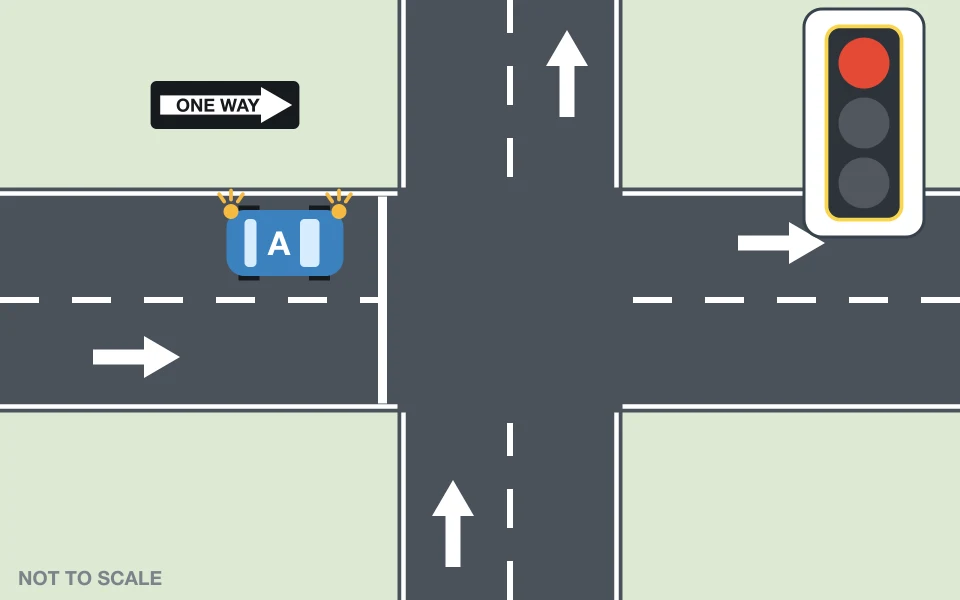
Which statement correctly describes left turns on a circular red signal?
Answer: A left turn from one one-way street to another can be permitted after stopping and yielding if no sign prohibits it.
A left turn from one one-way street to another can be permitted after stopping and yielding if no sign prohibits it.
U-turn sight distance
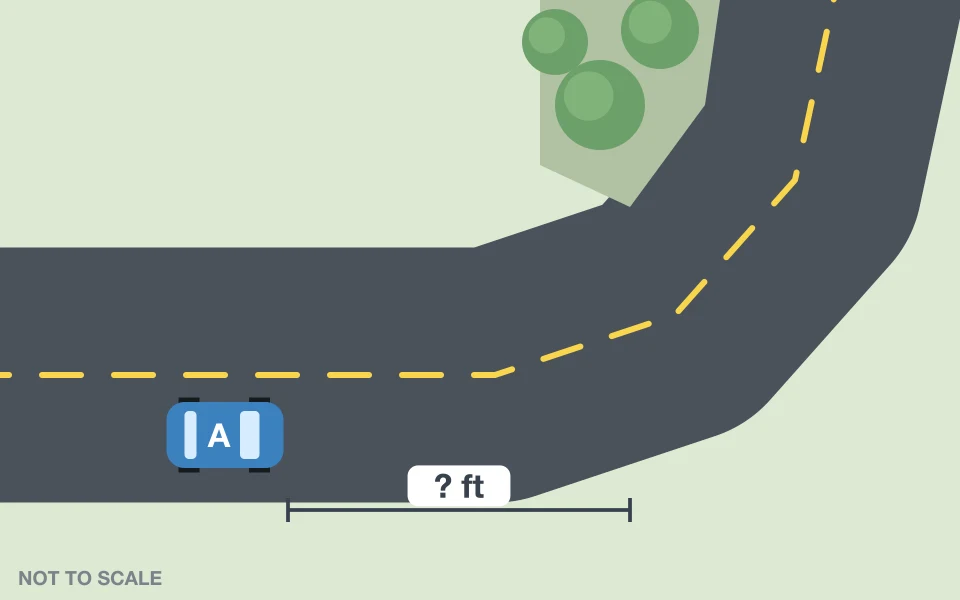
Which statement correctly describes U-turn sight distance?
Answer: Do not make a U-turn unless you can clearly see at least 200 feet in each direction.
Do not make a U-turn unless you can clearly see at least 200 feet in each direction.
U-turns on one-way streets
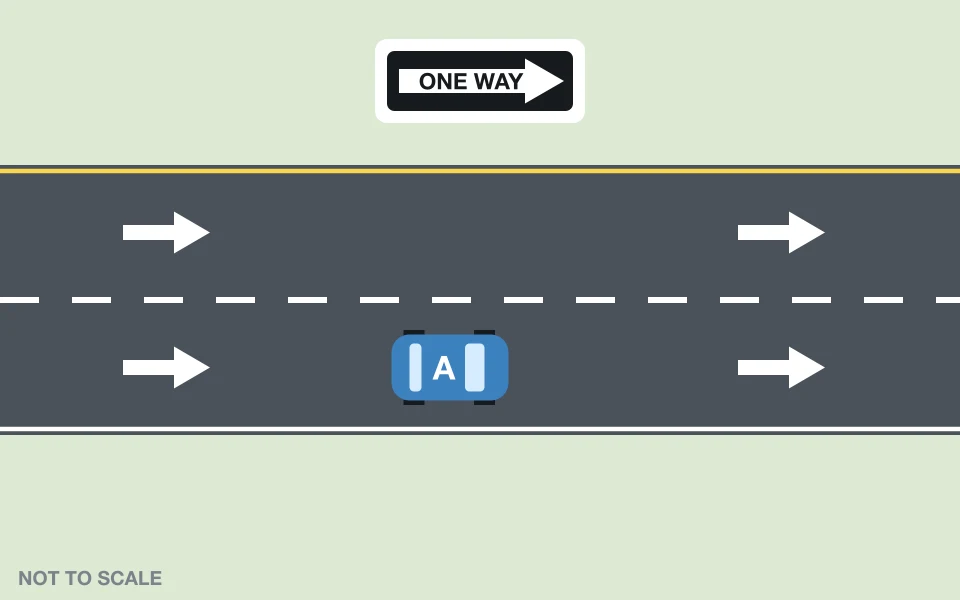
Which statement correctly describes U-turns on one-way streets?
Answer: Do not make a U-turn on a one-way street.
Do not make a U-turn on a one-way street.
Freeway merging speed
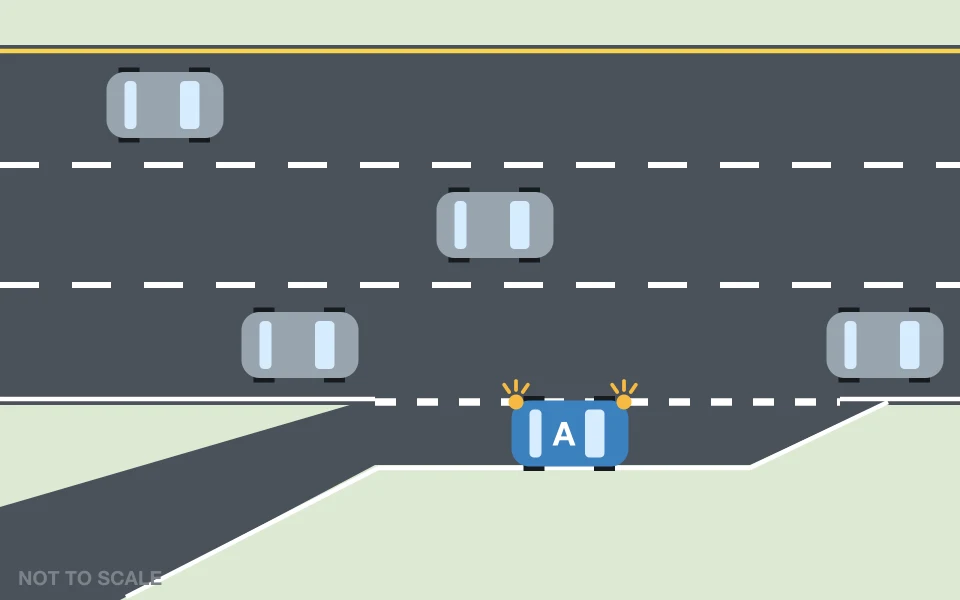
Which statement correctly describes freeway merging speed?
Answer: Approach the traffic speed when safe and merge into a sufficient gap.
Approach the traffic speed when safe and merge into a sufficient gap.
Crossing several lanes
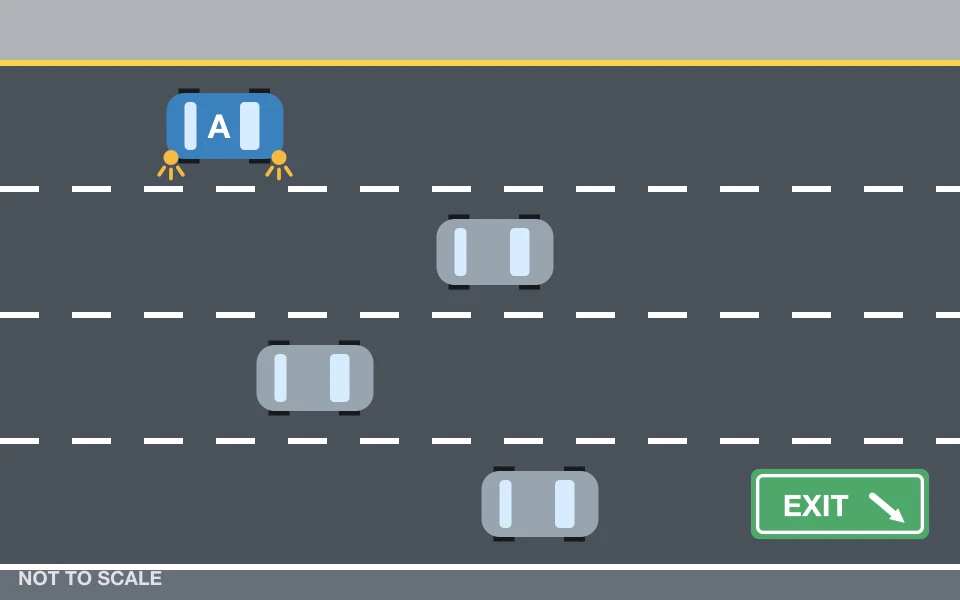
Which statement correctly describes crossing several lanes?
Answer: Change one lane at a time, checking each new lane before moving.
Change one lane at a time, checking each new lane before moving.
Missing a planned turn
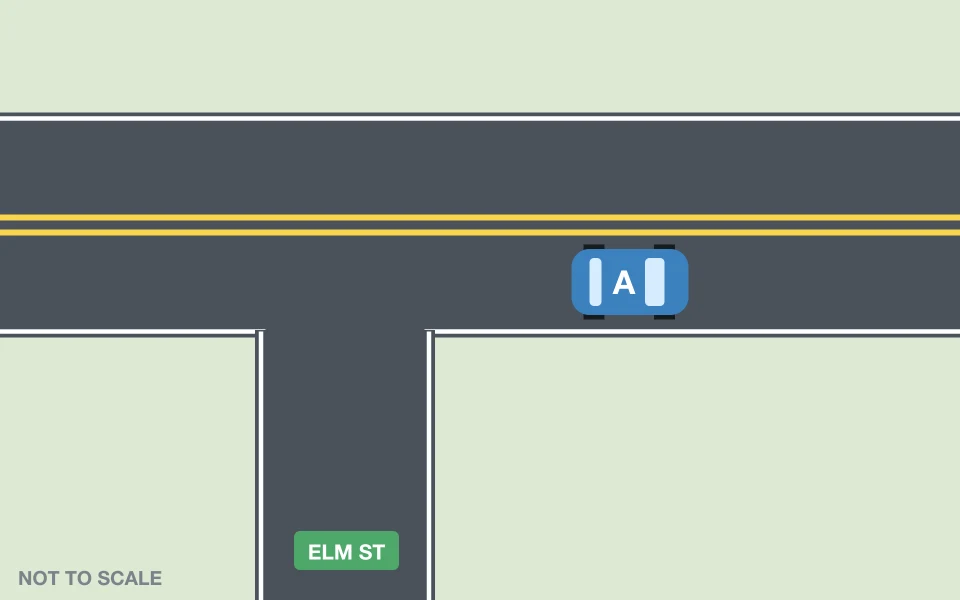
Which statement correctly describes missing a planned turn?
Answer: Continue until a safe and legal way to turn around is available.
Continue until a safe and legal way to turn around is available.
Passing a left-turning vehicle on the right
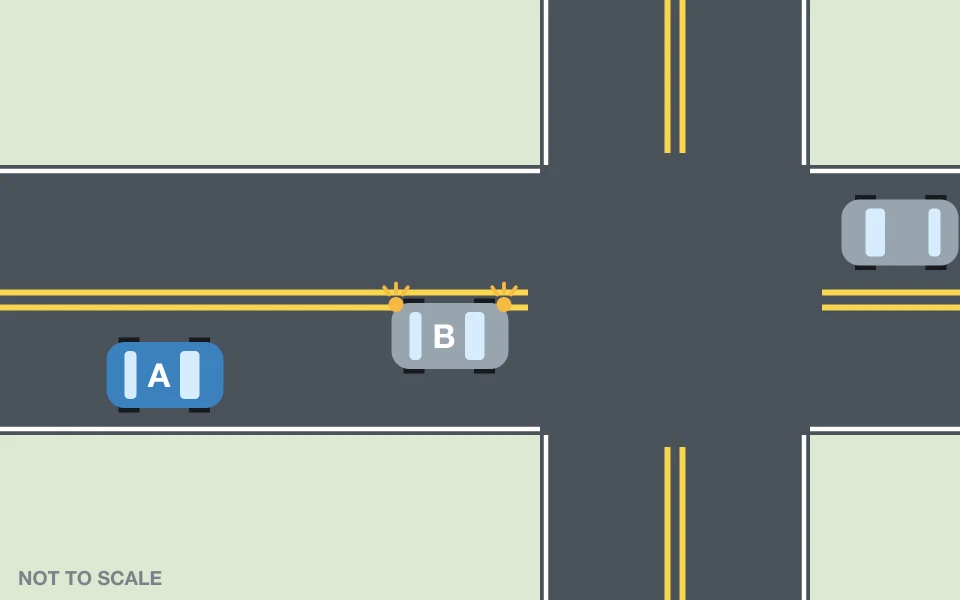
Which statement correctly describes passing a left-turning vehicle on the right?
Answer: Passing on the right may be permitted when safe, while remaining on the traveled roadway.
Passing on the right may be permitted when safe, while remaining on the traveled roadway.
Being passed by another driver
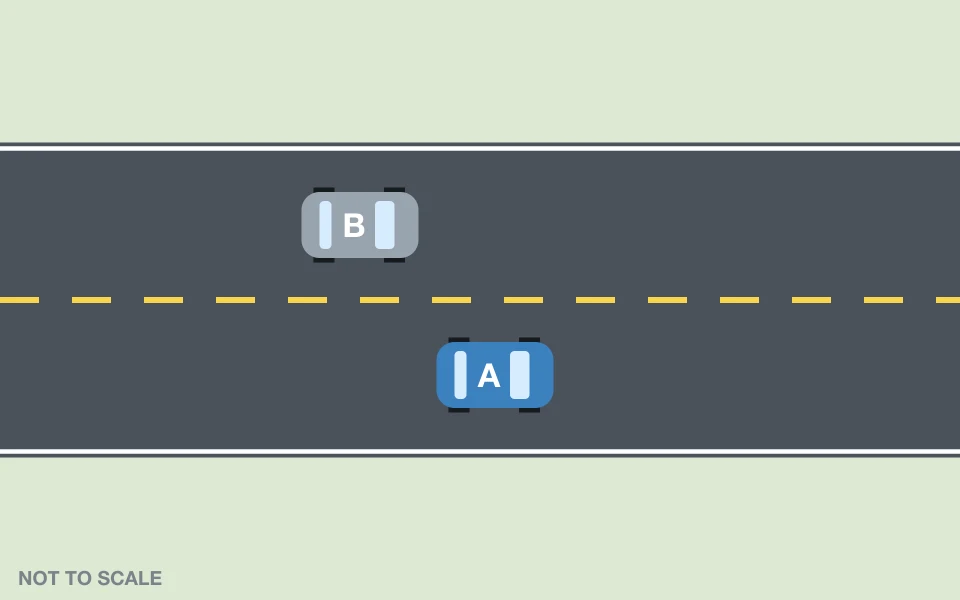
Which statement correctly describes being passed by another driver?
Answer: Do not accelerate while being overtaken; safely make room to the right for an ordinary left-side pass, without driving onto the shoulder.
Do not accelerate while being overtaken; safely make room to the right for an ordinary left-side pass, without driving onto the shoulder.
Judging an oncoming turn signal
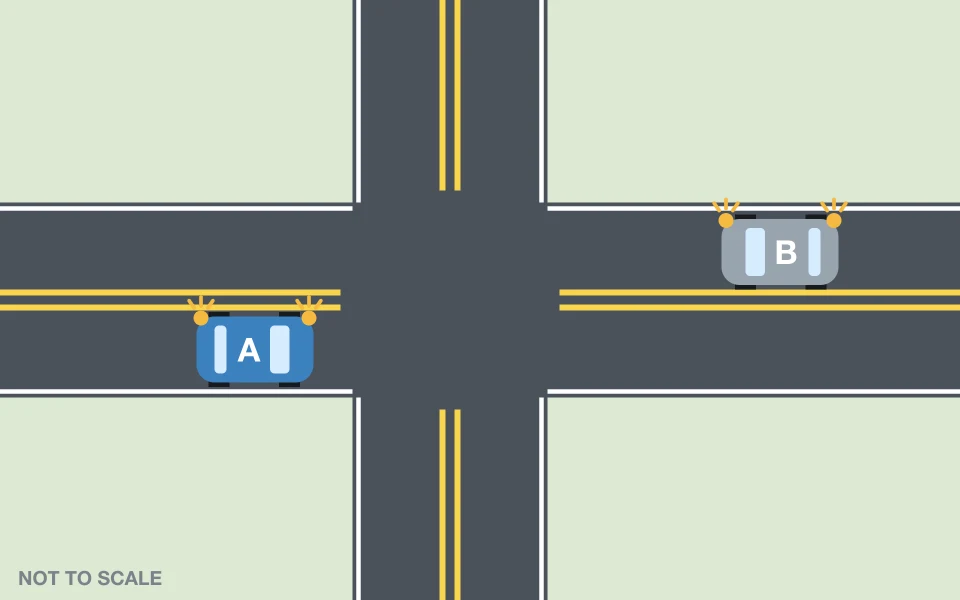
Which statement correctly describes judging an oncoming turn signal?
Answer: Before turning left, wait for the approaching vehicle to actually begin turning rather than trusting its signal alone.
Before turning left, wait for the approaching vehicle to actually begin turning rather than trusting its signal alone.
Passing near intersections
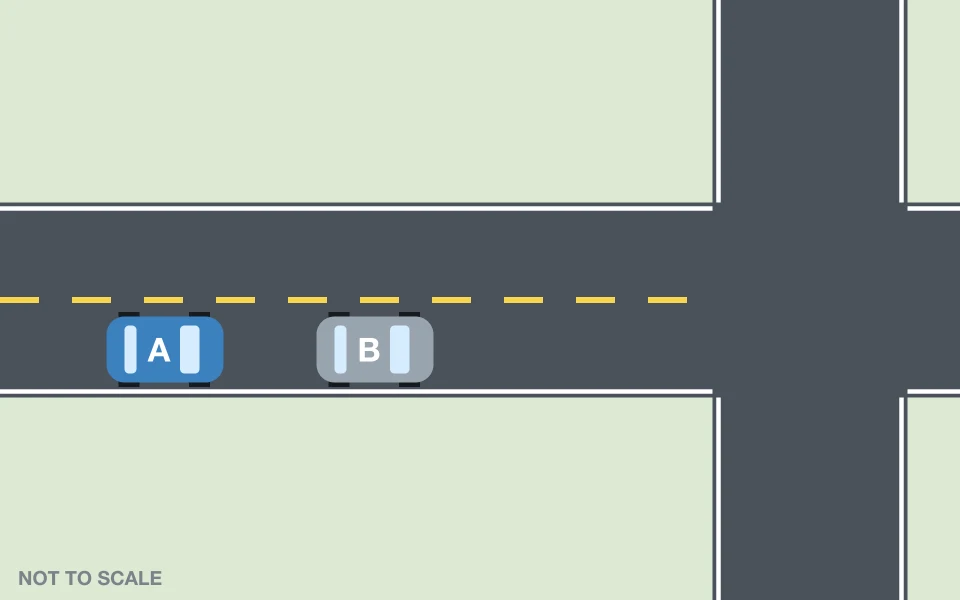
Which statement correctly describes passing near intersections?
Answer: On a two-way road, do not drive onto the opposing side of the roadway to pass while approaching within 100 feet of, or crossing, an intersection.
On a two-way road, do not drive onto the opposing side of the roadway to pass while approaching within 100 feet of, or crossing, an intersection.
Signaling a freeway exit
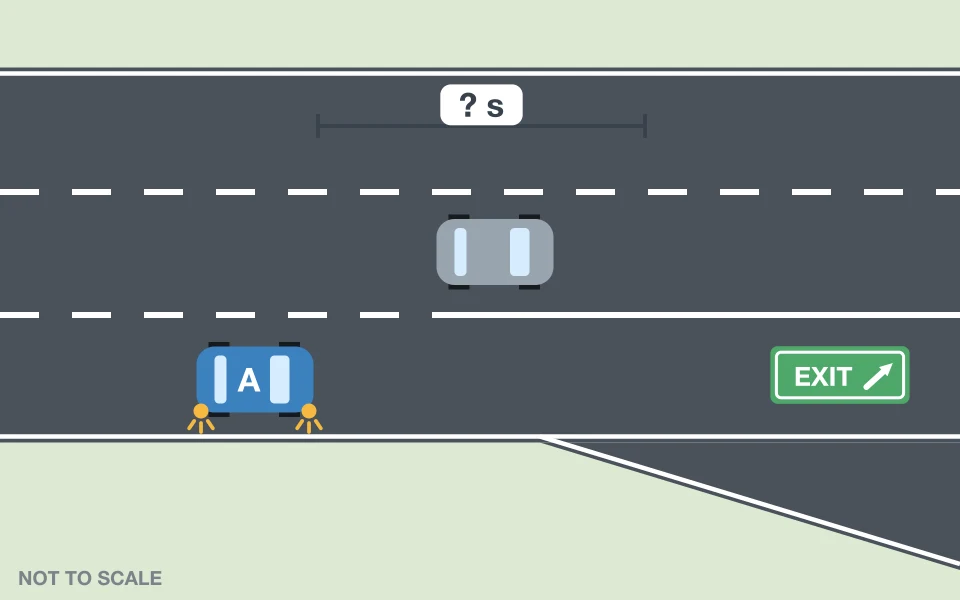
What advance exit signal does the California handbook recommend once you are in the proper freeway exit lane?
Answer: Once in the proper exit lane, follow the California handbook's guidance to signal about five seconds before exiting.
The handbook gives about five seconds of advance exit signaling once in the proper lane. Distance traveled in that time varies with speed; complete any necessary lane changes safely in advance.
Official references used for this topic
More topics
DriveRoad is an independent study aid. It is not affiliated with or endorsed by the California DMV, and these pages are not the official exam. Rules change; confirm details in the official California Driver’s Handbook.
© 2026 Paworld Labs LLC. Questions, explanations and illustrations are original to DriveRoad. Personal study use is welcome; reuse needs permission. Content use and copyright
 DriveRoad