← All topics
Right of WayCalifornia DMV written test guide
These 29 points cover right of way at intersections, roundabouts, school buses and emergency vehicles. Each one pairs a California Class C practice question with its answer, a short explanation and an original diagram, taken from the DriveRoad iPhone app.
Simultaneous arrivals at uncontrolled intersections
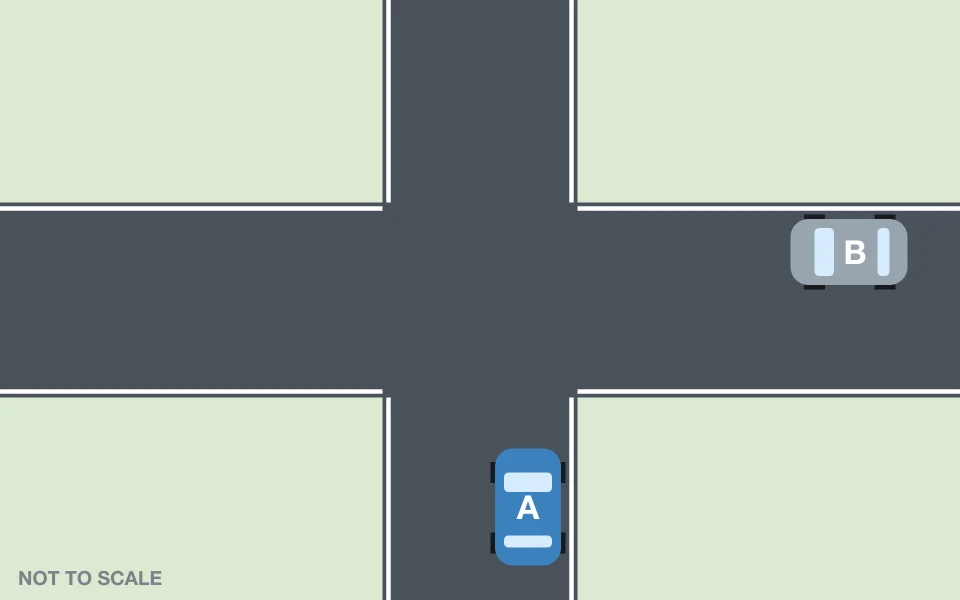
Ben and another driver reach an uncontrolled intersection at the same time. The other vehicle is on Ben's right. Whom should Ben yield to?
Answer: The vehicle to his right.
When arrival times tie at an uncontrolled junction, the right-side vehicle has priority.
Yielding at the stem of a T intersection
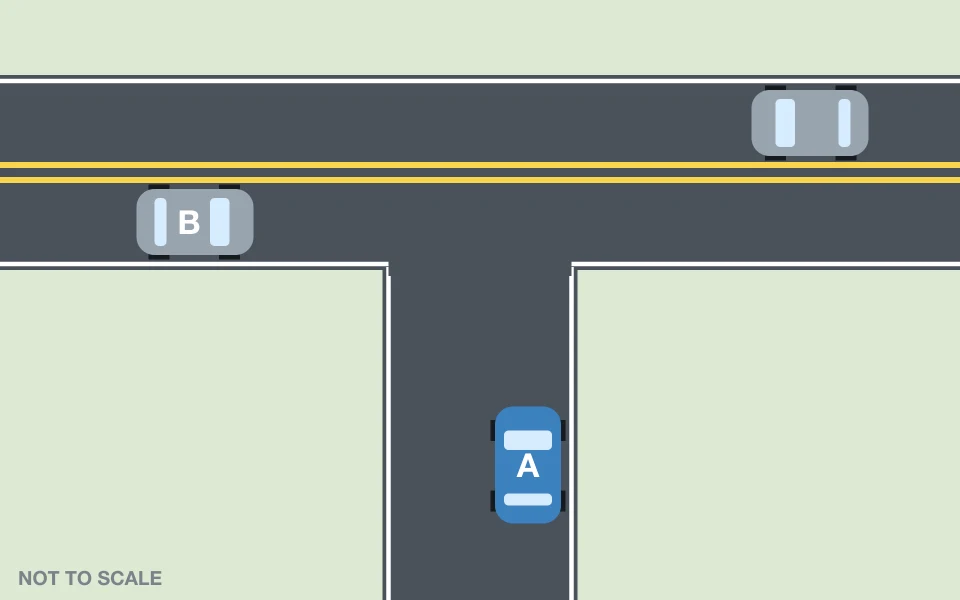
A driver approaches the terminating road of an uncontrolled T intersection. Which traffic has priority?
Answer: Traffic already traveling on the through road.
The through road has priority over vehicles entering from the terminating leg.
Vehicles stopped at crosswalks
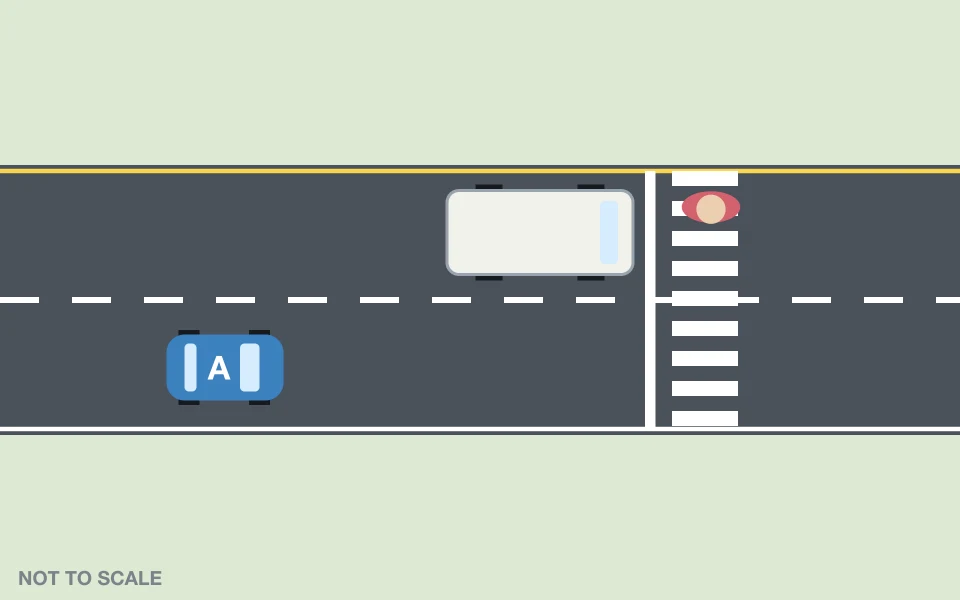
A van has stopped at a crosswalk and hides pedestrians from your view. Which maneuver must you avoid?
Answer: Passing the stopped van at the crossing.
A hidden pedestrian may be crossing ahead of the stopped vehicle; passing can put that person in the path of traffic.
Entering a roundabout
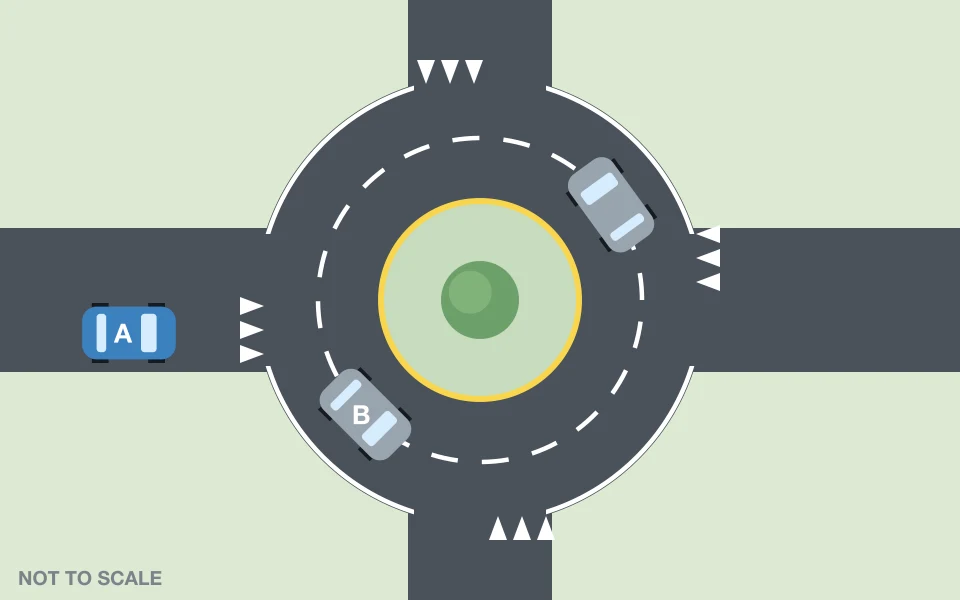
What should an entering driver do about traffic already circulating in a roundabout?
Answer: Let circulating traffic pass before entering a safe gap.
Entry traffic yields to vehicles already circulating; California roundabouts circulate counterclockwise.
Emergency vehicles while inside an intersection
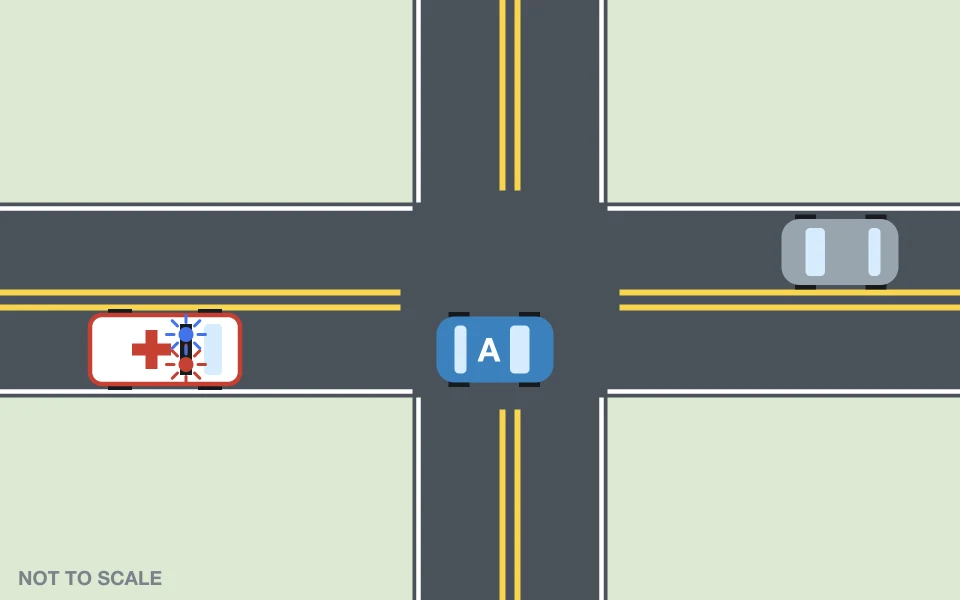
An ambulance sounds its siren and displays red lights while you are inside an intersection. What sequence is appropriate?
Answer: Clear the intersection, then pull right and stop when safe.
Clearing the junction prevents blocking the emergency vehicle; yielding follows as soon as it is safe.
Vehicles already inside an uncontrolled intersection
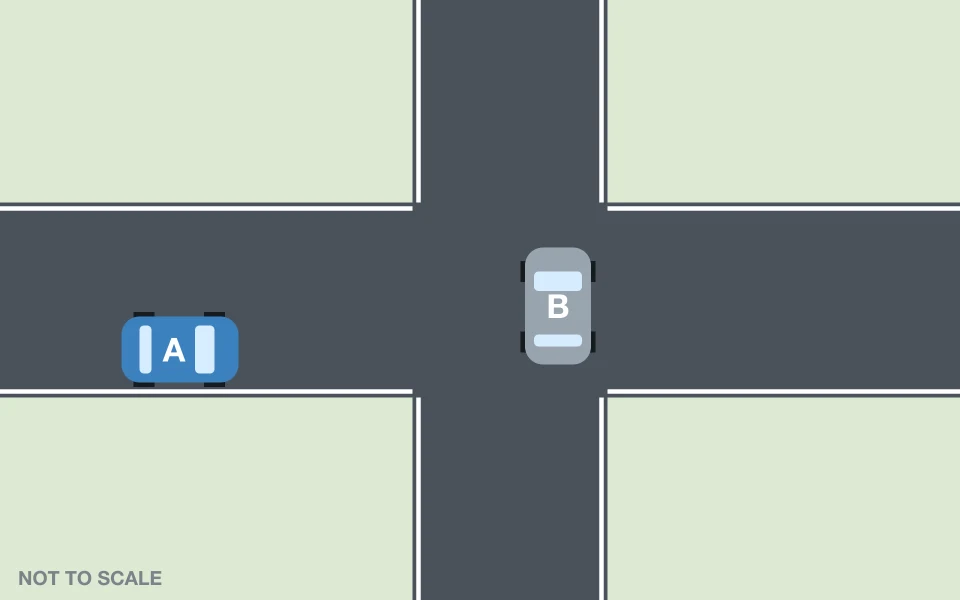
At an uncontrolled intersection, which duty applies when a vehicle from another road is already inside the intersection?
Answer: An approaching driver must yield to a vehicle that has already entered the uncontrolled intersection from another road, while still protecting pedestrians and avoiding a collision.
An approaching driver must yield to a vehicle that has already entered the uncontrolled intersection from another road, while still protecting pedestrians and avoiding a collision.
Checking beside a right turn
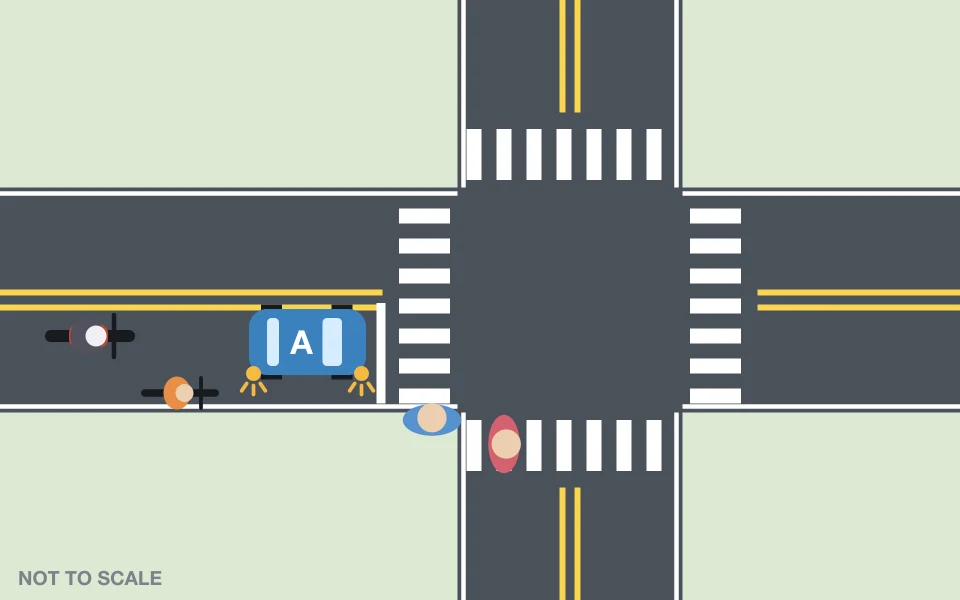
Which statement correctly describes checking beside a right turn?
Answer: Check for pedestrians, cyclists and motorcycles beside the vehicle.
Check for pedestrians, cyclists and motorcycles beside the vehicle.
Entering an occupied traffic lane
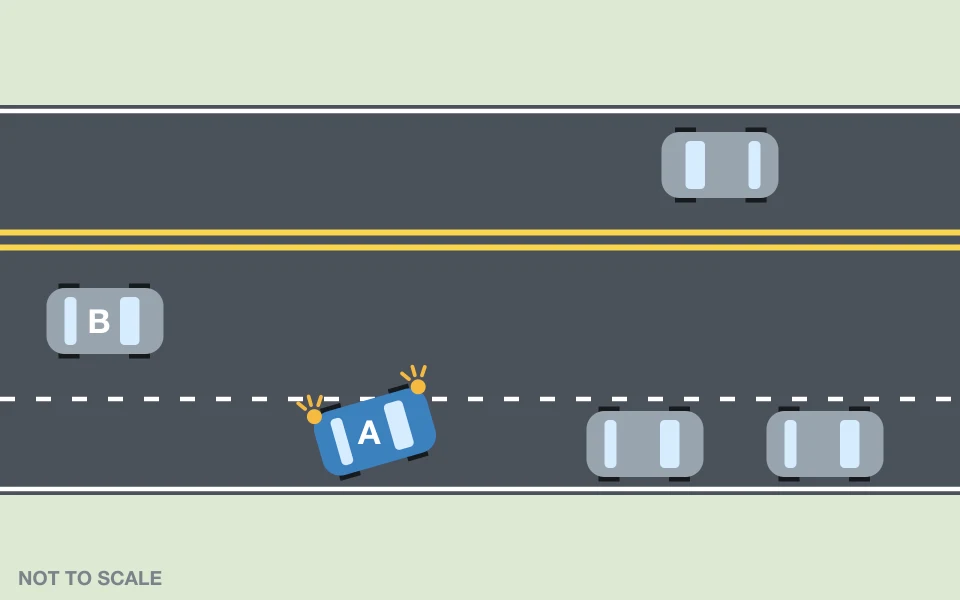
Which statement correctly describes entering an occupied traffic lane?
Answer: Yield to traffic already using the lane.
Yield to traffic already using the lane.
Unmarked crosswalks
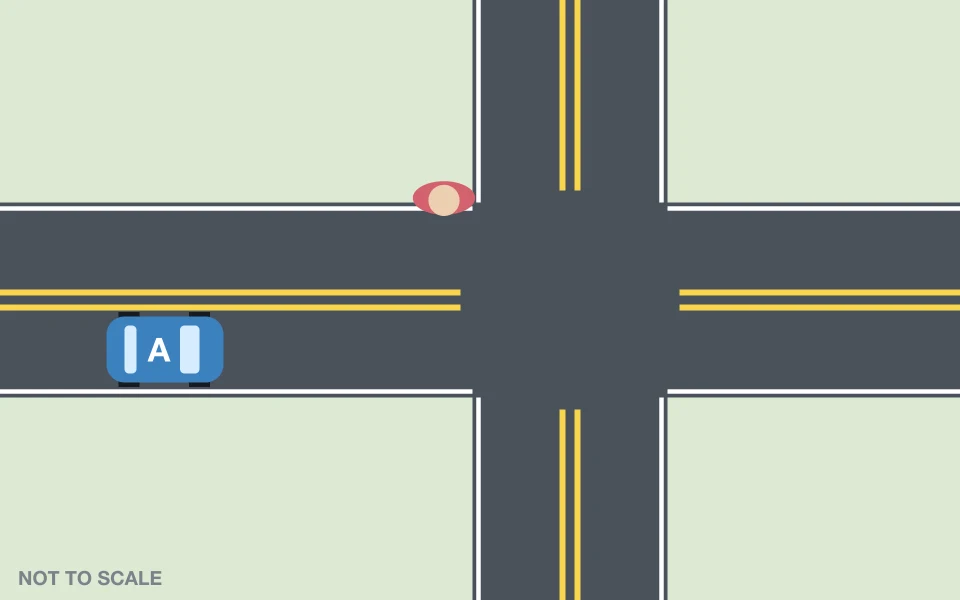
Which statement correctly describes unmarked crosswalks?
Answer: Pedestrians may have priority even when a crosswalk is not painted.
Pedestrians may have priority even when a crosswalk is not painted.
Pedestrians with guide dogs or white canes
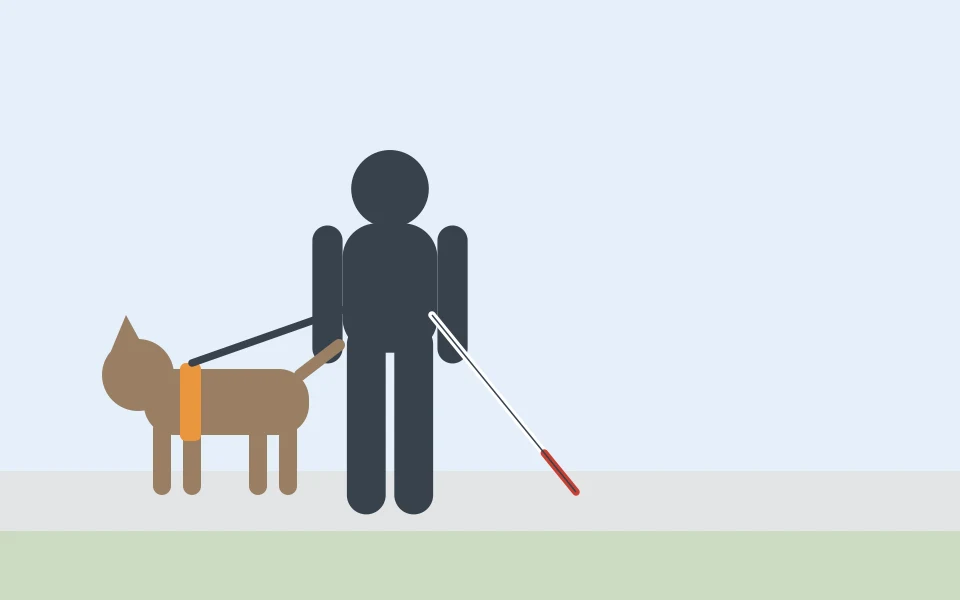
Which statement correctly describes pedestrians with guide dogs or white canes?
Answer: Give these pedestrians the right-of-way and take special care when turning or backing.
Give these pedestrians the right-of-way and take special care when turning or backing.
Honking near a blind pedestrian
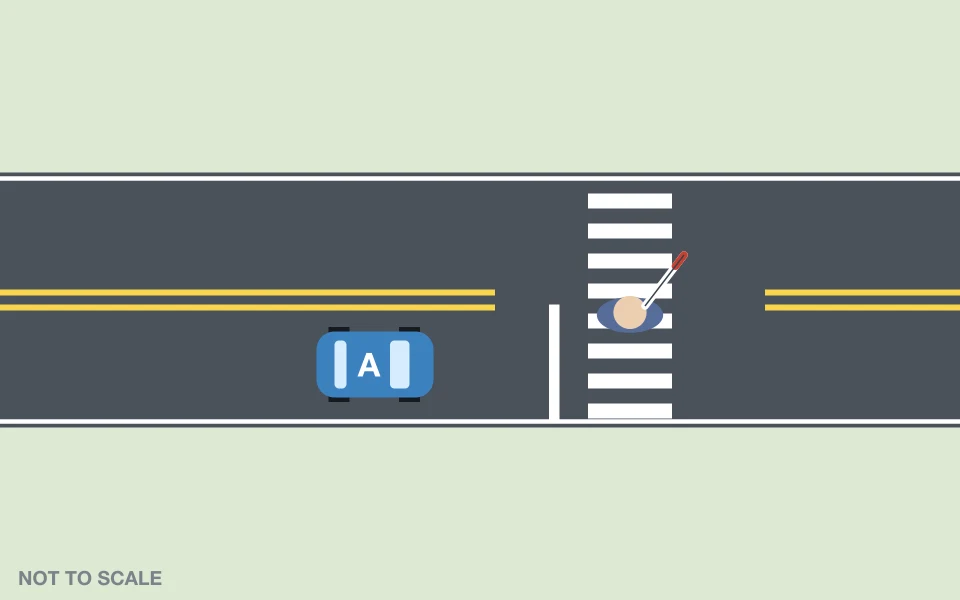
Which statement correctly describes honking near a blind pedestrian?
Answer: Do not use the horn to urge a blind pedestrian across or out of the way.
Do not use the horn to urge a blind pedestrian across or out of the way.
Allowing extra crossing time
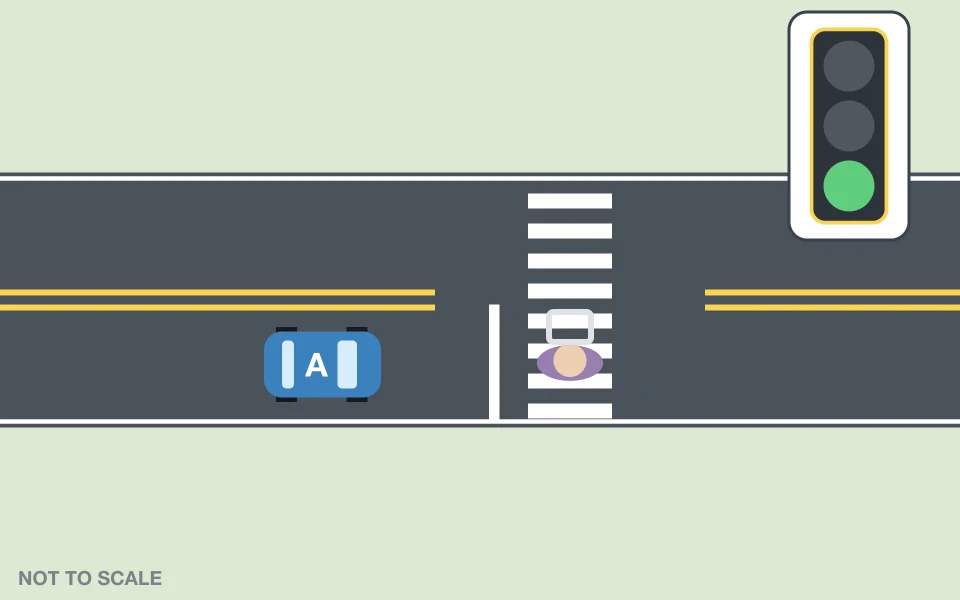
Which statement correctly describes allowing extra crossing time?
Answer: Allow extra time for people who need it, including seniors and people with disabilities.
Allow extra time for people who need it, including seniors and people with disabilities.
Keeping the crossing clear
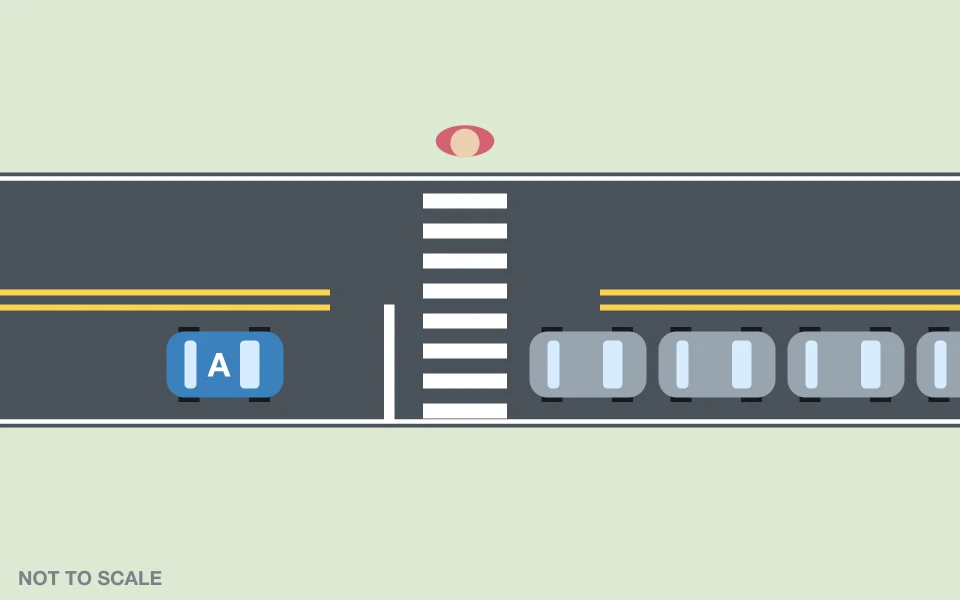
Which statement correctly describes keeping the crossing clear?
Answer: Stop before the crossing rather than blocking it.
Stop before the crossing rather than blocking it.
Missing a roundabout exit
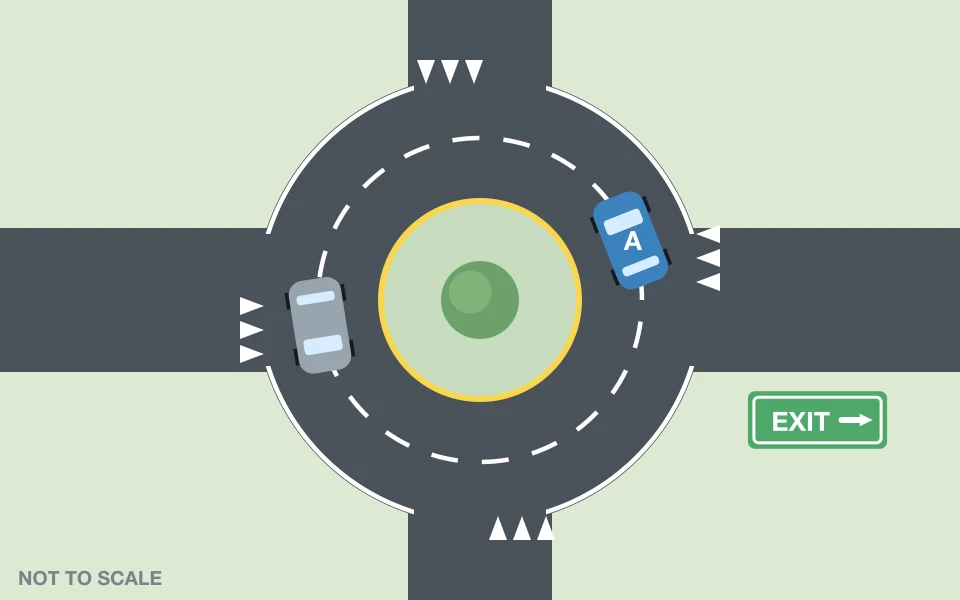
Which statement correctly describes missing a roundabout exit?
Answer: Continue around to the exit rather than reversing.
Continue around to the exit rather than reversing.
Roundabout circulation

Which statement correctly describes roundabout circulation?
Answer: Traffic circulates counterclockwise around the island.
Traffic circulates counterclockwise around the island.
Meeting on a steep narrow road
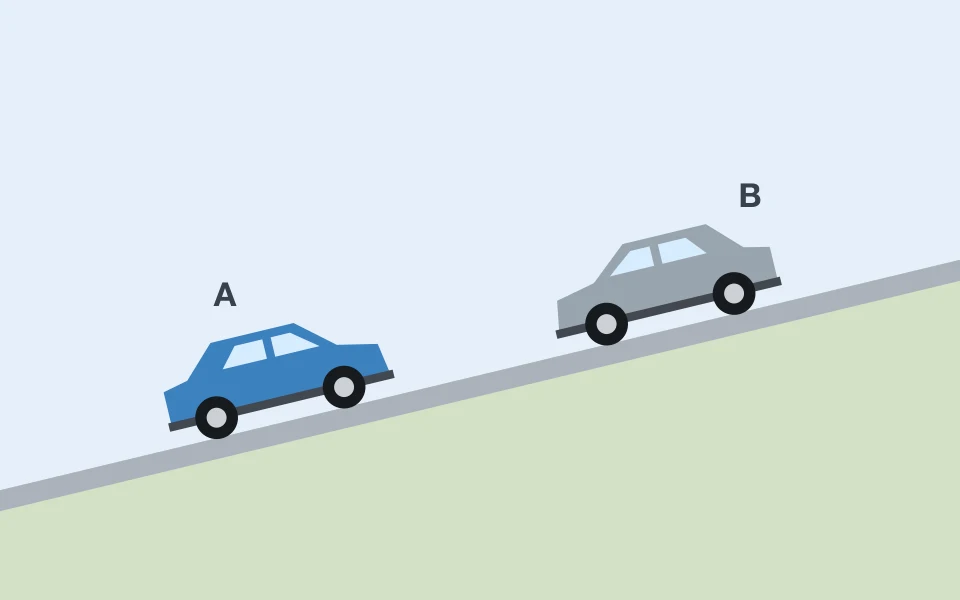
Which statement correctly describes meeting on a steep narrow road?
Answer: If neither can pass, the downhill-facing vehicle backs up to allow the uphill vehicle through.
If neither can pass, the downhill-facing vehicle backs up to allow the uphill vehicle through.
Yellow school-bus lights
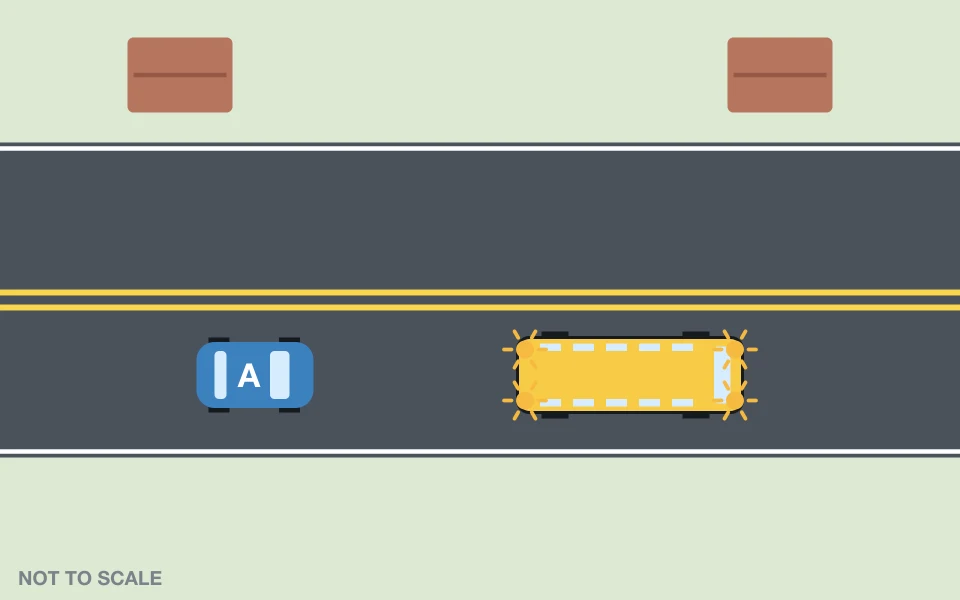
Which statement correctly describes yellow school-bus lights?
Answer: Slow down and prepare to stop.
Slow down and prepare to stop.
School-bus red lights on a two-lane road
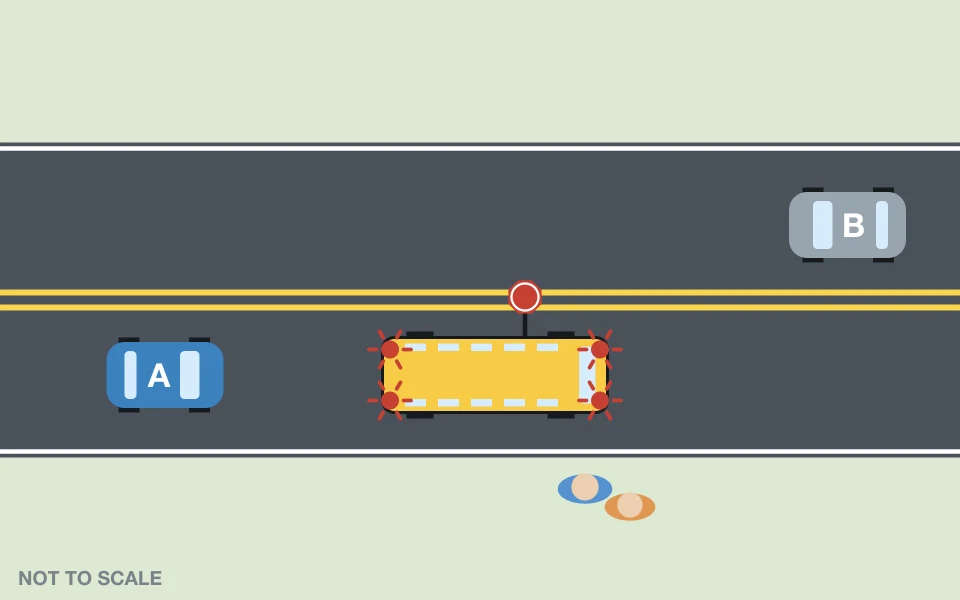
Which statement correctly describes school-bus red lights on a two-lane road?
Answer: Stop in either direction and wait until the bus’s red warning lights stop flashing and children are safely across before passing.
Stop in either direction and wait until the bus’s red warning lights stop flashing and children are safely across before passing.
Opposite-side school buses on separated roads
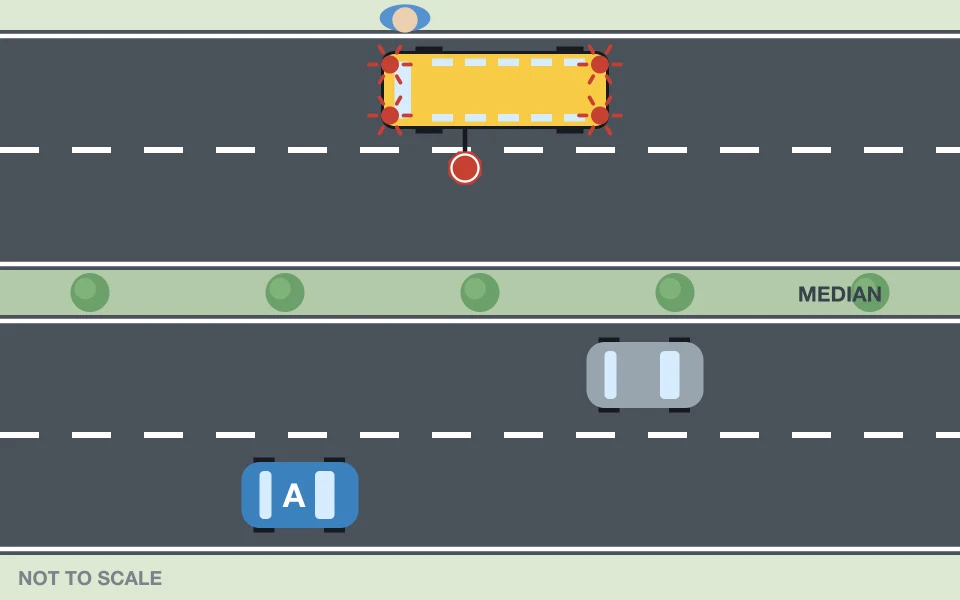
Which statement correctly describes opposite-side school buses on separated roads?
Answer: An opposite-side bus on a divided road or a road with at least two lanes each way does not require that opposite traffic to stop.
An opposite-side bus on a divided road or a road with at least two lanes each way does not require that opposite traffic to stop.
School crossing guards
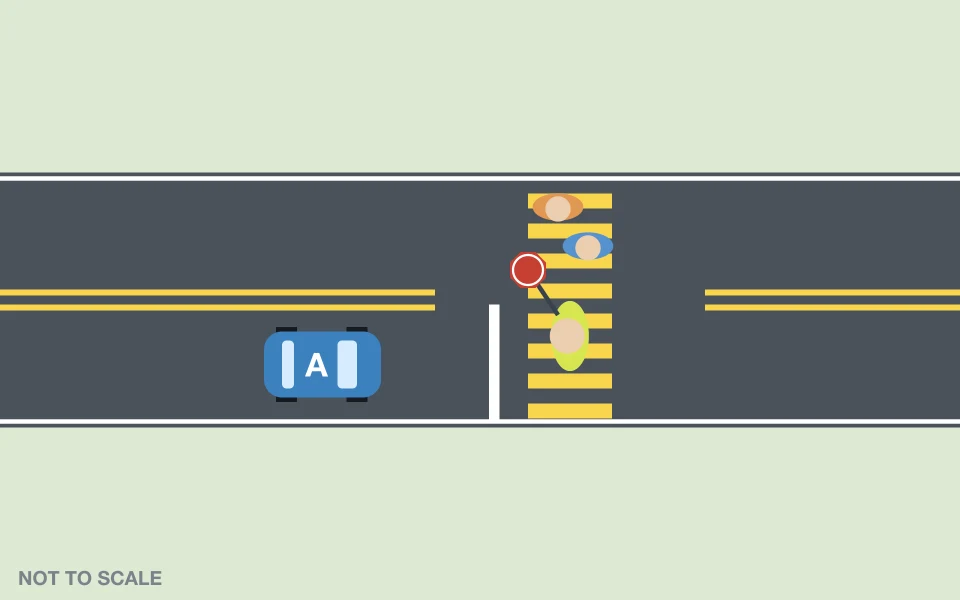
Which statement correctly describes school crossing guards?
Answer: Follow their directions even when they require waiting.
Follow their directions even when they require waiting.
Yielding to a moving emergency vehicle
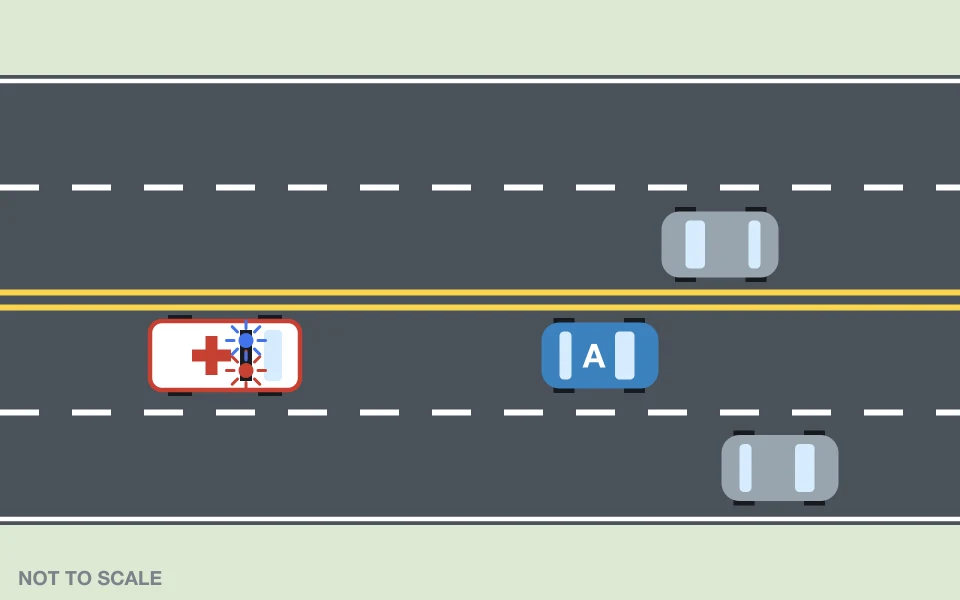
Which statement correctly describes yielding to a moving emergency vehicle?
Answer: When it uses a siren and red lights, move right and stop when safe.
When it uses a siren and red lights, move right and stop when safe.
Following responding emergency vehicles
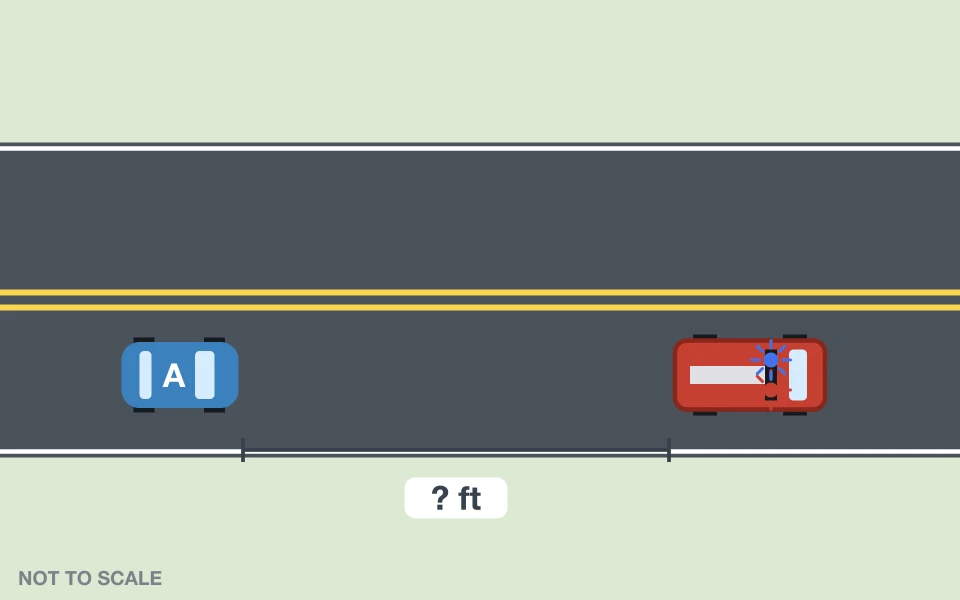
Which statement correctly describes following responding emergency vehicles?
Answer: Do not follow within 300 feet when the emergency vehicle's siren or flashing lights are on.
Do not follow within 300 feet when the emergency vehicle's siren or flashing lights are on.
Officer directions versus signals
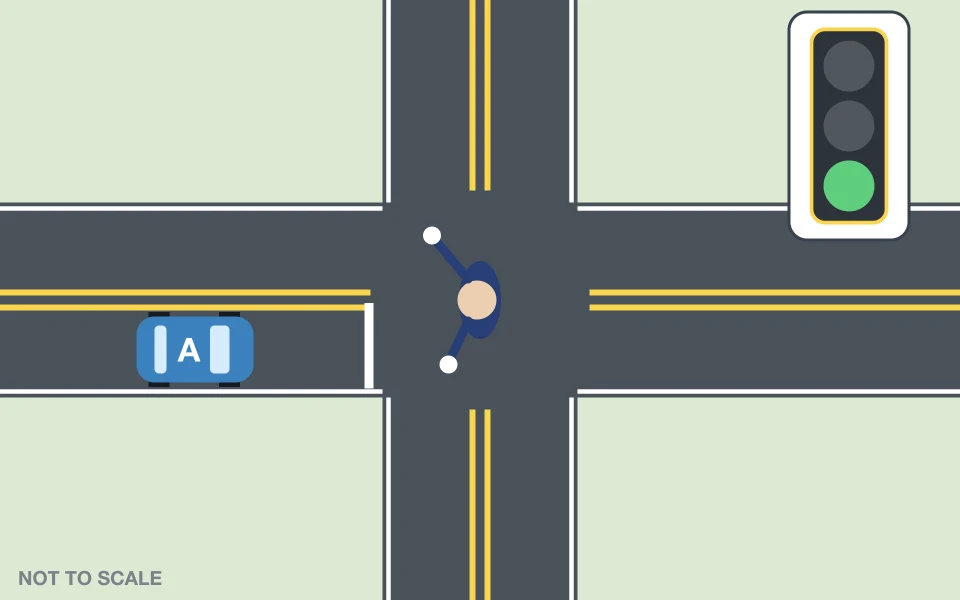
Which statement correctly describes officer directions versus signals?
Answer: Follow the lawful traffic direction of a law-enforcement officer or a firefighter acting in their traffic-protection duties, even when it differs from a signal.
Follow the lawful traffic direction of a law-enforcement officer or a firefighter acting in their traffic-protection duties, even when it differs from a signal.
Passing stopped vehicles with warning devices
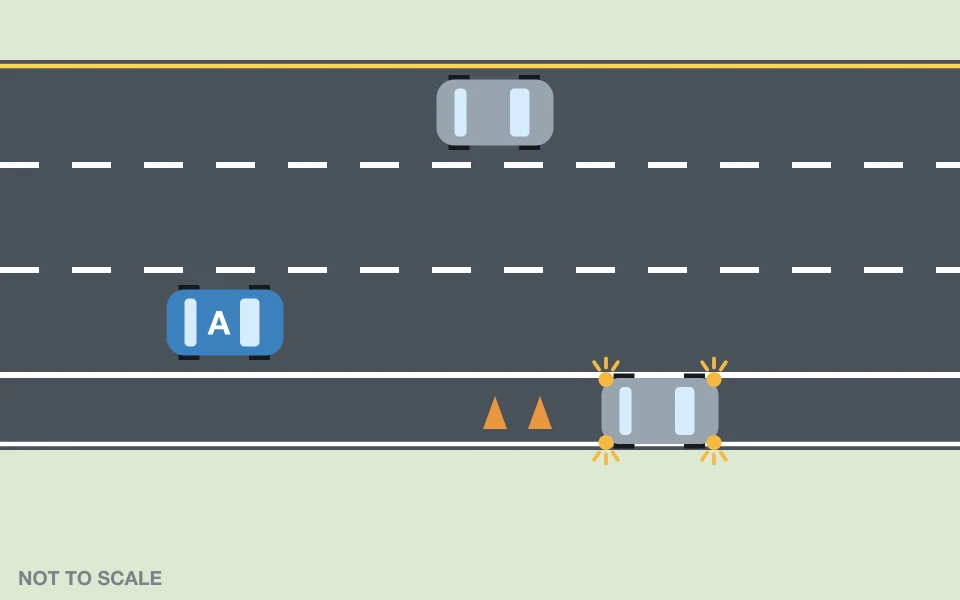
On a public highway, you approach a stopped vehicle with warning devices, without a protective barrier or contrary officer direction. Which passing rule applies?
Answer: Approach cautiously; change to an available safe, legal nonadjacent lane if practicable, otherwise slow to a safe speed. Ordinary stopped vehicles displaying hazards or other warning devices are included.
Approach cautiously; change to an available safe, legal nonadjacent lane if practicable, otherwise slow to a safe speed. Ordinary stopped vehicles displaying hazards or other warning devices are included.
Truck blind spots
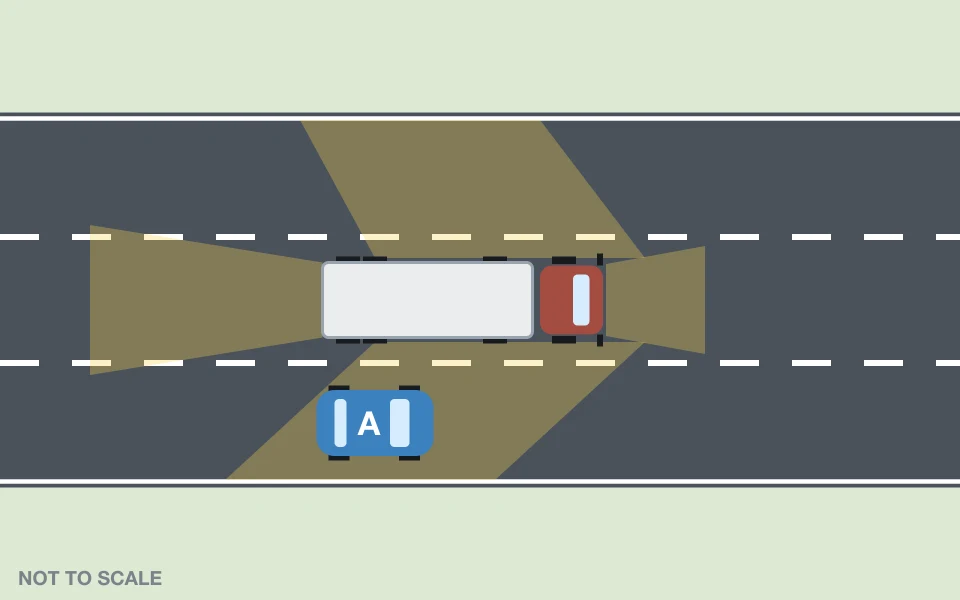
Which statement correctly describes truck blind spots?
Answer: If the truck's side mirrors are not visible to you, its driver may not be able to see your vehicle.
If the truck's side mirrors are not visible to you, its driver may not be able to see your vehicle.
Wide truck turns
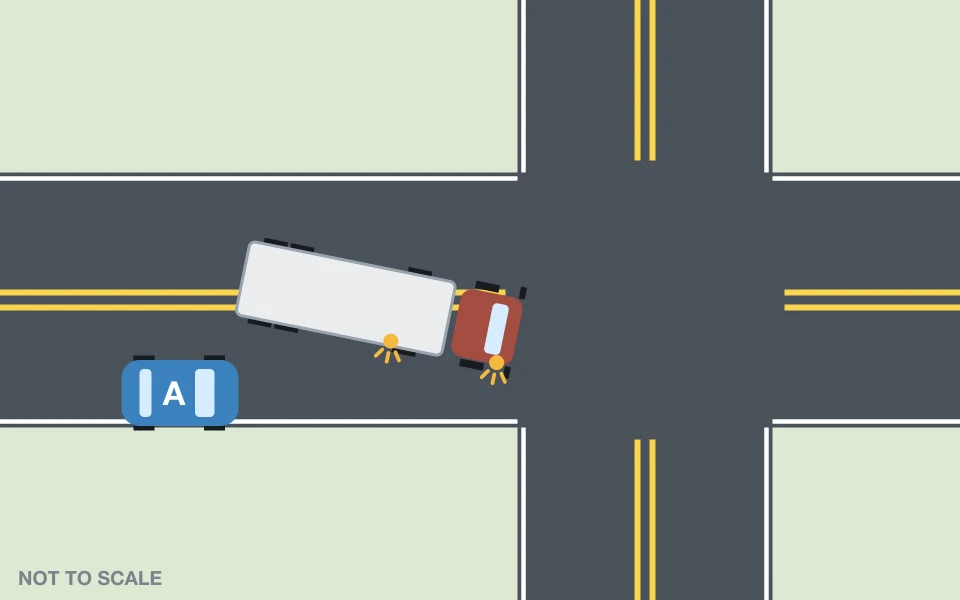
Which statement correctly describes wide truck turns?
Answer: Do not squeeze between a turning truck and the curb.
Do not squeeze between a turning truck and the curb.
A truck's stopping space
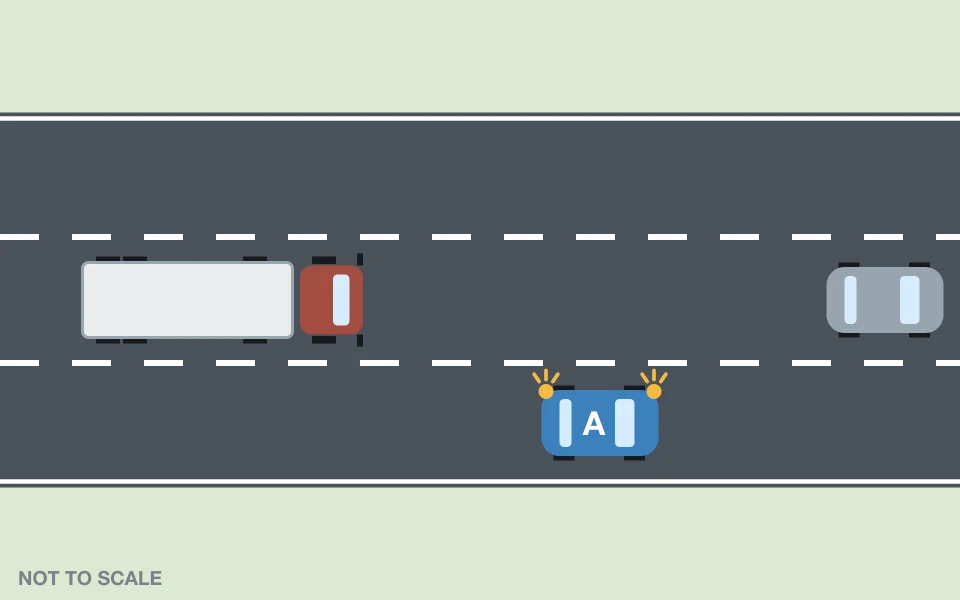
Which statement correctly describes a truck's stopping space?
Answer: Do not cut into a truck's stopping buffer and brake suddenly.
Do not cut into a truck's stopping buffer and brake suddenly.
Transit passenger safety zones
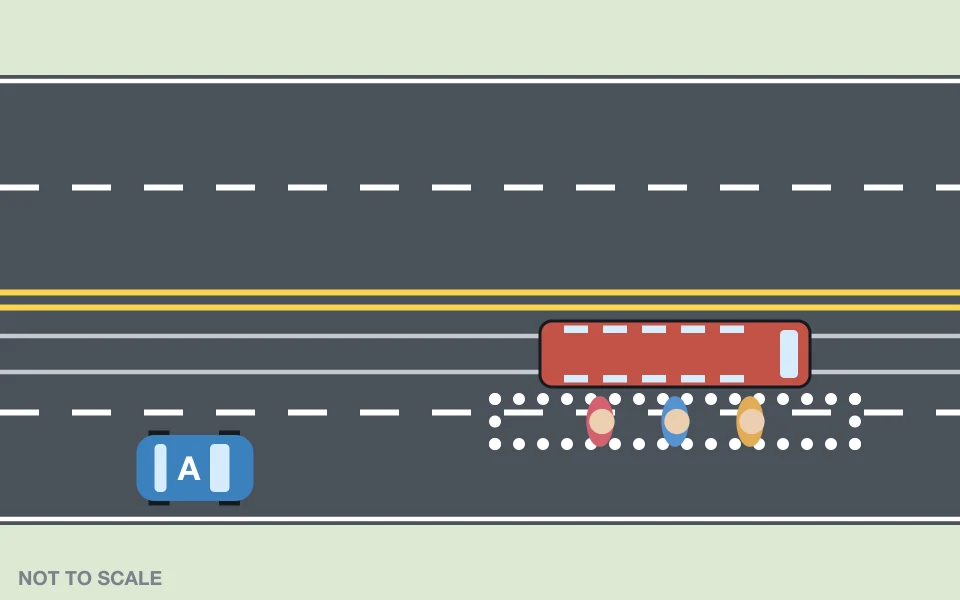
Which statement correctly describes transit passenger safety zones?
Answer: Do not drive through a marked passenger safety zone.
Do not drive through a marked passenger safety zone.
Sharing space with motorcycles
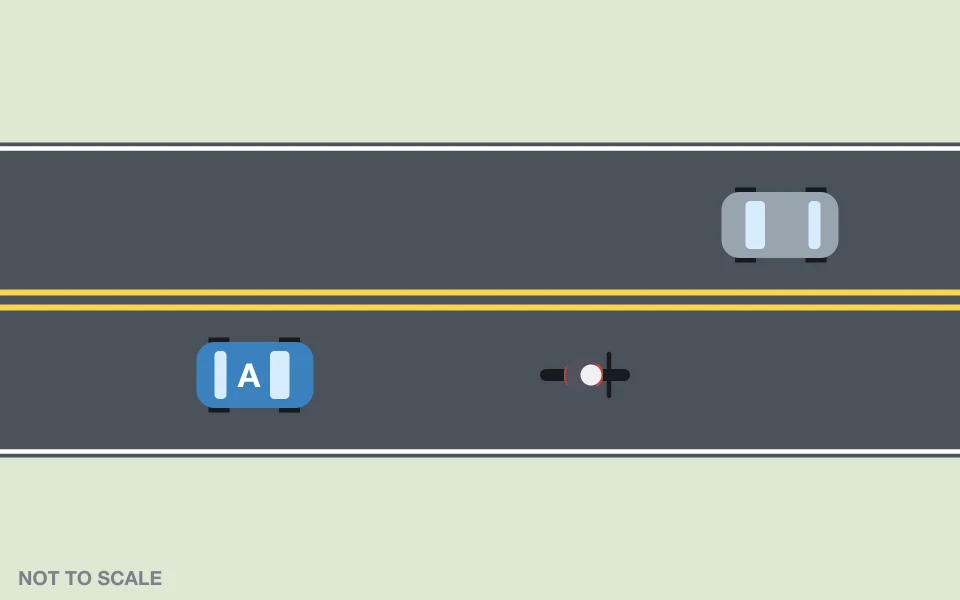
Which statement correctly describes sharing space with motorcycles?
Answer: Do not try to pass a motorcycle within the same lane.
Do not try to pass a motorcycle within the same lane.
Official references used for this topic
More topics
DriveRoad is an independent study aid. It is not affiliated with or endorsed by the California DMV, and these pages are not the official exam. Rules change; confirm details in the official California Driver’s Handbook.
© 2026 Paworld Labs LLC. Questions, explanations and illustrations are original to DriveRoad. Personal study use is welcome; reuse needs permission. Content use and copyright
 DriveRoad