Parallel-parking distance from the curb
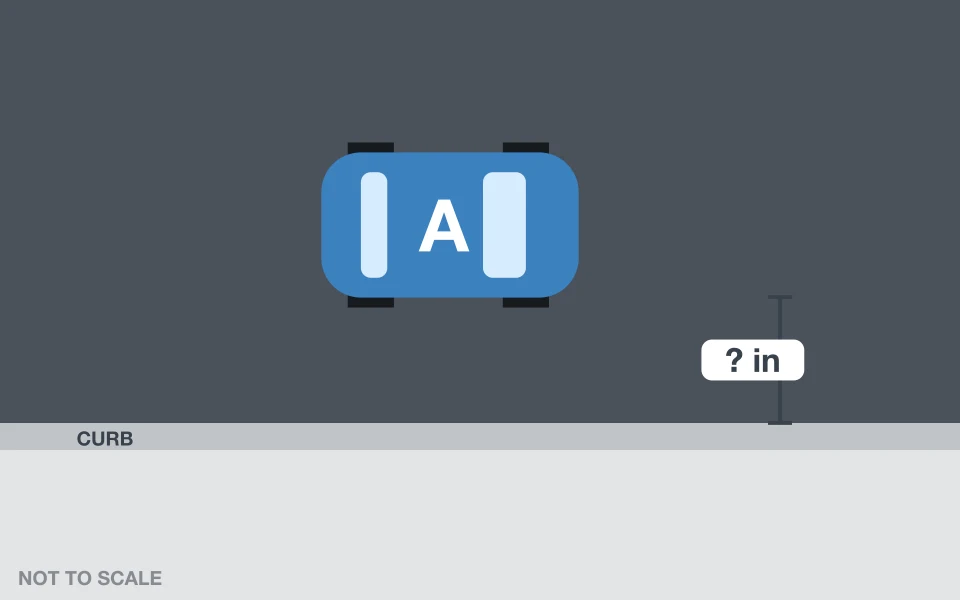
After parallel parking on an ordinary level street, how close should the vehicle be to the curb?
Answer: Within 18 inches.
A parallel-parked vehicle should be aligned with the curb and within 18 inches of it.
 DriveRoad
These 17 points cover parking distances, hills and colored curbs. Each one pairs a California Class C practice question with its answer, a short explanation and an original diagram, taken from the DriveRoad iPhone app.
After parallel parking on an ordinary level street, how close should the vehicle be to the curb?
Answer: Within 18 inches.
A parallel-parked vehicle should be aligned with the curb and within 18 inches of it.
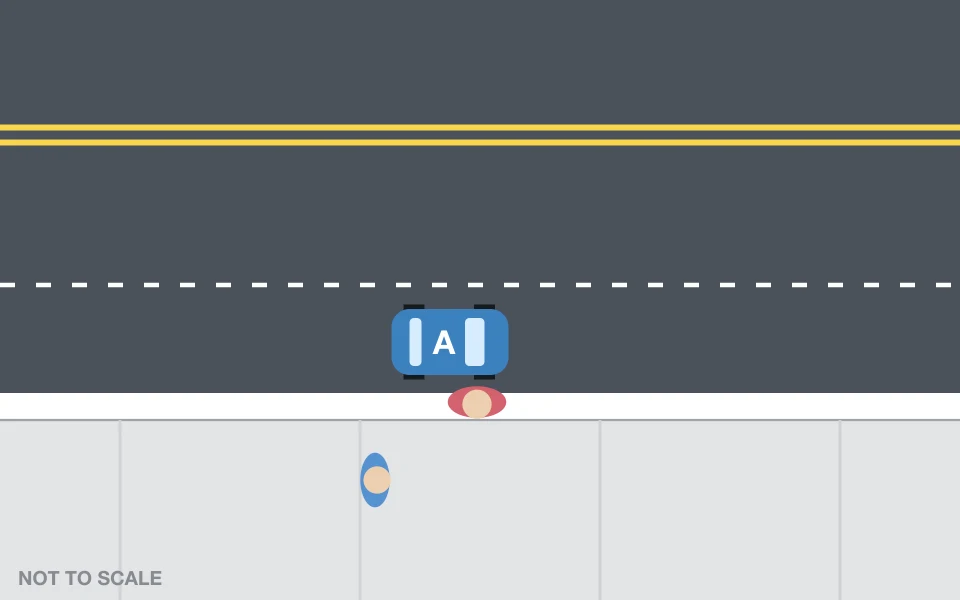
A passenger is getting out beside a white curb. What stopping use is permitted?
Answer: Stop only for the time needed to unload the passenger.
A white curb is for brief passenger pickup or drop-off, not ordinary long-term parking.
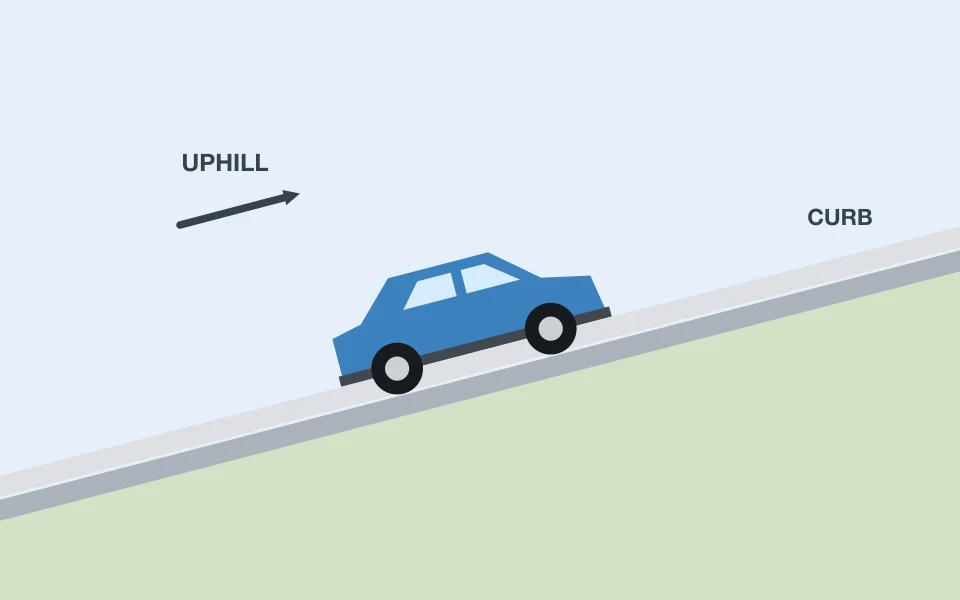
When parking facing uphill beside a curb, where should the front wheels point?
Answer: Away from the curb.
For uphill parking with a curb, turning away allows the curb to help catch the vehicle if it rolls backward; set the parking brake too.
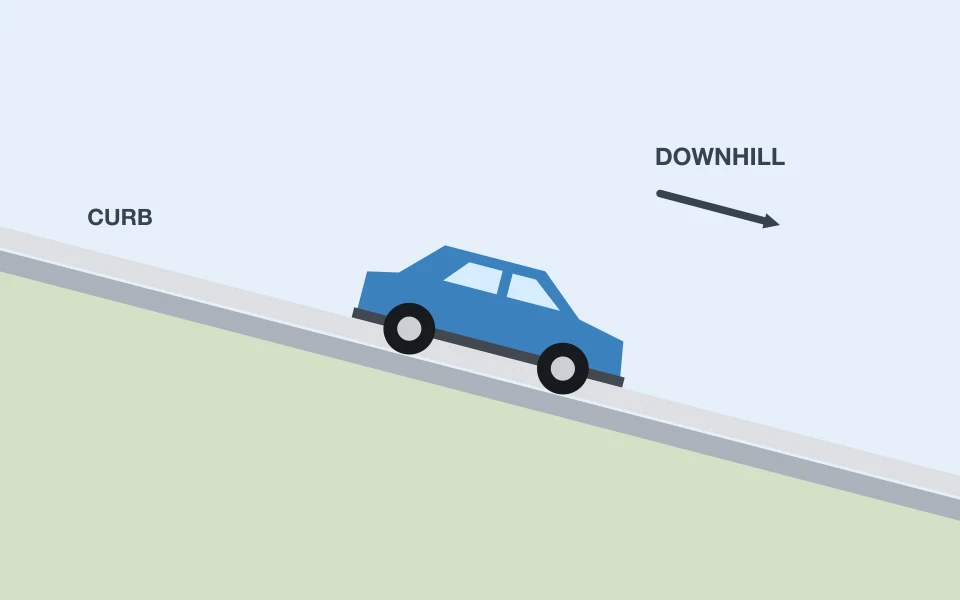
When parking facing downhill beside a curb, where should the front wheels point?
Answer: Toward the curb.
Turning toward the curb directs a rolling vehicle toward the road edge rather than into moving traffic.
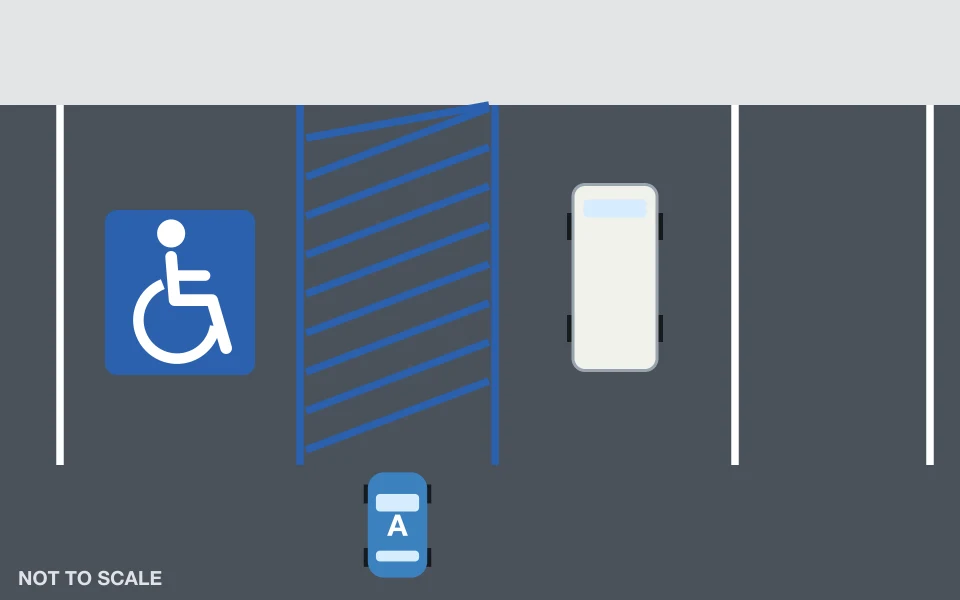
May even an authorized disabled-placard holder park in the striped access aisle beside an accessible space?
Answer: No; keep the access area clear.
The access aisle is not a parking stall; keeping it clear allows people to enter and exit accessible vehicles.
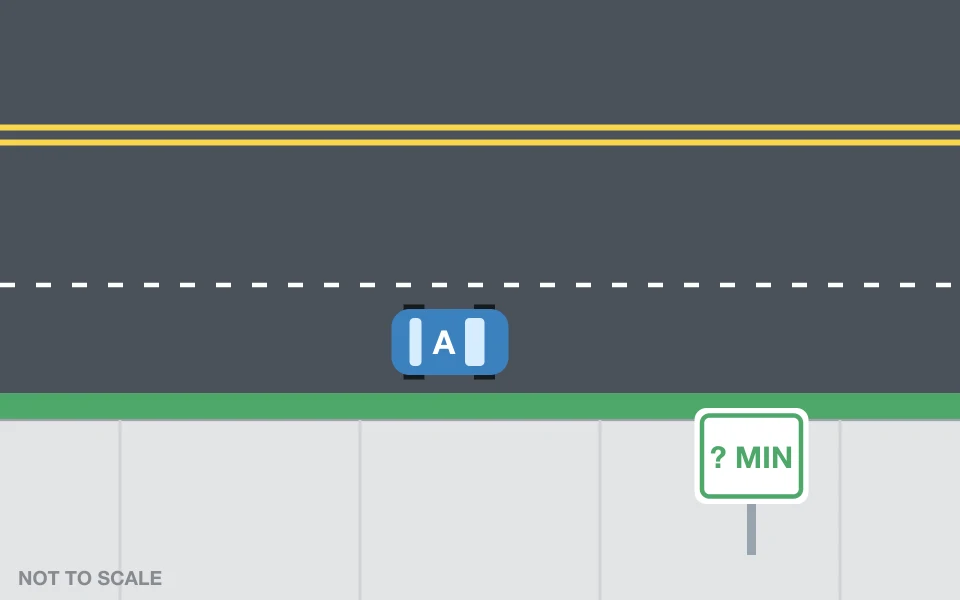
Which statement correctly describes green curb time limits?
Answer: Check the posted or painted time limit and leave within it.
Check the posted or painted time limit and leave within it.
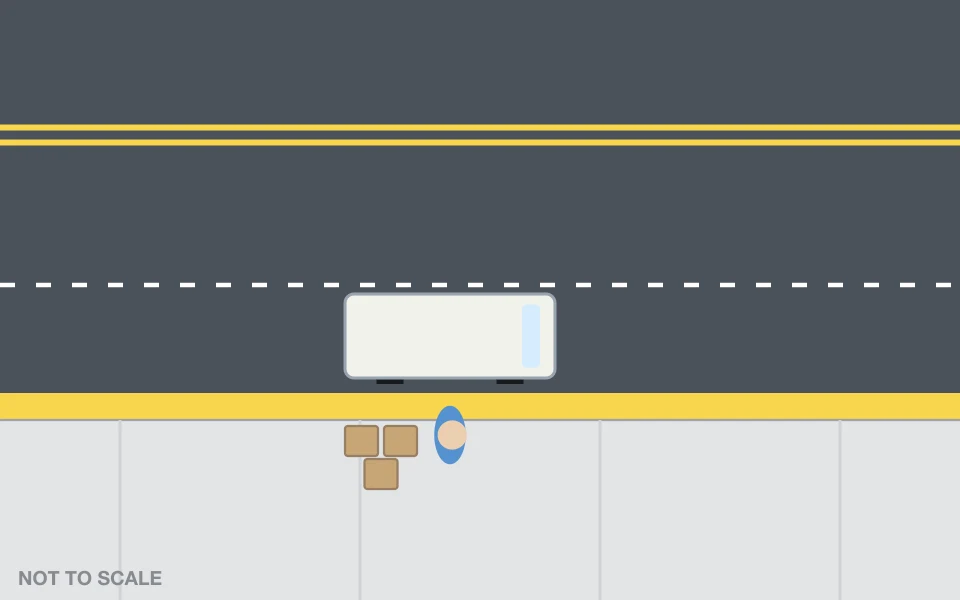
Which statement correctly describes yellow curb loading?
Answer: Use it for permitted passenger or freight loading within the posted time; noncommercial drivers usually stay with the vehicle.
Use it for permitted passenger or freight loading within the posted time; noncommercial drivers usually stay with the vehicle.
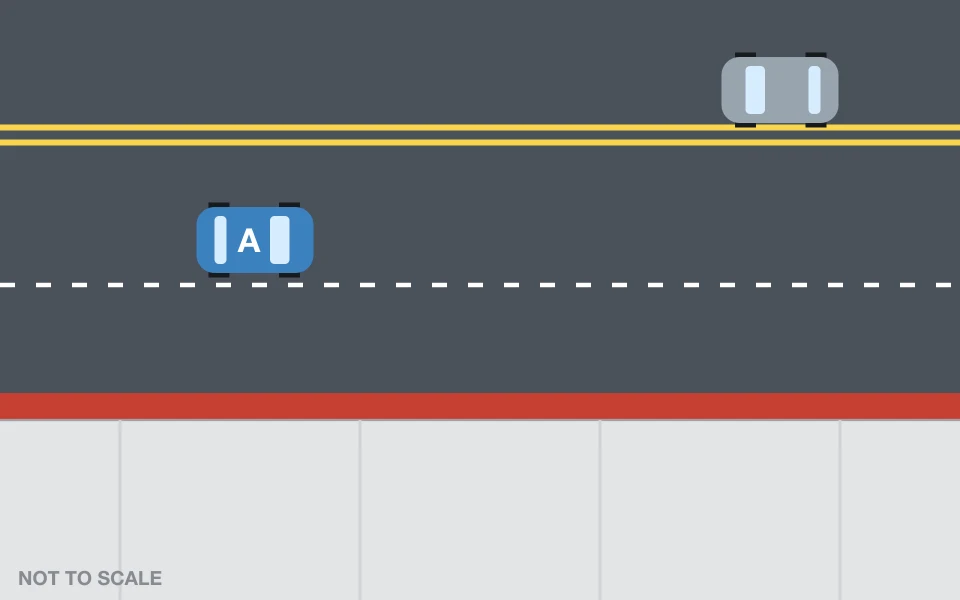
Which statement correctly describes red curb restrictions?
Answer: An ordinary passenger car must not stop, stand, or park there.
An ordinary passenger car must not stop, stand, or park there.
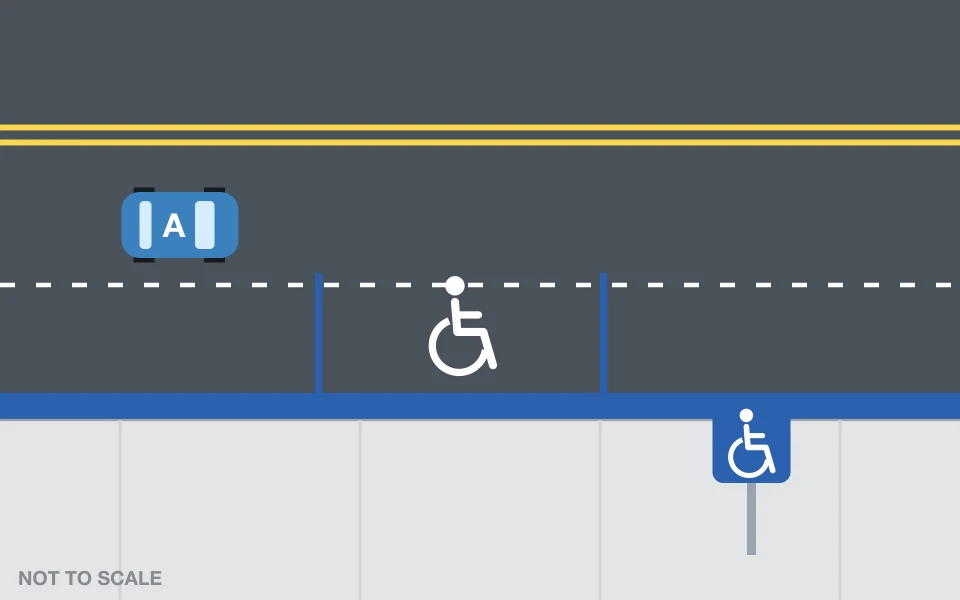
Which statement correctly describes blue accessible parking?
Answer: Use requires qualifying disabled-person authorization, such as a valid special placard or plate.
Use requires qualifying disabled-person authorization, such as a valid special placard or plate.
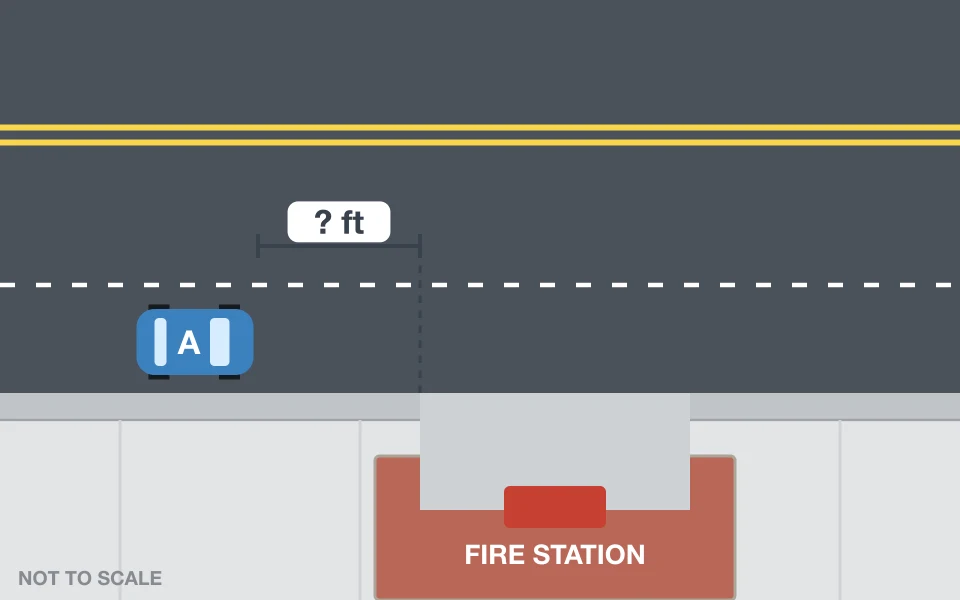
Which statement correctly describes fire station driveway parking clearance?
Answer: Do not park within fifteen feet of a fire station driveway under the listed rule.
Do not park within fifteen feet of a fire station driveway under the listed rule.
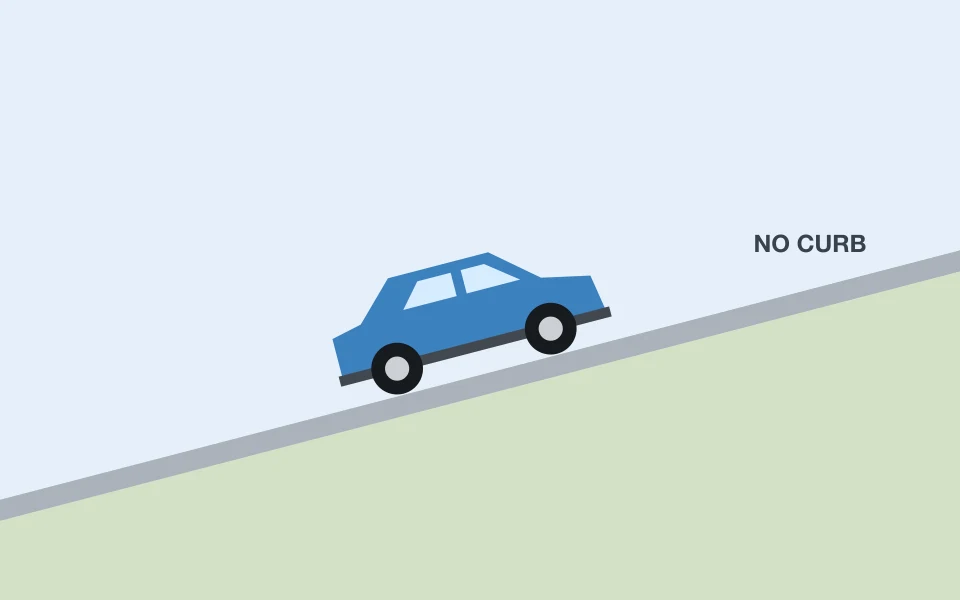
Which statement correctly describes hill parking without a curb?
Answer: Turn the wheels right so a rolling vehicle moves away from the road center.
Turn the wheels right so a rolling vehicle moves away from the road center.
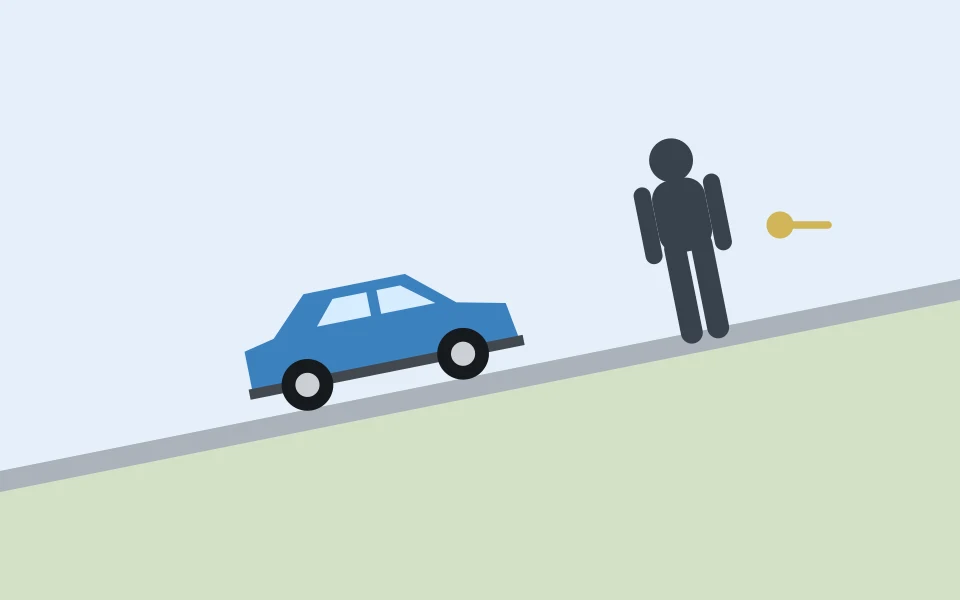
Which statement correctly describes securing a parked vehicle on a hill?
Answer: Set the parking brake and select Park, or an appropriate gear in a manual vehicle.
Set the parking brake and select Park, or an appropriate gear in a manual vehicle.
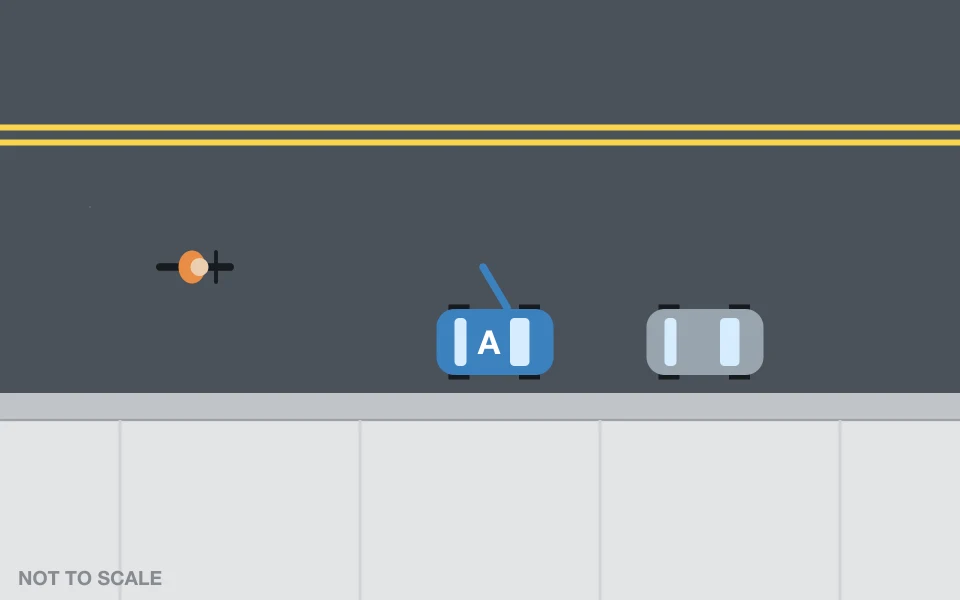
Which statement correctly describes opening a door into traffic?
Answer: Check for passing cars, bicycles, and motorcycles before opening the door.
Check for passing cars, bicycles, and motorcycles before opening the door.
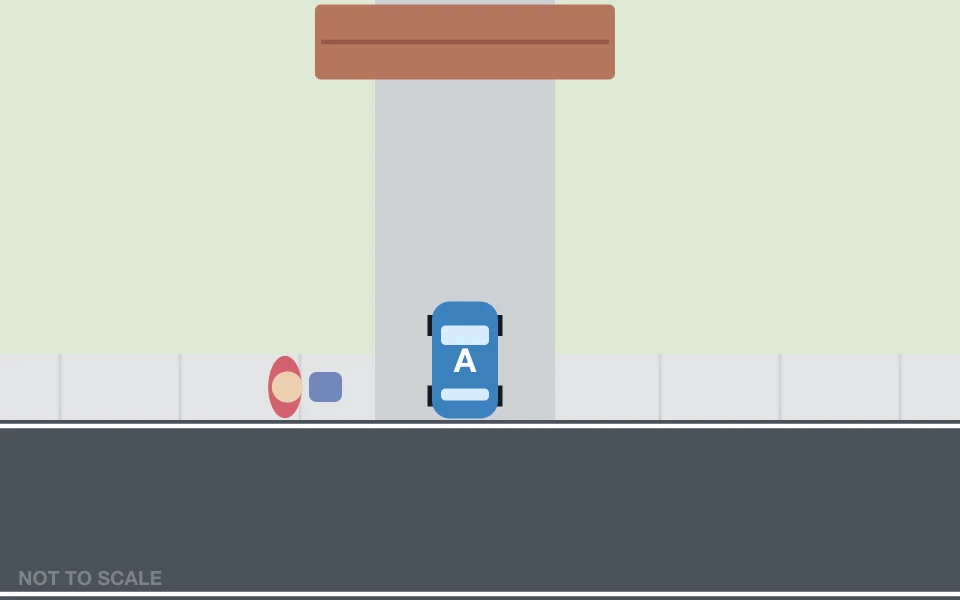
Which statement correctly describes blocking a sidewalk or driveway?
Answer: Do not park on or partly obstruct a sidewalk or block a driveway.
Do not park on or partly obstruct a sidewalk or block a driveway.
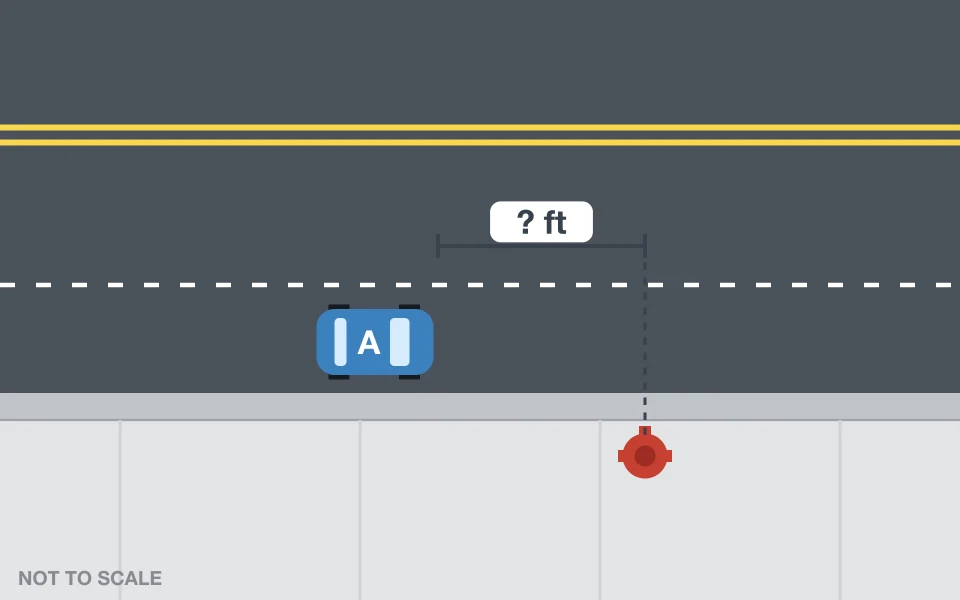
Which statement correctly describes fire hydrant parking clearance?
Answer: Keep at least 15 feet clear of a fire hydrant under the ordinary parking rule.
Keep at least 15 feet clear of a fire hydrant under the ordinary parking rule.
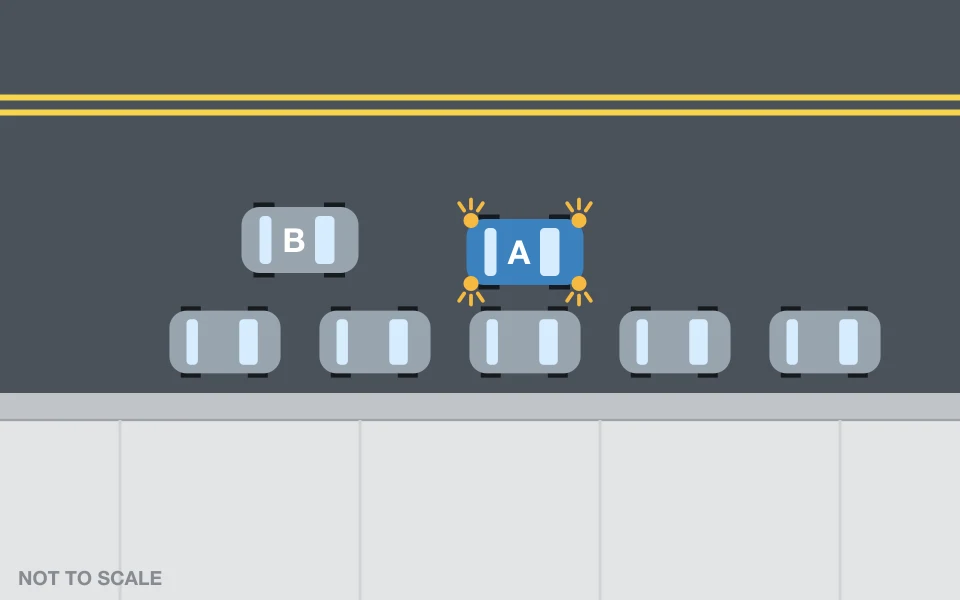
Which statement correctly describes double parking?
Answer: Do not park beside an already parked vehicle and block the travel lane.
Do not park beside an already parked vehicle and block the travel lane.
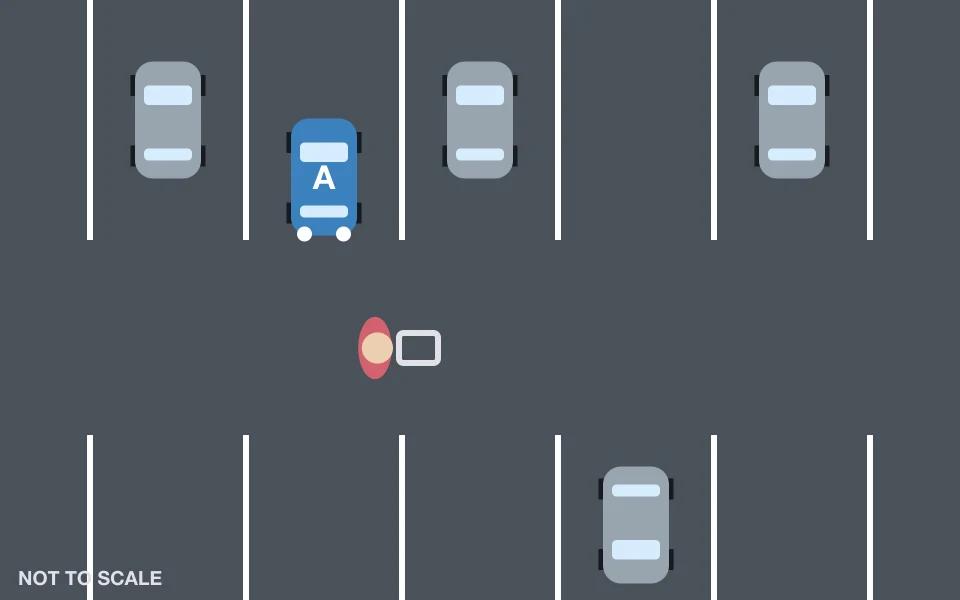
Which statement correctly describes controlled reversing?
Answer: Reverse smoothly at a safe speed while continuing to watch behind.
Reverse smoothly at a safe speed while continuing to watch behind.
DriveRoad is an independent study aid. It is not affiliated with or endorsed by the California DMV, and these pages are not the official exam. Rules change; confirm details in the official California Driver’s Handbook.
© 2026 Paworld Labs LLC. Questions, explanations and illustrations are original to DriveRoad. Personal study use is welcome; reuse needs permission. Content use and copyright