Stopping at a limit line before a crosswalk
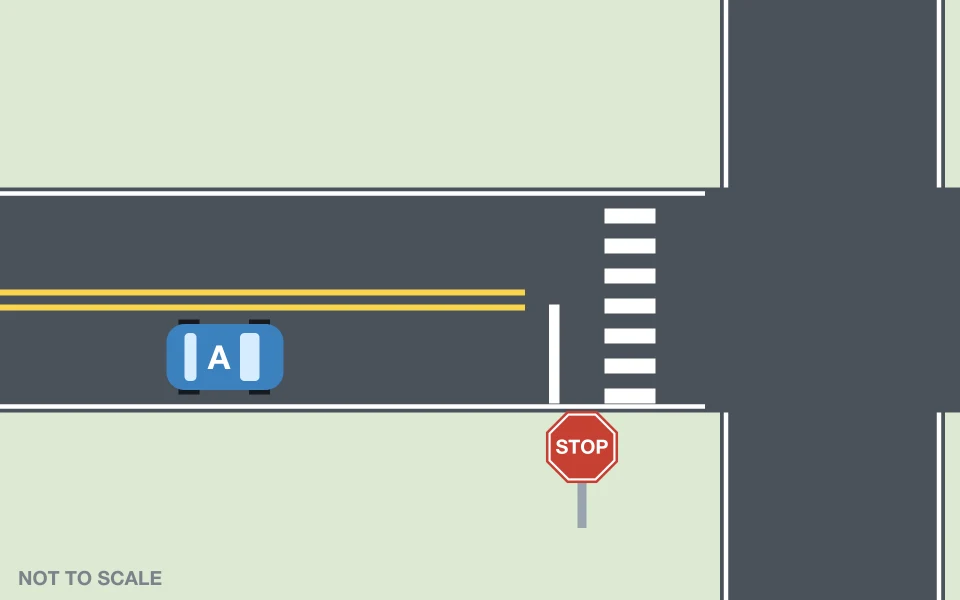
A stop line is marked before a crosswalk at a STOP sign. Where must the vehicle stop?
Answer: Before the stop line.
The stop line fixes the stopping point; pedestrians must still have room to cross.
 DriveRoad
These 27 points cover road signs, lane lines and pavement markings. Each one pairs a California Class C practice question with its answer, a short explanation and an original diagram, taken from the DriveRoad iPhone app.
A stop line is marked before a crosswalk at a STOP sign. Where must the vehicle stop?
Answer: Before the stop line.
The stop line fixes the stopping point; pedestrians must still have room to cross.
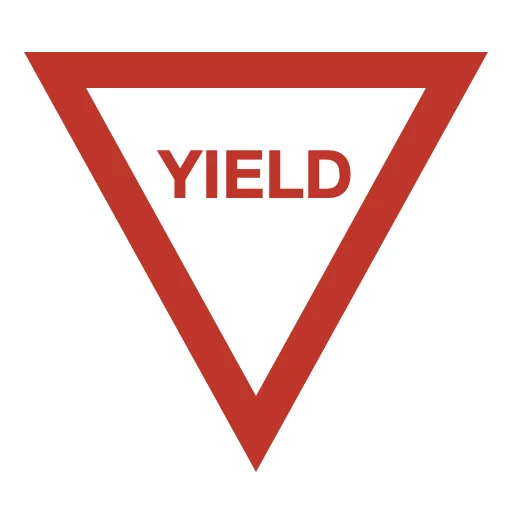
What action does a YIELD sign require when other road users have priority?
Answer: Slow and stop when needed to let others go first.
A yield control requires giving conflicting road users space before proceeding.
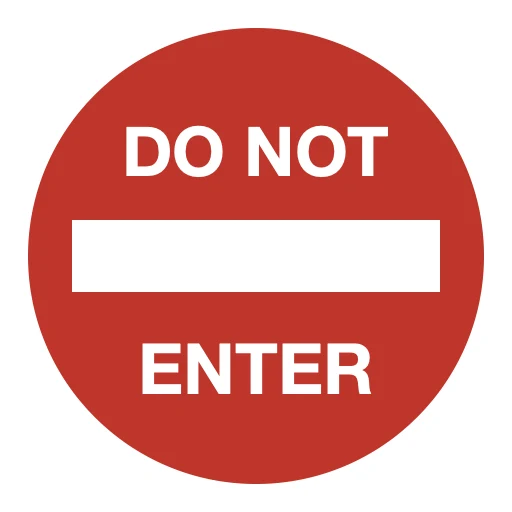
An entrance displays DO NOT ENTER. Which route choice respects that sign?
Answer: Use another permitted entrance.
The restriction applies to entry from the direction facing the sign, not only when traffic is present.

What is the purpose of a diamond-shaped roadside warning sign?
Answer: Warn about a road condition or hazard ahead.
Warning signs tell drivers to anticipate a condition; they do not create priority or a parking permission.
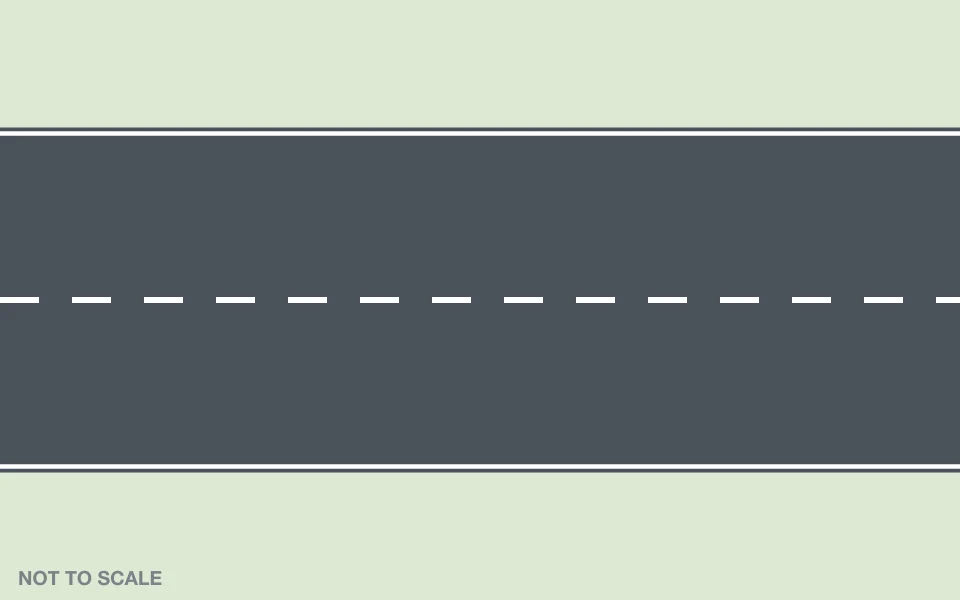
What do broken white lines between two traffic lanes separate?
Answer: Separate lanes carrying traffic in the same direction.
Broken white markings divide same-direction lanes; a lane change still requires checking and signaling.
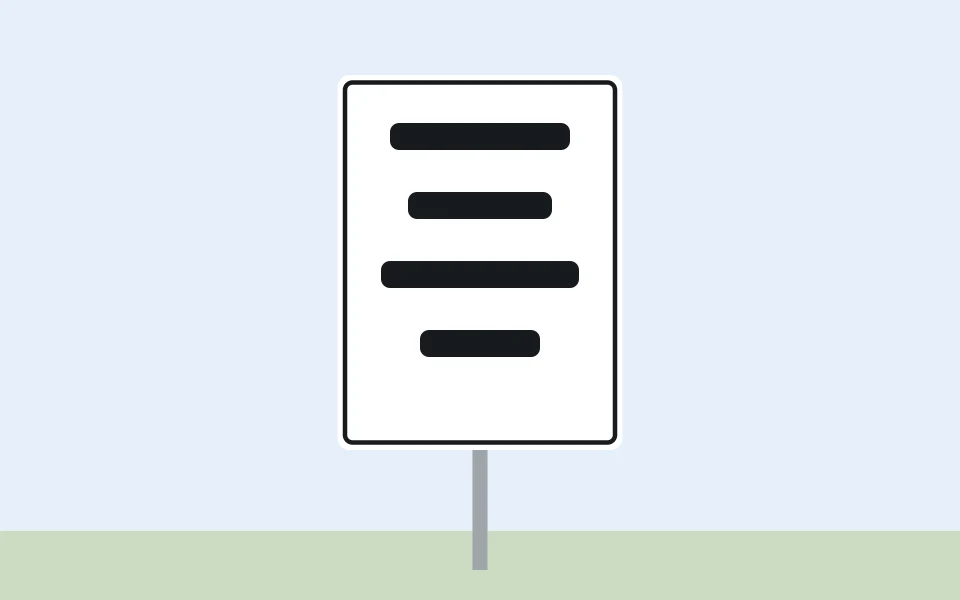
Which statement correctly describes white rectangular regulatory signs?
Answer: They communicate rules a driver must follow.
They communicate rules a driver must follow.
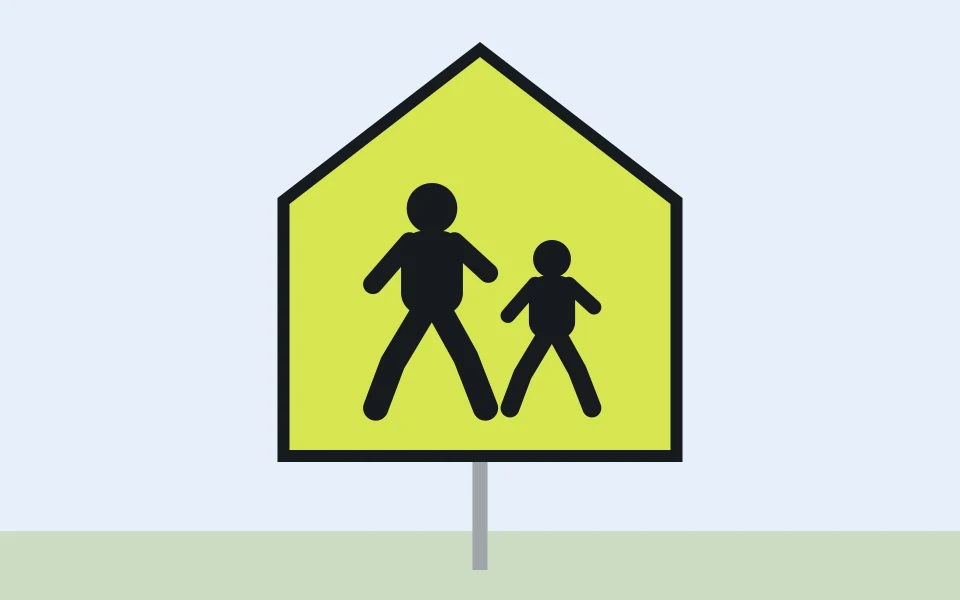
Which statement correctly describes five-sided school signs?
Answer: The sign indicates a school area where children may cross.
The sign indicates a school area where children may cross.
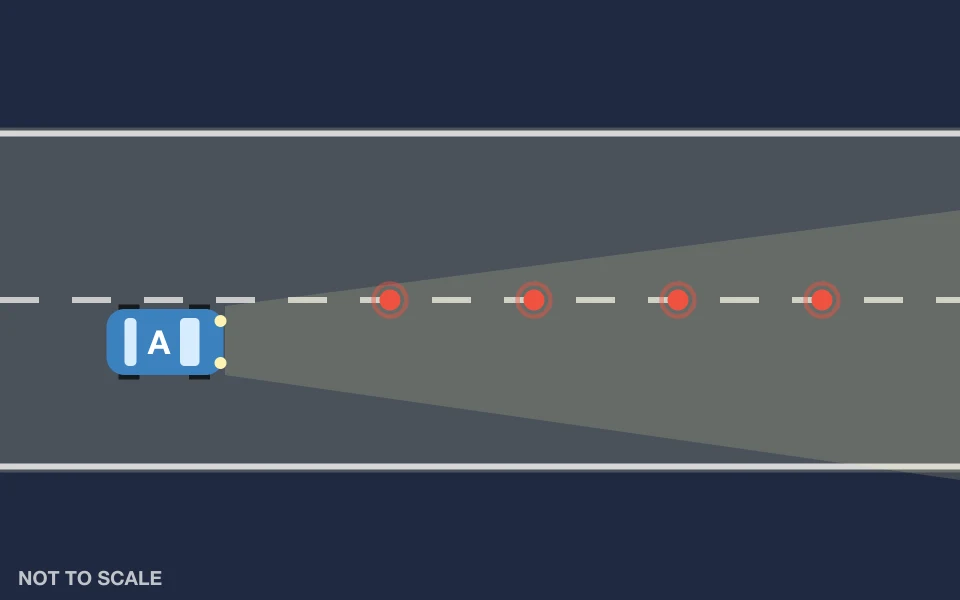
Which statement correctly describes red road reflectors facing a driver?
Answer: At night they can warn that the vehicle is traveling the wrong way.
At night they can warn that the vehicle is traveling the wrong way.
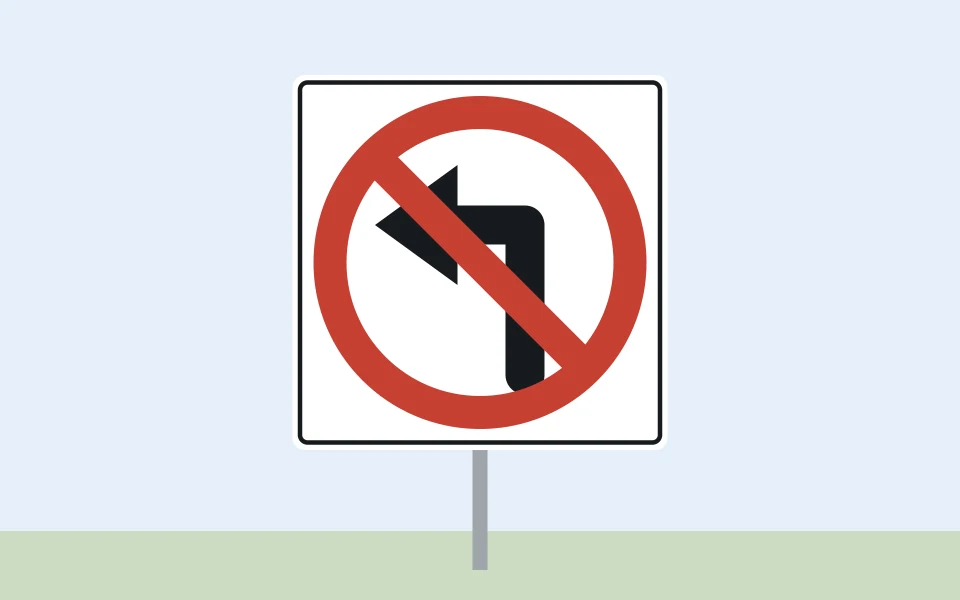
Which statement correctly describes a red prohibition circle and slash?
Answer: The pictured action is prohibited.
The pictured action is prohibited.
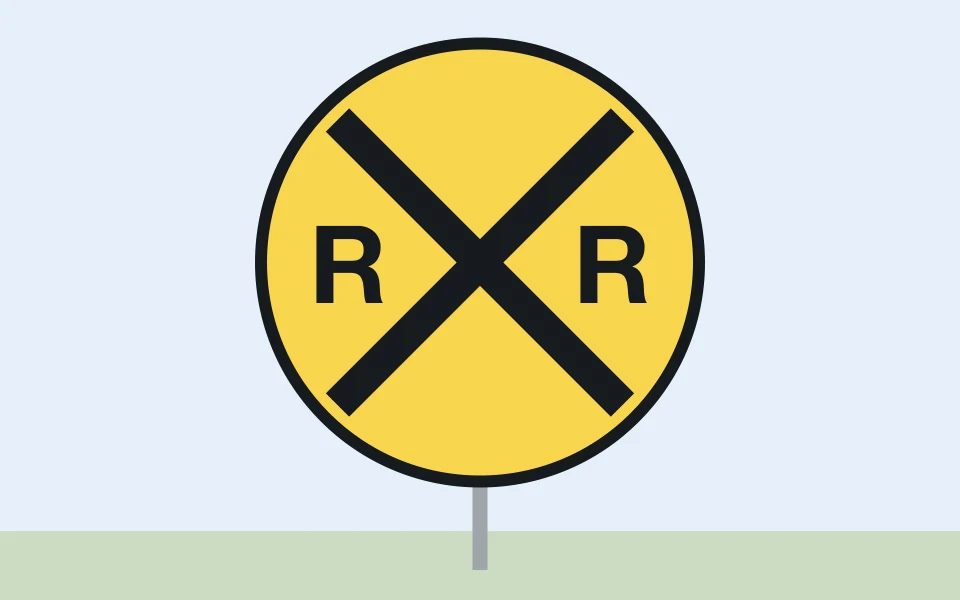
Which statement correctly describes circular railroad warning signs?
Answer: They warn of an approaching railroad crossing.
They warn of an approaching railroad crossing.
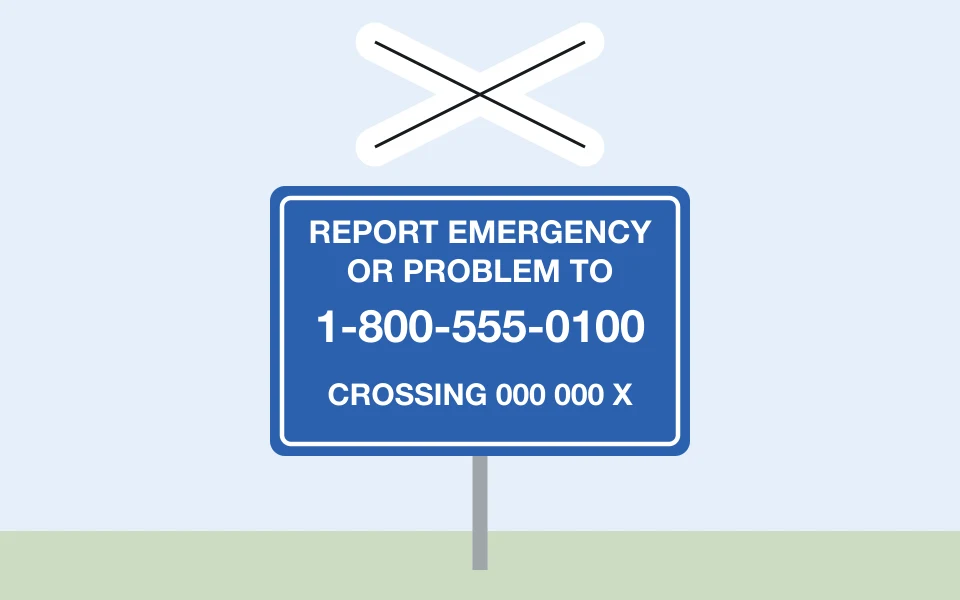
Which statement correctly describes railroad emergency information signs?
Answer: A posted emergency number and crossing identifier help report a blocked track.
A posted emergency number and crossing identifier help report a blocked track.
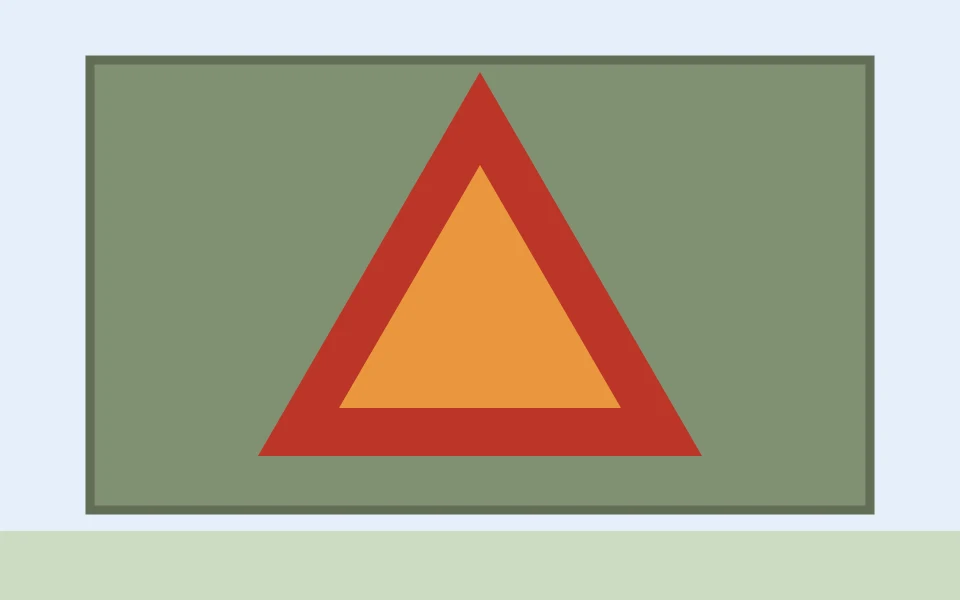
Which statement correctly describes slow-moving vehicle emblems?
Answer: An orange-and-red triangle can identify a vehicle that moves slowly.
An orange-and-red triangle can identify a vehicle that moves slowly.
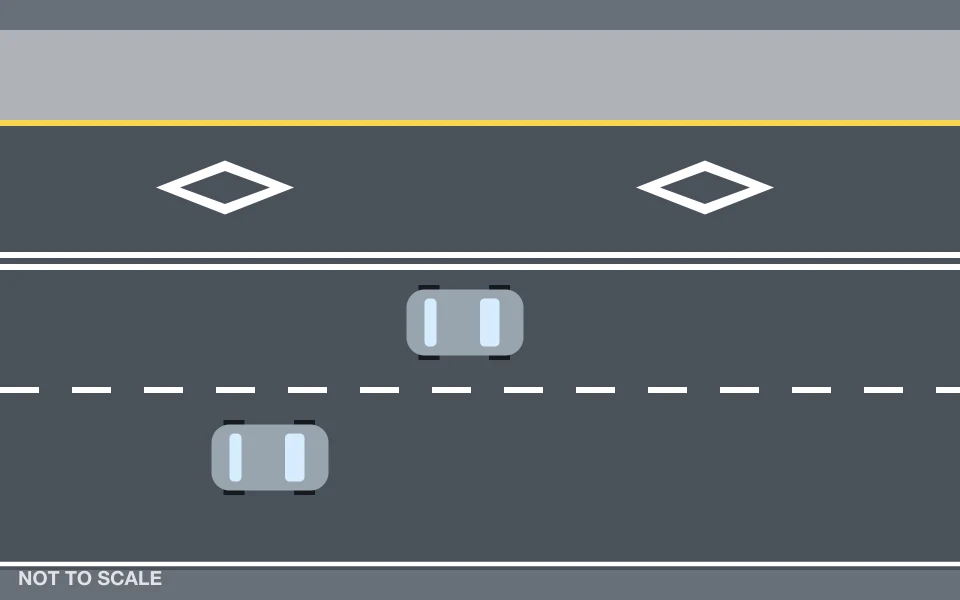
Which statement correctly describes HOV lane pavement symbols?
Answer: A diamond can mark a preferential lane whose posted occupancy rules must be checked.
A diamond can mark a preferential lane whose posted occupancy rules must be checked.
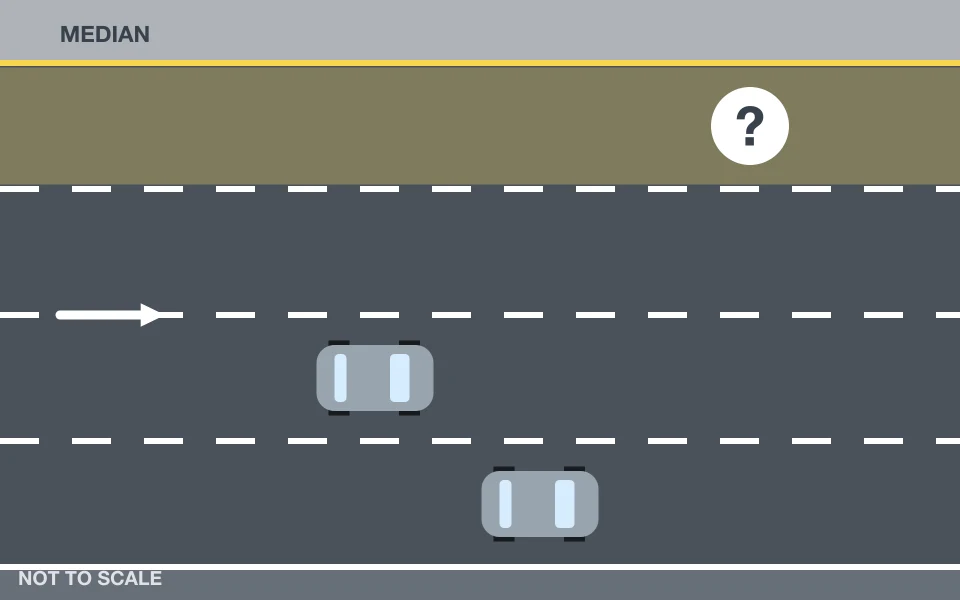
Which statement correctly describes lane numbering?
Answer: The far-left lane is called lane number one.
The far-left lane is called lane number one.
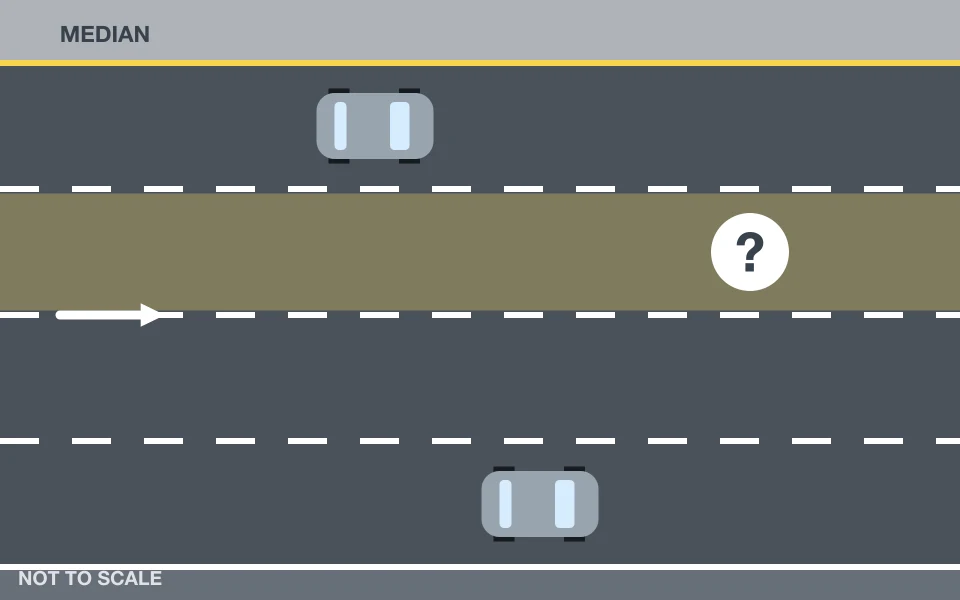
Which statement correctly describes the second numbered lane?
Answer: Lane two is immediately to the right of lane one.
Lane two is immediately to the right of lane one.
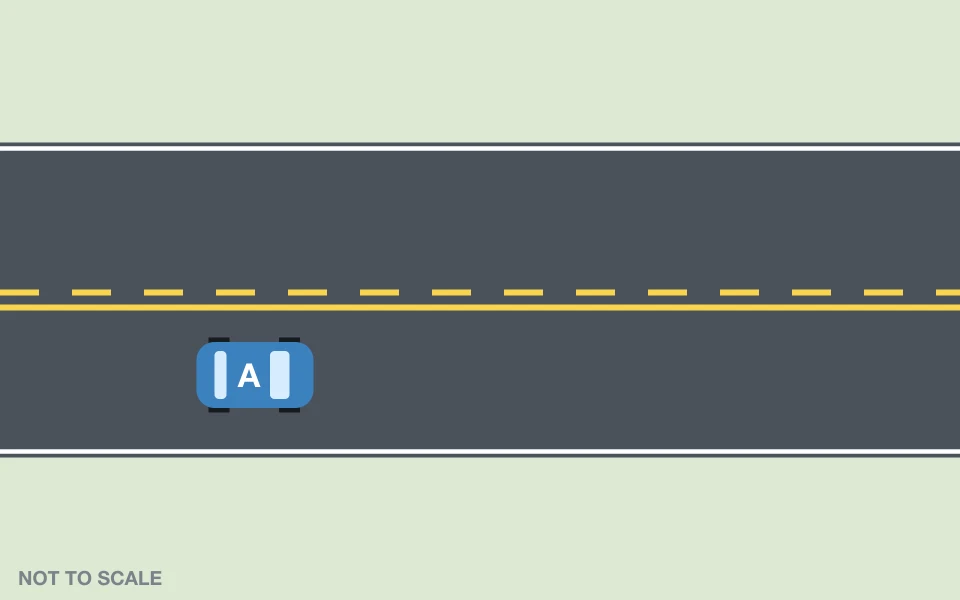
Which statement correctly describes a solid yellow line on the driver's side?
Answer: On a two-way road with one lane each way, do not cross that solid line to pass.
On a two-way road with one lane each way, do not cross that solid line to pass.
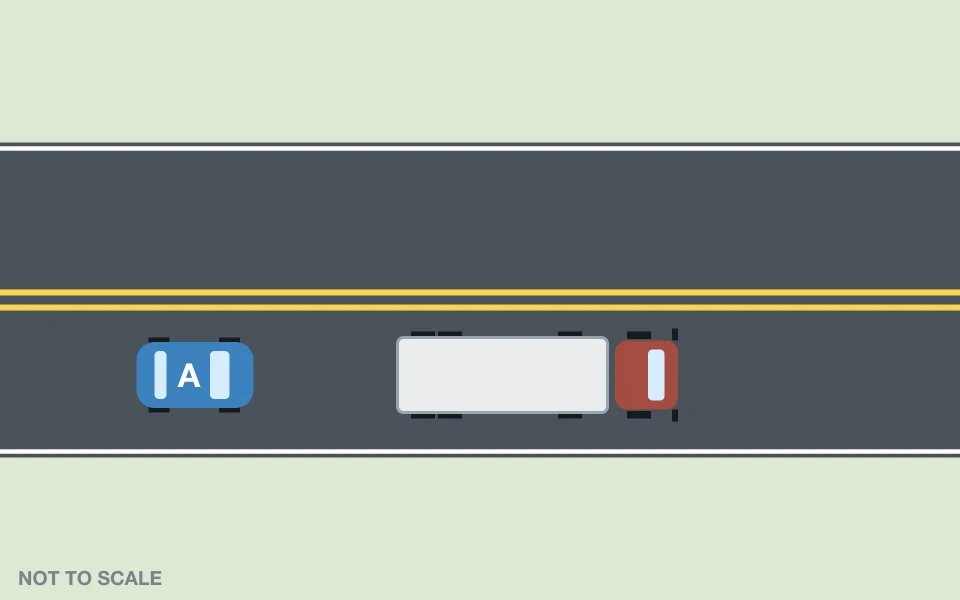
Which statement correctly describes double yellow center lines and passing?
Answer: They must not be crossed for an ordinary passing maneuver.
They must not be crossed for an ordinary passing maneuver.
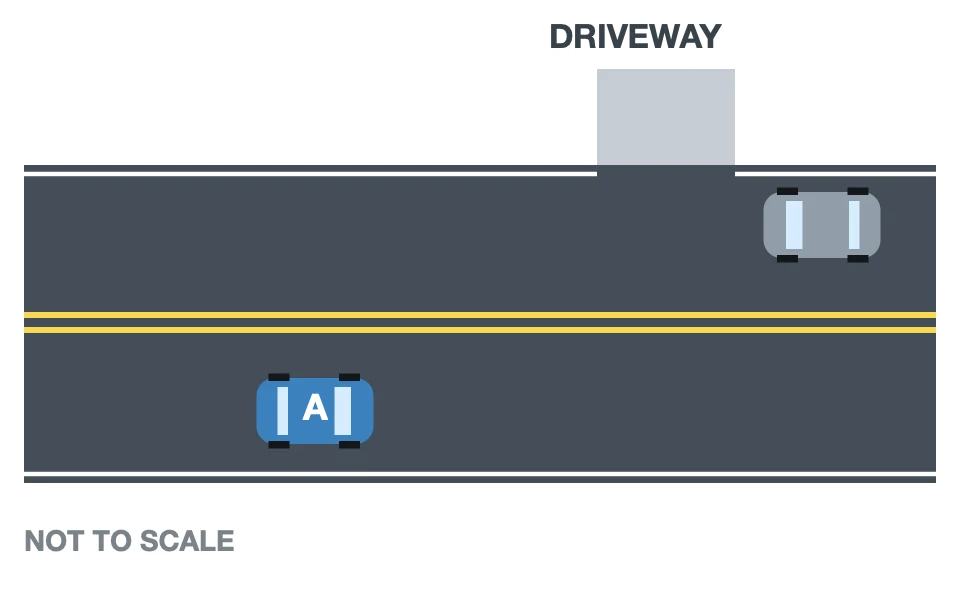
Which statement correctly describes a driveway turn across one set of double solid yellow lines?
Answer: A safe left turn into or out of a driveway can be permitted across a single pair.
One set of double solid yellow lines normally separates opposing traffic and prohibits passing. A left turn into or out of a driveway is an exception when safe and otherwise lawful; yield to approaching traffic. Two sets separated by at least two feet are a different marking: cross only at designated openings.
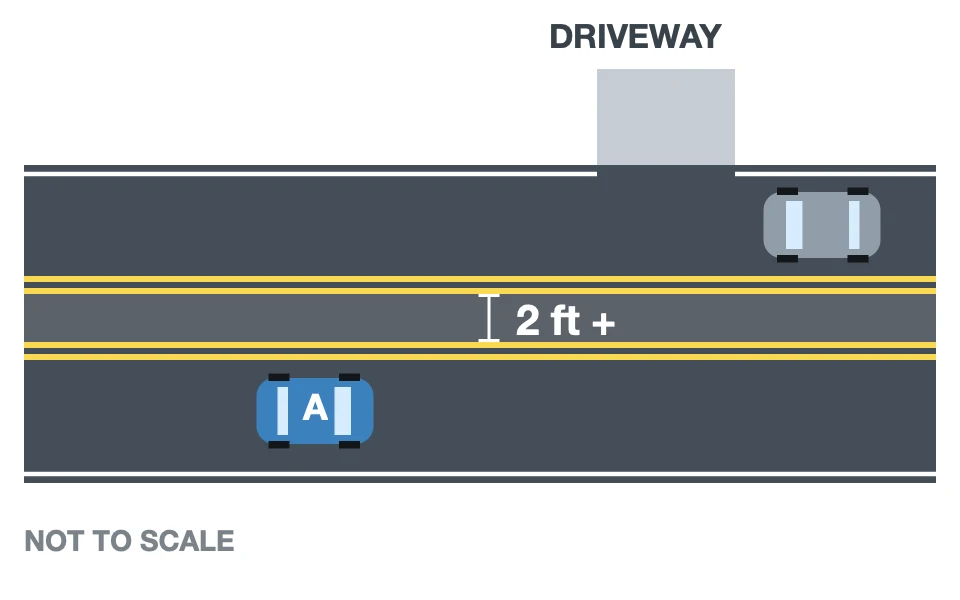
Which statement correctly describes widely spaced pairs of double yellow lines?
Answer: Two pairs at least two feet apart form a barrier; use designated openings.
Two pairs at least two feet apart form a barrier; use designated openings.
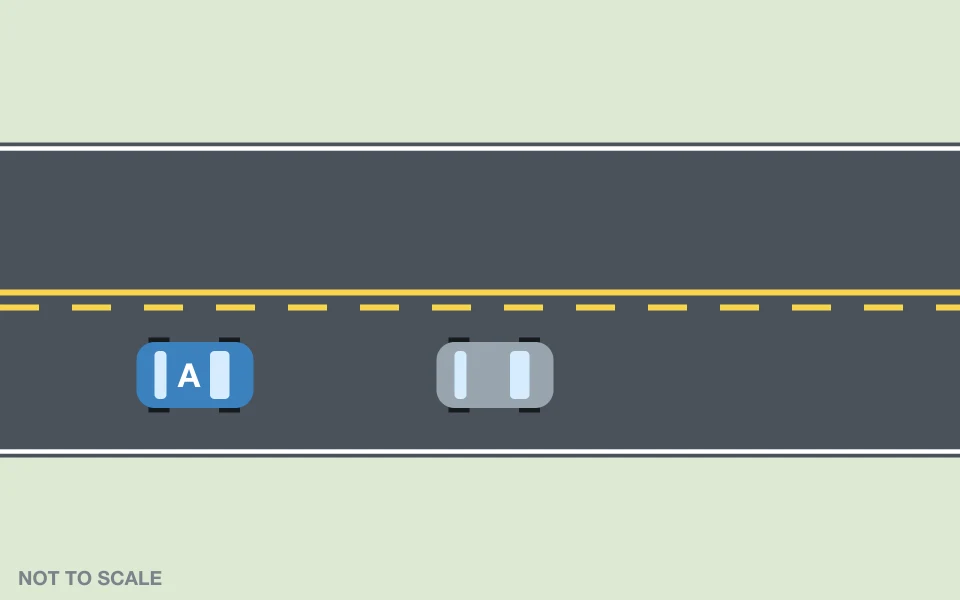
Which statement correctly describes a broken yellow line beside the lane?
Answer: Passing may be allowed from the broken-line side when conditions are safe.
Passing may be allowed from the broken-line side when conditions are safe.
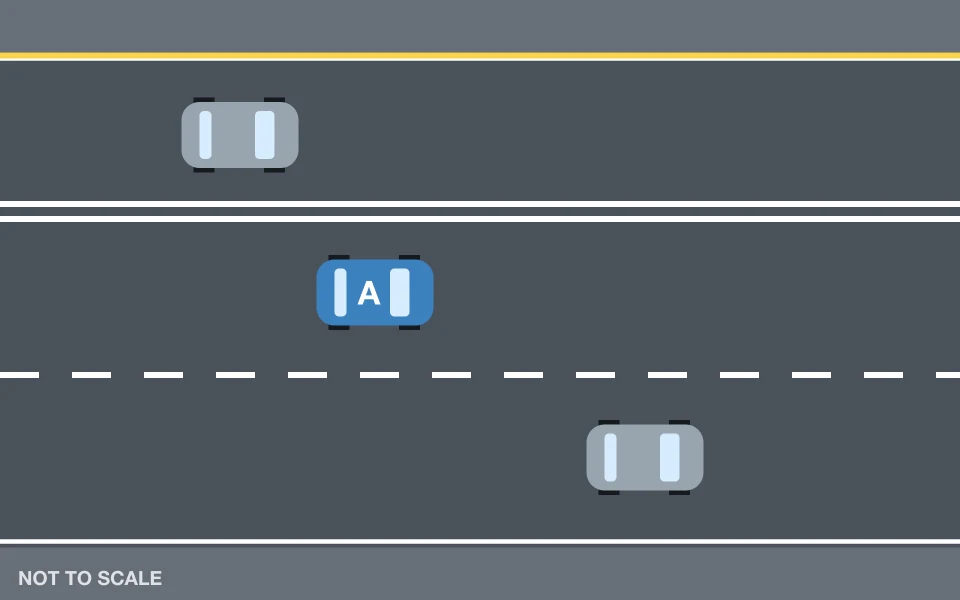
Which statement correctly describes double solid white lane barriers?
Answer: Wait for a permitted broken-line opening rather than crossing the double white lines.
Wait for a permitted broken-line opening rather than crossing the double white lines.
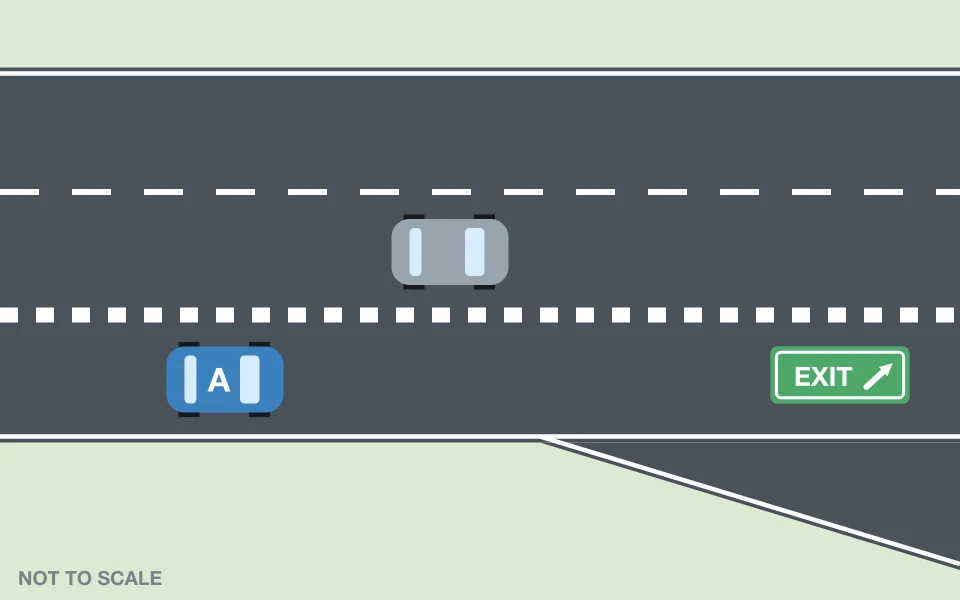
Which statement correctly describes wide dotted white lane-drop markings?
Answer: They can indicate that the lane is ending or becoming an exit.
They can indicate that the lane is ending or becoming an exit.
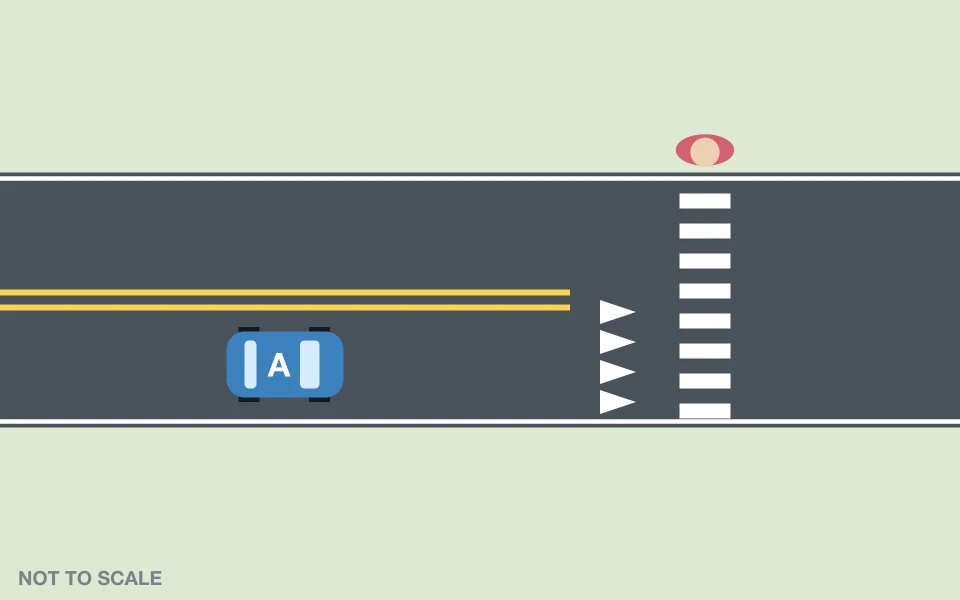
Which statement correctly describes yield-line triangles?
Answer: The row shows where approaching drivers should yield or stop if needed.
The row shows where approaching drivers should yield or stop if needed.
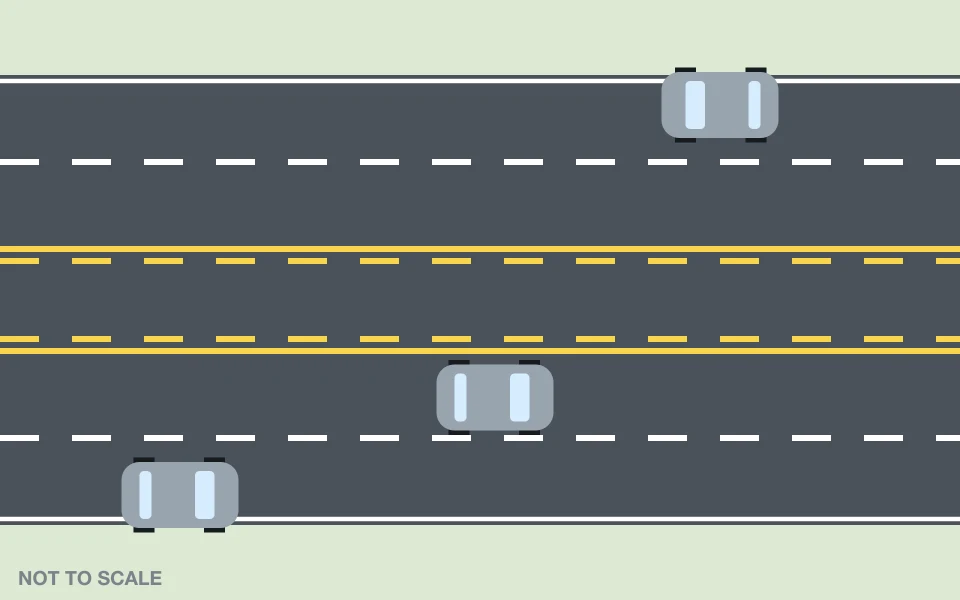
Which statement correctly describes center left-turn lane markings?
Answer: These markings identify a center left-turn lane, with broken inner lines and solid outer lines on both sides.
The lane is for preparing for a left turn or permitted U-turn, not for ordinary through travel or passing. Its boundary has a broken inner line and solid outer line on each side.
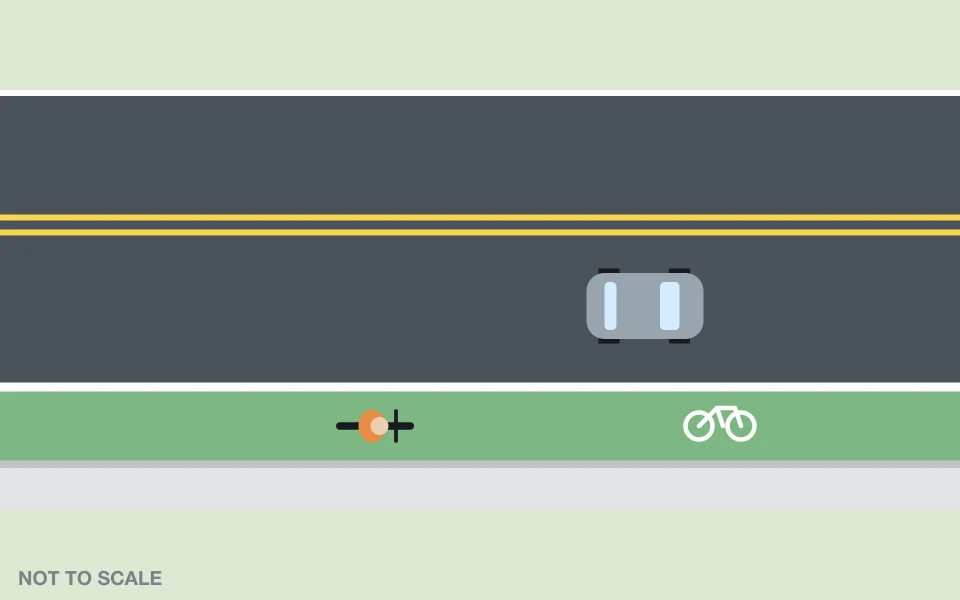
Which statement correctly describes bicycle lane identification?
Answer: Bike lanes are commonly marked beside traffic by a white line and signs, sometimes with green pavement.
Bike lanes are commonly marked beside traffic by a white line and signs, sometimes with green pavement.
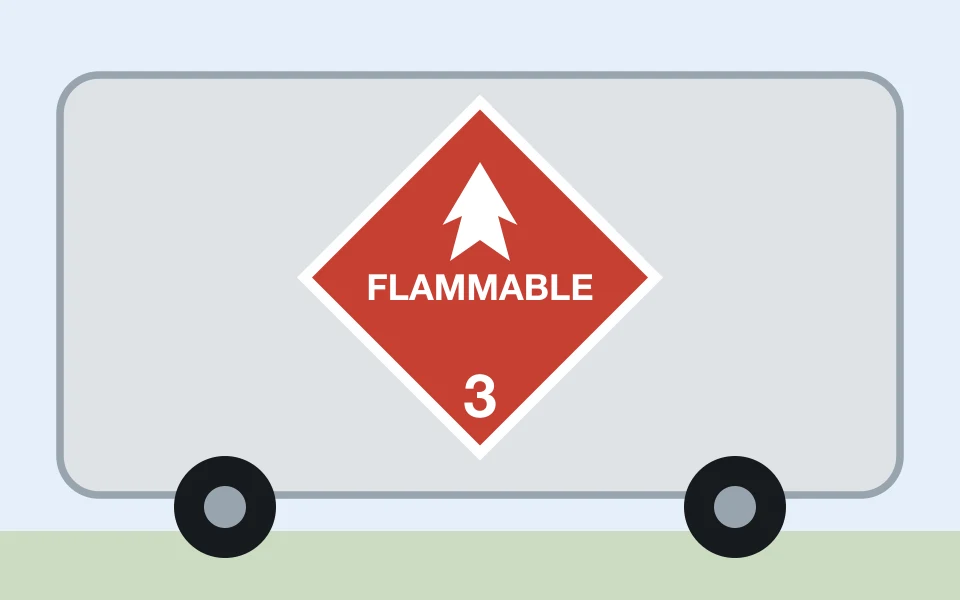
Which statement correctly describes hazardous-load truck placards?
Answer: A Class 3 flammable-liquid placard identifies hazardous cargo; a truck required to display it must stop before an ordinary railroad crossing with no applicable exemption.
A Class 3 flammable-liquid placard identifies hazardous cargo; a truck required to display it must stop before an ordinary railroad crossing with no applicable exemption.
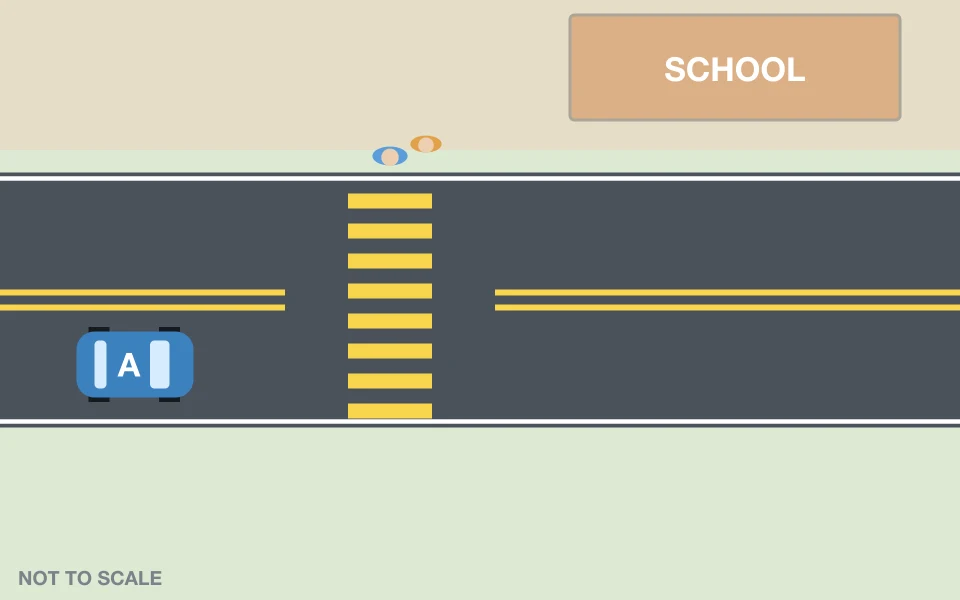
Which statement correctly describes school crossing markings?
Answer: School crossings may use yellow crosswalk lines.
School crossings may use yellow crosswalk lines.
DriveRoad is an independent study aid. It is not affiliated with or endorsed by the California DMV, and these pages are not the official exam. Rules change; confirm details in the official California Driver’s Handbook.
© 2026 Paworld Labs LLC. Questions, explanations and illustrations are original to DriveRoad. Personal study use is welcome; reuse needs permission. Content use and copyright