The Basic Speed Law
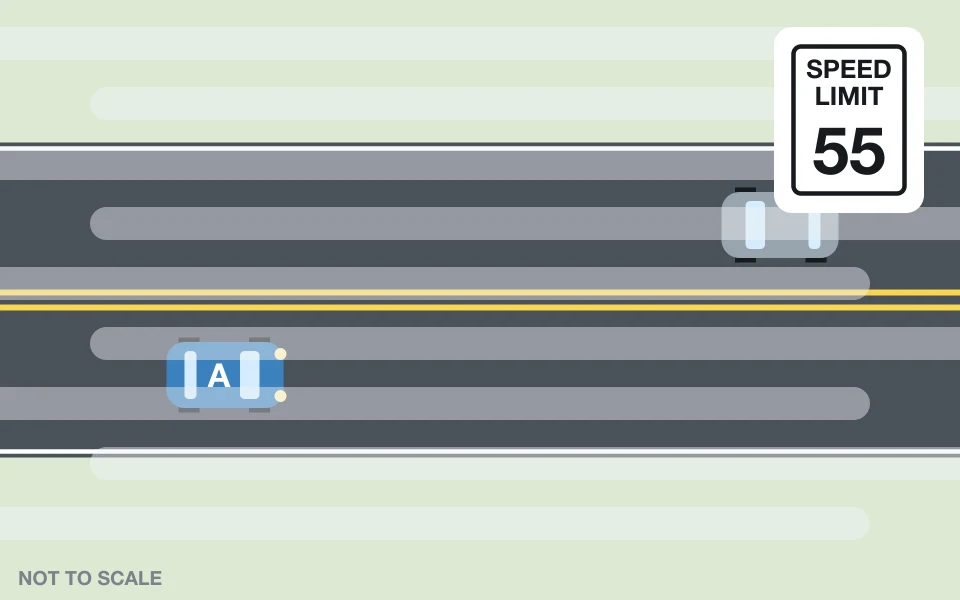
Fog makes the posted 55 mph limit unsafe. How should a driver choose speed?
Answer: Drive slower as conditions require.
A posted limit does not override the duty to choose a speed safe for actual conditions.
 DriveRoad
These 19 points cover speed limits, following distance and driving for conditions. Each one pairs a California Class C practice question with its answer, a short explanation and an original diagram, taken from the DriveRoad iPhone app.
Fog makes the posted 55 mph limit unsafe. How should a driver choose speed?
Answer: Drive slower as conditions require.
A posted limit does not override the duty to choose a speed safe for actual conditions.
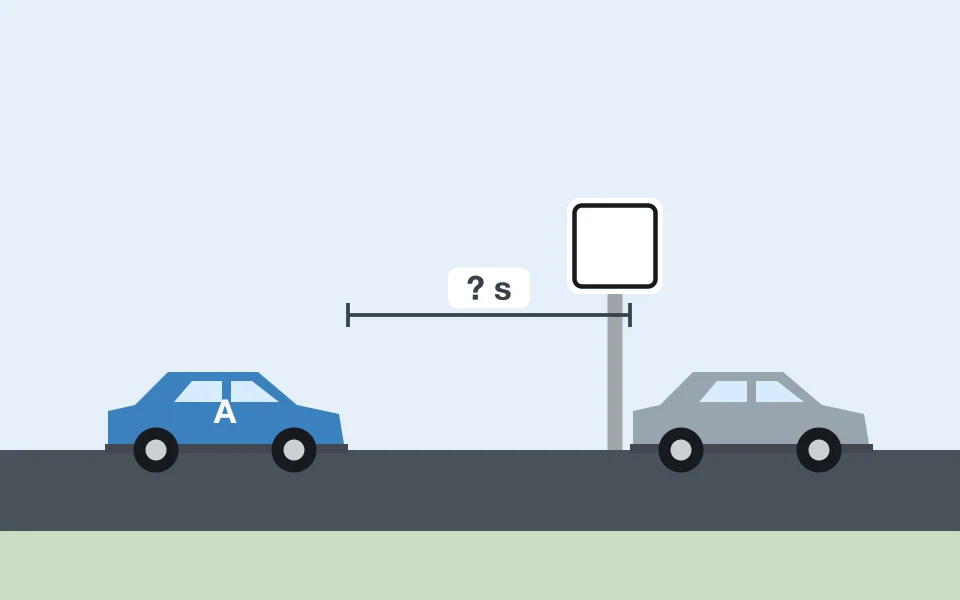
In ordinary good conditions, how should a driver estimate a basic time gap behind another vehicle?
Answer: Count about three seconds behind the vehicle ahead.
A time gap grows with vehicle speed and gives reaction room; adverse conditions need more room.
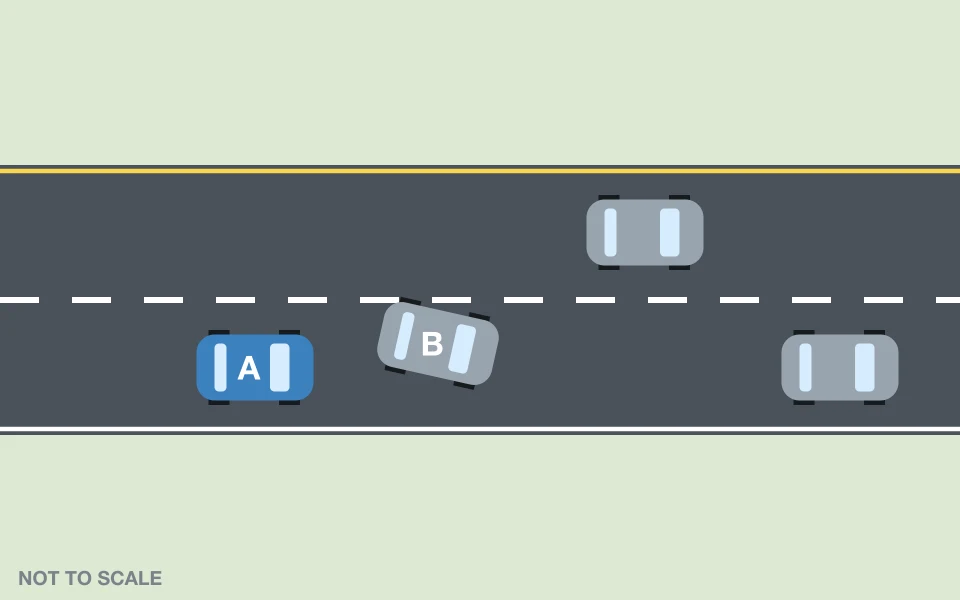
Another vehicle merges too closely ahead. Which response restores space?
Answer: Ease off the accelerator and let the gap grow.
Smoothly giving space restores a margin for braking without competing for the gap.
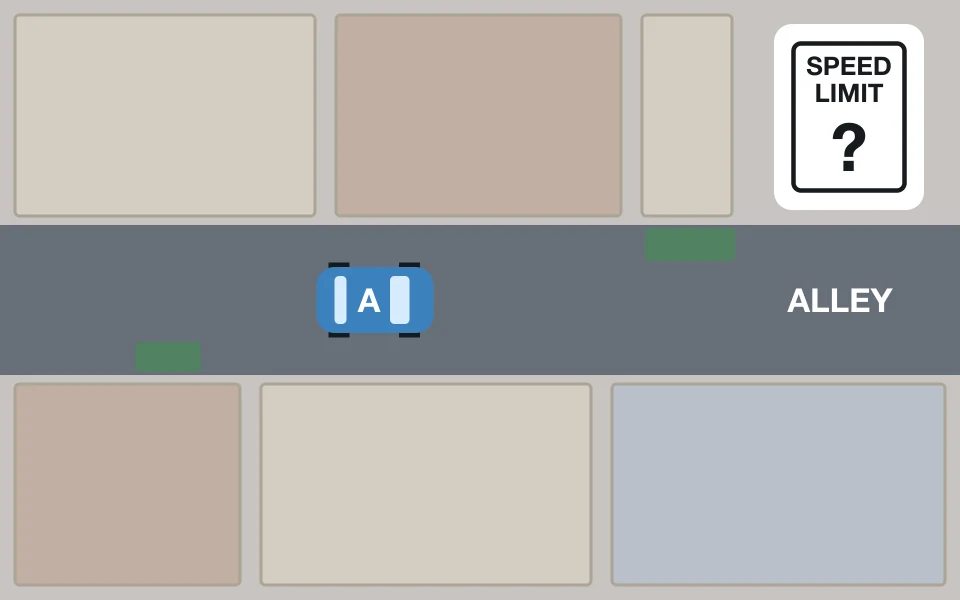
What is the usual speed limit in an alley without a different applicable posted limit?
Answer: 15 mph.
California's default alley limit is 15 mph; conditions can require driving even slower.
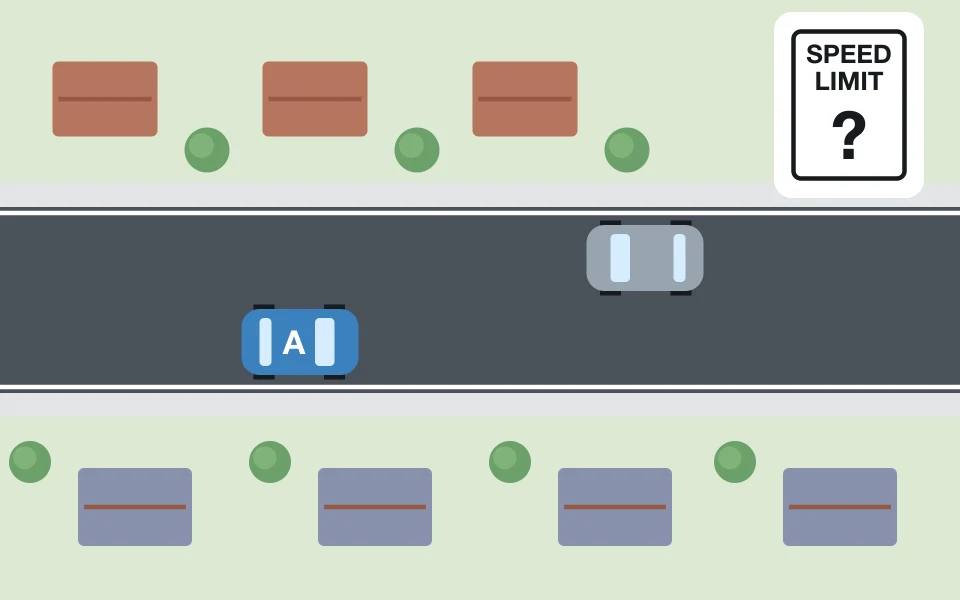
What is the usual residential-district speed limit unless a different limit is posted?
Answer: 25 mph.
The default for business and residential districts is 25 mph unless posted otherwise; it is not a promise that 25 is always safe.
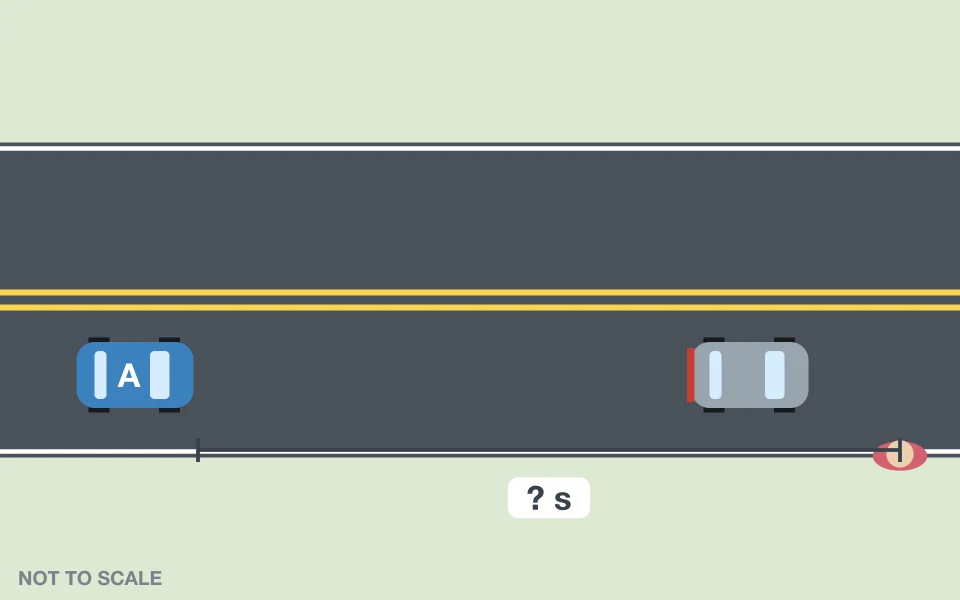
Which statement correctly describes scanning ahead? (Speeds are in mph.)
Answer: Scan at least ten seconds ahead and keep the eyes moving.
Scan at least ten seconds ahead and keep the eyes moving.
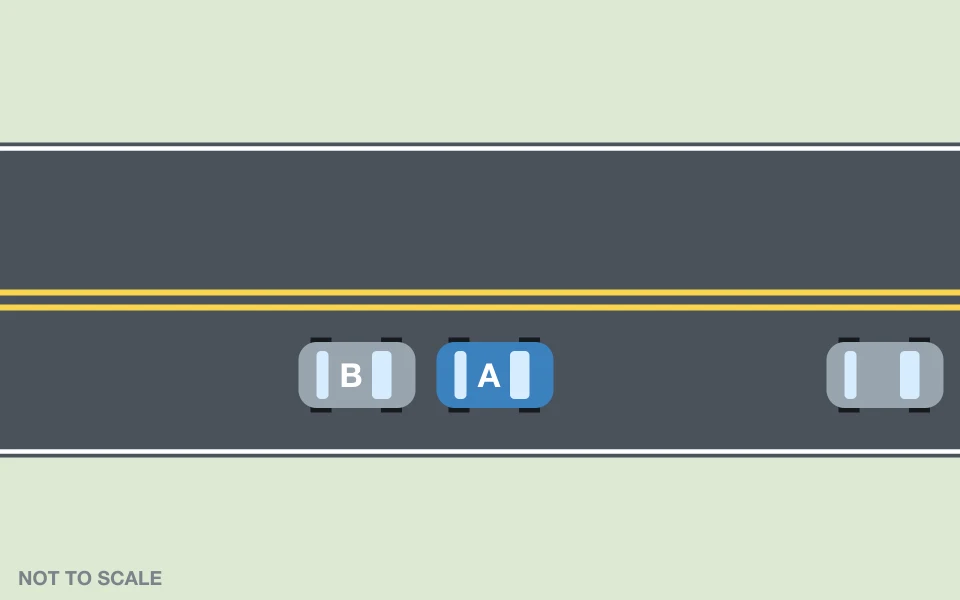
Which statement correctly describes space when being tailgated? (Speeds are in mph.)
Answer: Create more room ahead and let the follower pass when safe.
Create more room ahead and let the follower pass when safe.
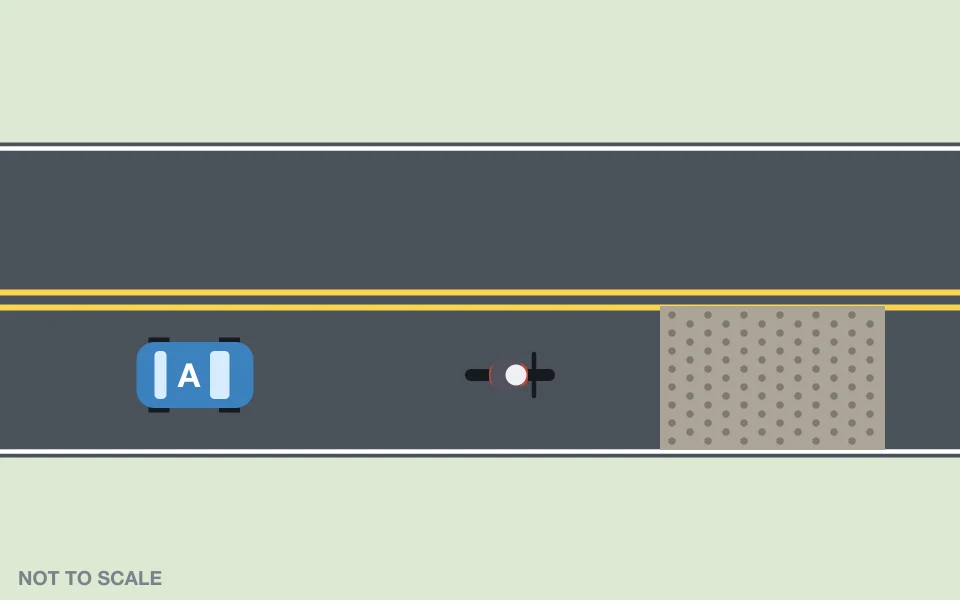
Which statement correctly describes following motorcycles on poor surfaces? (Speeds are in mph.)
Answer: Allow extra room when following a motorcycle over metal grates or gravel.
Allow extra room when following a motorcycle over metal grates or gravel.
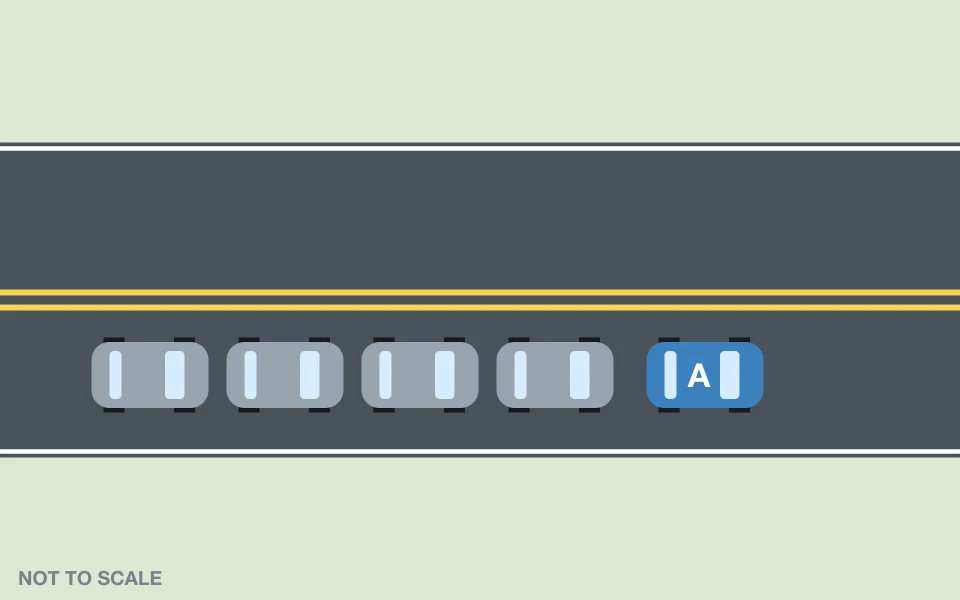
Which statement correctly describes unreasonably slow driving? (Speeds are in mph.)
Answer: Do not obstruct normal reasonable traffic flow by unnecessary slow driving.
Do not obstruct normal reasonable traffic flow by unnecessary slow driving.
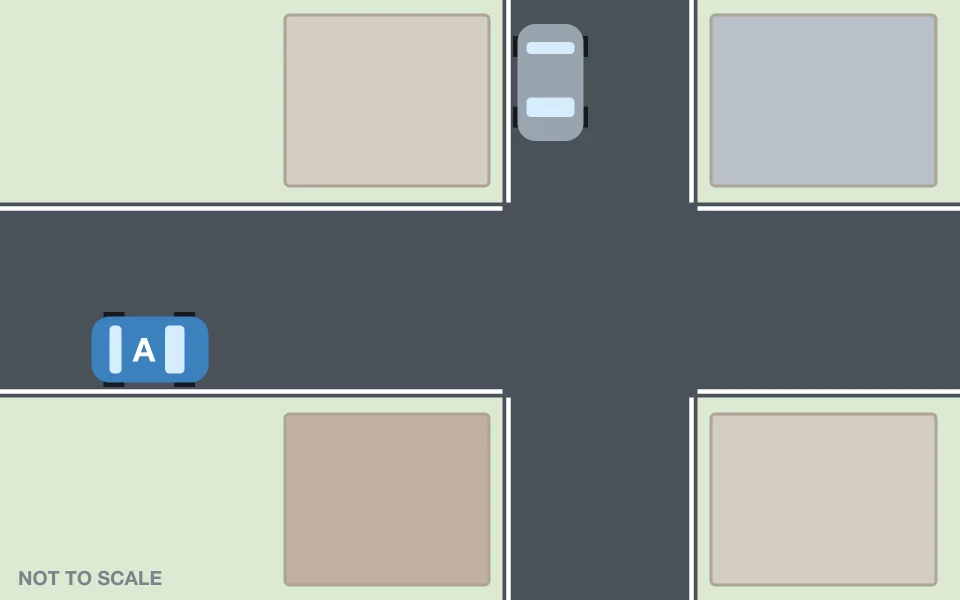
Which statement correctly describes blind intersections? (Speeds are in mph.)
Answer: The prima-facie limit is 15 mph when, during the final 100 feet approaching an uncontrolled intersection, cross traffic cannot be seen clearly for 100 feet; conditions may require an even lower speed.
The prima-facie limit is 15 mph when, during the final 100 feet approaching an uncontrolled intersection, cross traffic cannot be seen clearly for 100 feet; conditions may require an even lower speed.
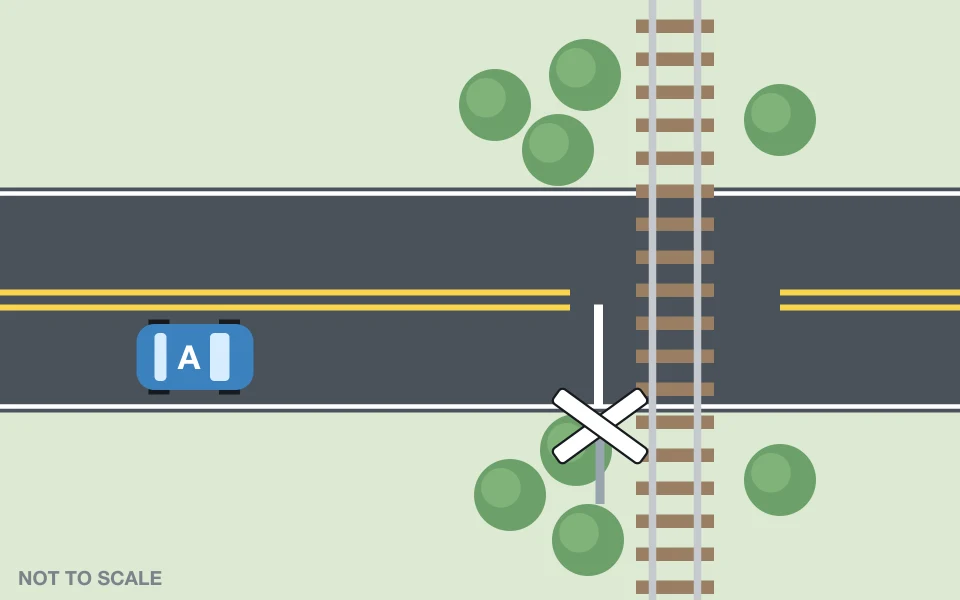
Which statement correctly describes limited-visibility uncontrolled rail crossings? (Speeds are in mph.)
Answer: At an uncontrolled railroad crossing, the 15 mph prima-facie rule applies when the final 100 feet of approach lack a clear 400-foot view along either track direction; obey crossing controls and reduce further when needed.
At an uncontrolled railroad crossing, the 15 mph prima-facie rule applies when the final 100 feet of approach lack a clear 400-foot view along either track direction; obey crossing controls and reduce further when needed.
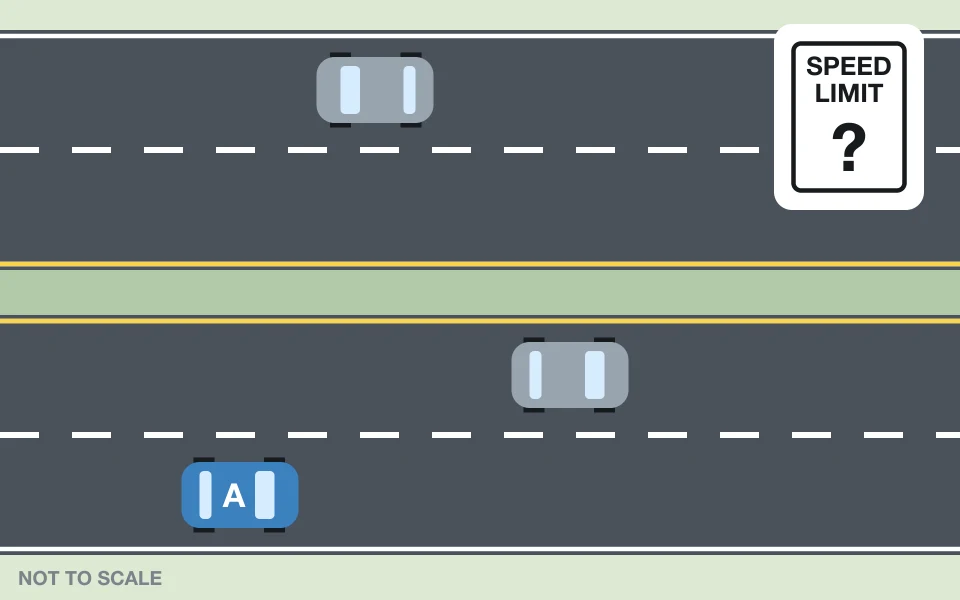
Which statement correctly describes ordinary highway maximums? (Speeds are in mph.)
Answer: Most California highways have a 65 mph maximum unless another applicable posted limit says otherwise.
Most California highways have a 65 mph maximum unless another applicable posted limit says otherwise.
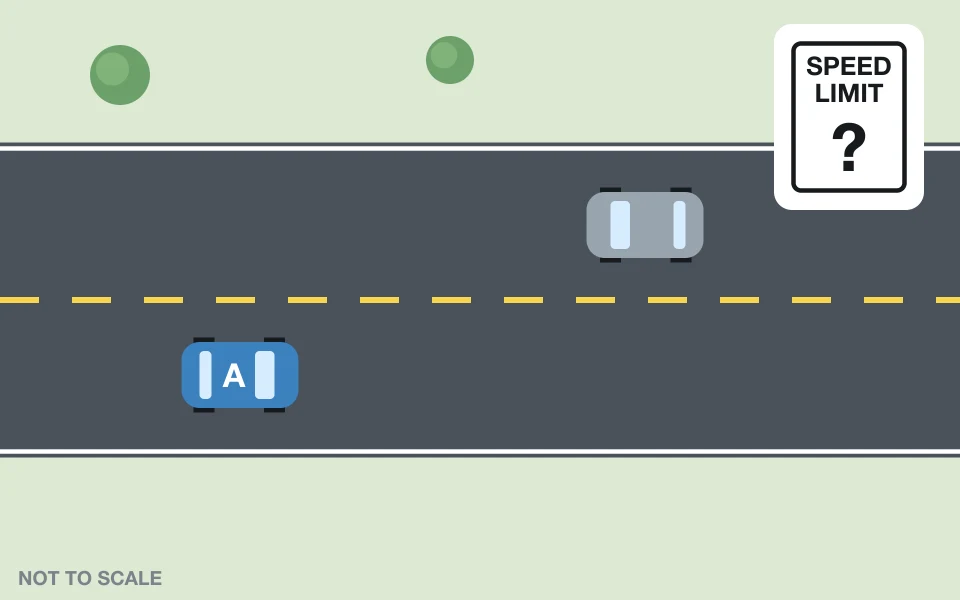
Which statement correctly describes two-lane undivided highways? (Speeds are in mph.)
Answer: The usual maximum is 55 mph unless a different applicable limit is posted.
The usual maximum is 55 mph unless a different applicable limit is posted.
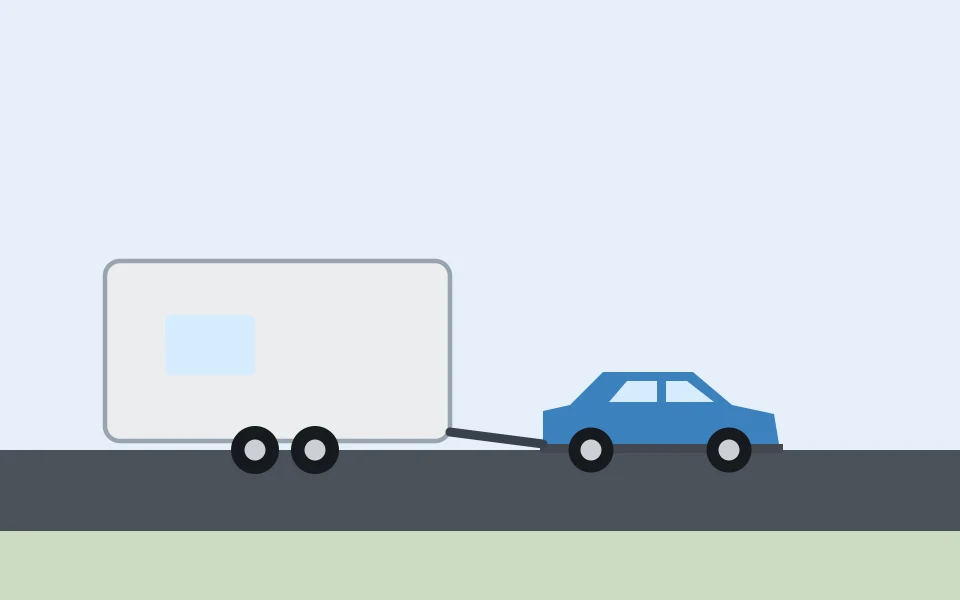
Which statement correctly describes towing speed? (Speeds are in mph.)
Answer: Vehicles towing trailers are subject to the 55 mph maximum stated in the handbook.
Vehicles towing trailers are subject to the 55 mph maximum stated in the handbook.
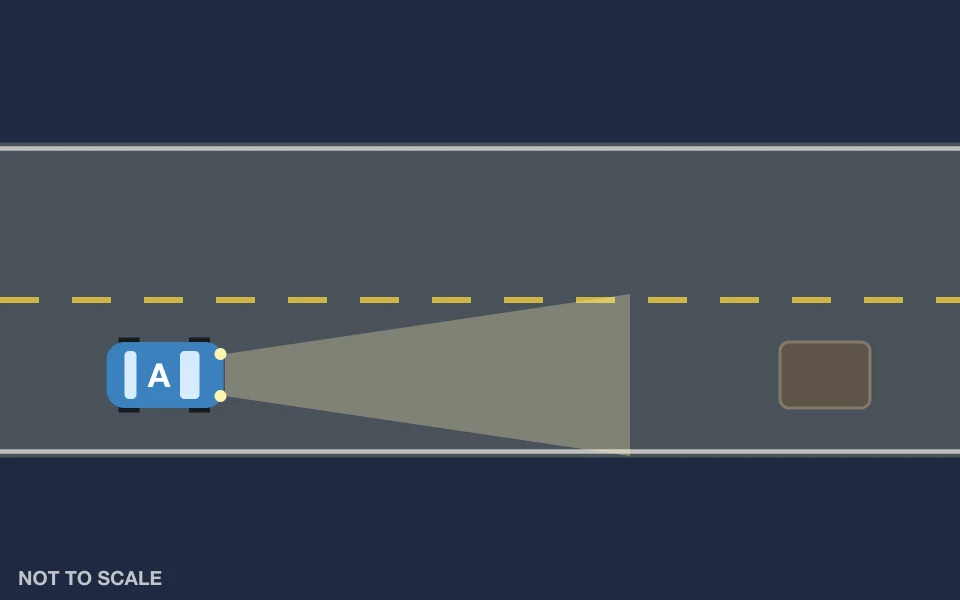
Which statement correctly describes night driving and stopping distance? (Speeds are in mph.)
Answer: Choose a speed that allows stopping within the illuminated distance.
Choose a speed that allows stopping within the illuminated distance.
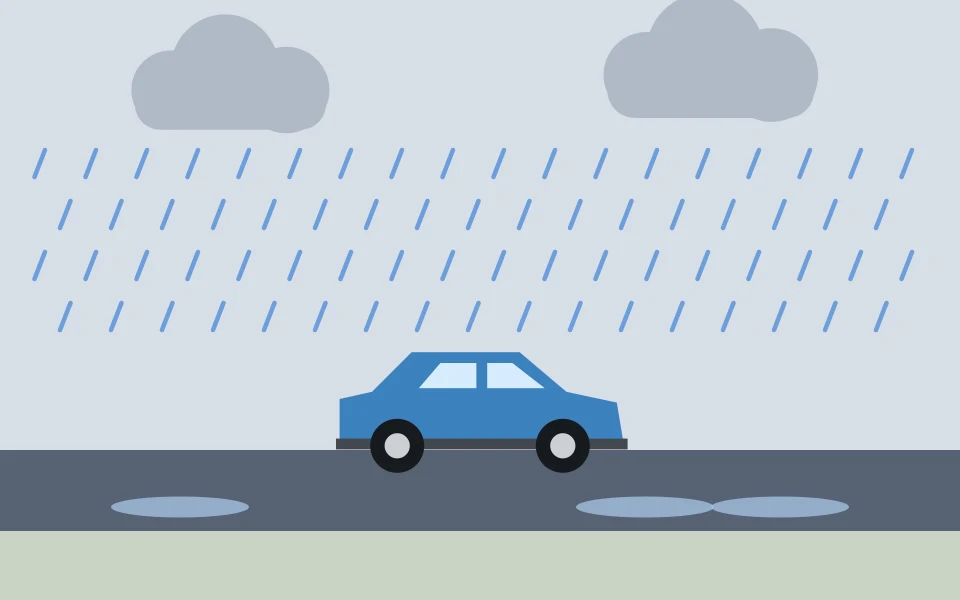
Which statement correctly describes speed on wet roads? (Speeds are in mph.)
Answer: The handbook suggests reducing by 5 to 10 mph on a wet road, with further adjustment when needed.
The handbook suggests reducing by 5 to 10 mph on a wet road, with further adjustment when needed.

Which statement correctly describes speed on packed snow? (Speeds are in mph.)
Answer: The handbook advises reducing speed by about half on packed snow.
The handbook advises reducing speed by about half on packed snow.
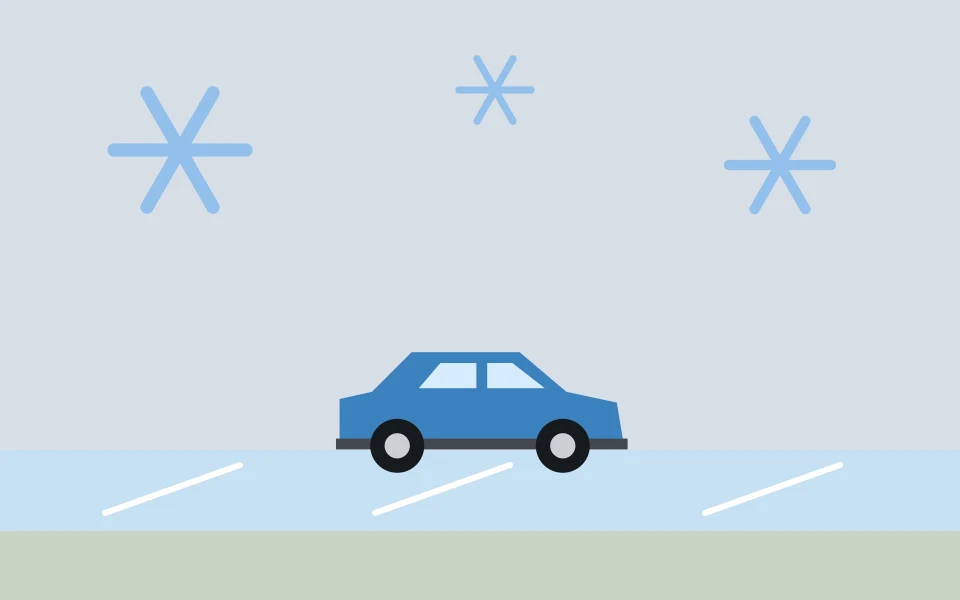
Which statement correctly describes speed on ice? (Speeds are in mph.)
Answer: The handbook gives no more than 5 mph as its ice guidance, and avoiding unsafe travel is still preferable.
The handbook gives no more than 5 mph as its ice guidance, and avoiding unsafe travel is still preferable.
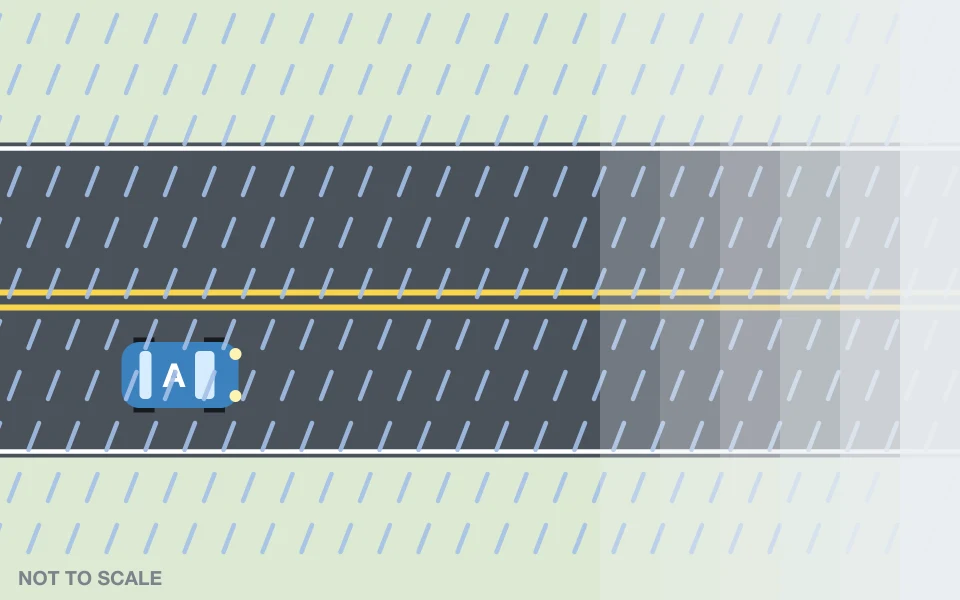
Which statement correctly describes very short storm visibility? (Speeds are in mph.)
Answer: If visibility is no more than 100 feet, speeds over 30 mph are unsafe and an even lower speed may be needed.
If visibility is no more than 100 feet, speeds over 30 mph are unsafe and an even lower speed may be needed.
DriveRoad is an independent study aid. It is not affiliated with or endorsed by the California DMV, and these pages are not the official exam. Rules change; confirm details in the official California Driver’s Handbook.
© 2026 Paworld Labs LLC. Questions, explanations and illustrations are original to DriveRoad. Personal study use is welcome; reuse needs permission. Content use and copyright