Red directional arrows
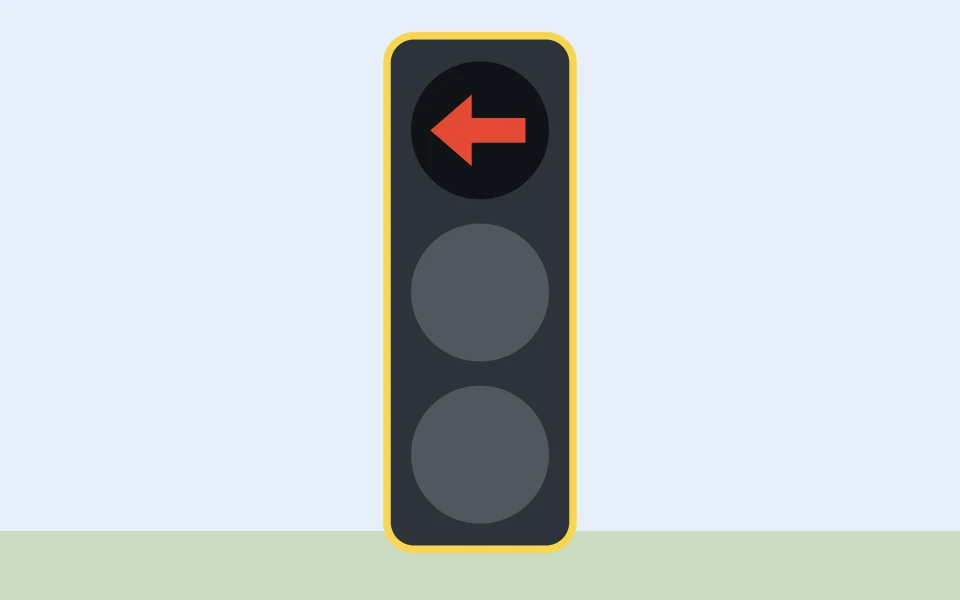
Your intended turn is controlled by a red arrow. What should you do?
Answer: Wait for a signal that permits the turn.
A red arrow prohibits the indicated turn while that arrow remains red.
 DriveRoad
These 17 points cover traffic lights, arrows and pedestrian signals. Each one pairs a California Class C practice question with its answer, a short explanation and an original diagram, taken from the DriveRoad iPhone app.
Your intended turn is controlled by a red arrow. What should you do?
Answer: Wait for a signal that permits the turn.
A red arrow prohibits the indicated turn while that arrow remains red.
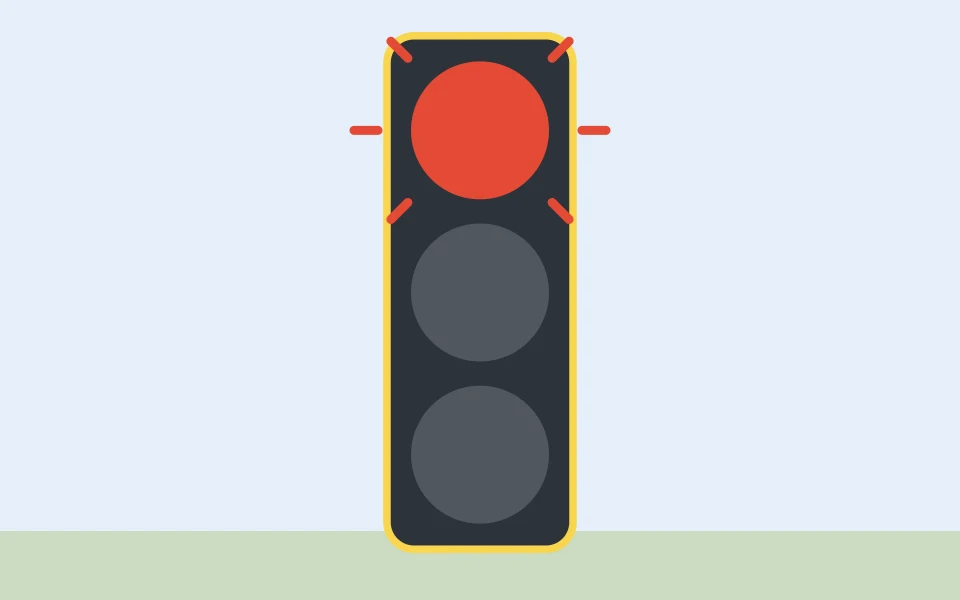
How should a driver enter a junction controlled by a flashing red signal?
Answer: Stop completely, check, then proceed if safe.
Flashing red requires a full stop; it is not merely a suggestion to reduce speed.
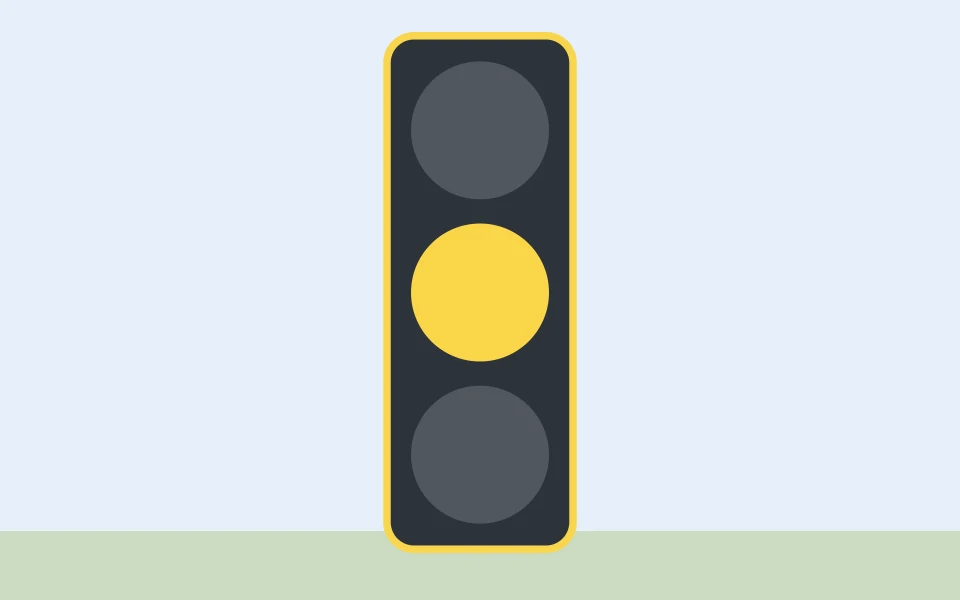
A steady yellow appears while you can still stop safely before the intersection. What should you do?
Answer: Stop before entering.
Yellow warns of the coming red; when stopping safely is possible, stop rather than race the signal.
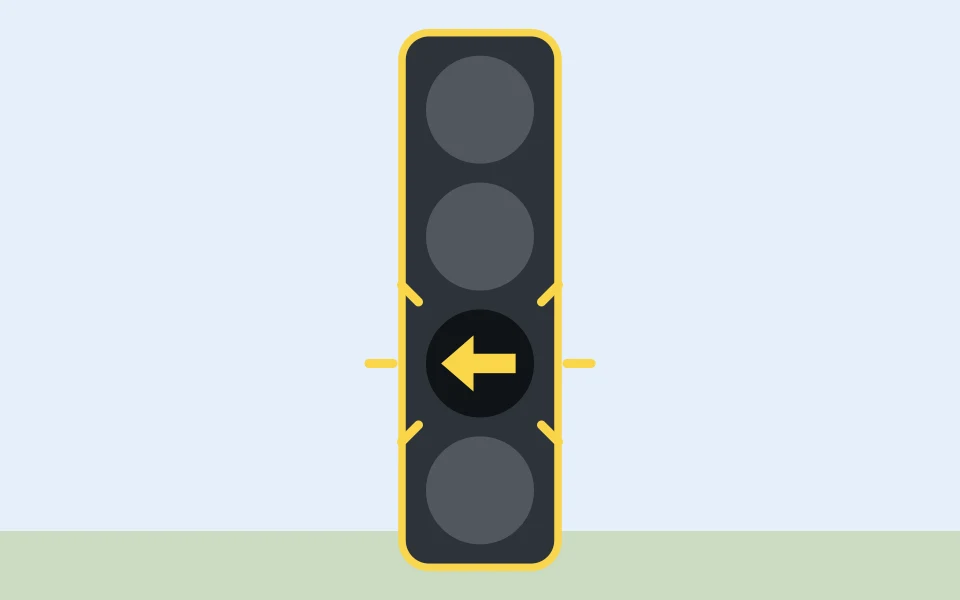
What duty applies before turning left on a flashing yellow arrow?
Answer: Yield to approaching traffic and turn cautiously.
A flashing yellow arrow allows a permissive turn, not a protected one.
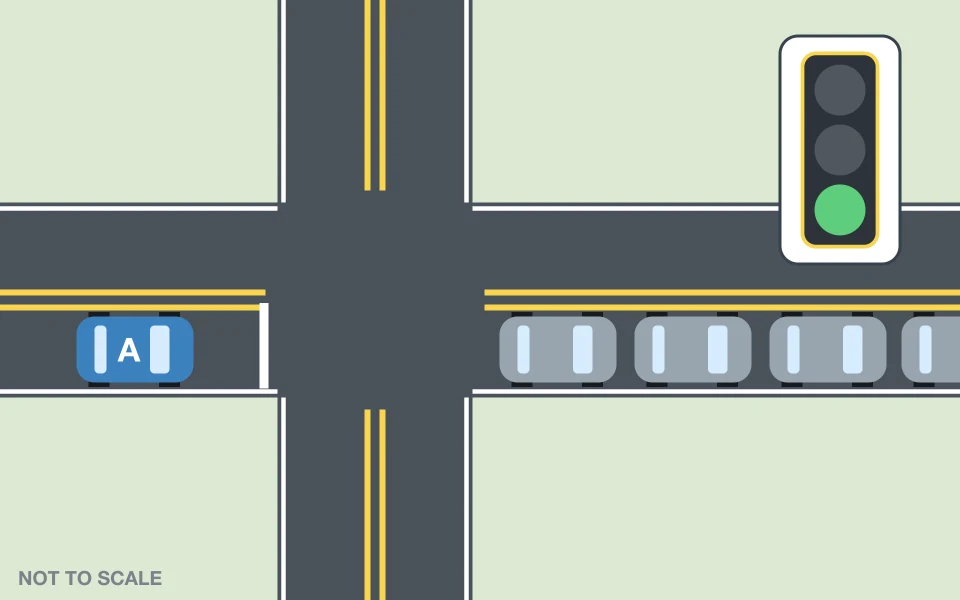
Your light is green but stopped traffic blocks the intersection's exit. What should you do?
Answer: Remain outside until there is room to clear the junction.
A green light does not permit entering a junction that cannot be cleared without blocking it.
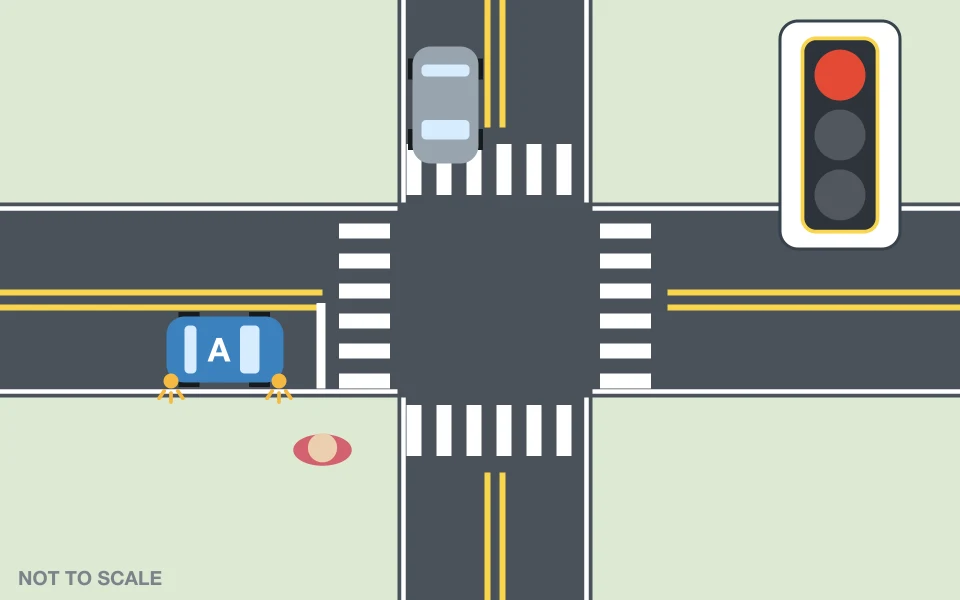
Which statement correctly describes a right turn at a circular red light?
Answer: If no sign forbids it, stop fully, yield and turn right only when safe.
If no sign forbids it, stop fully, yield and turn right only when safe.
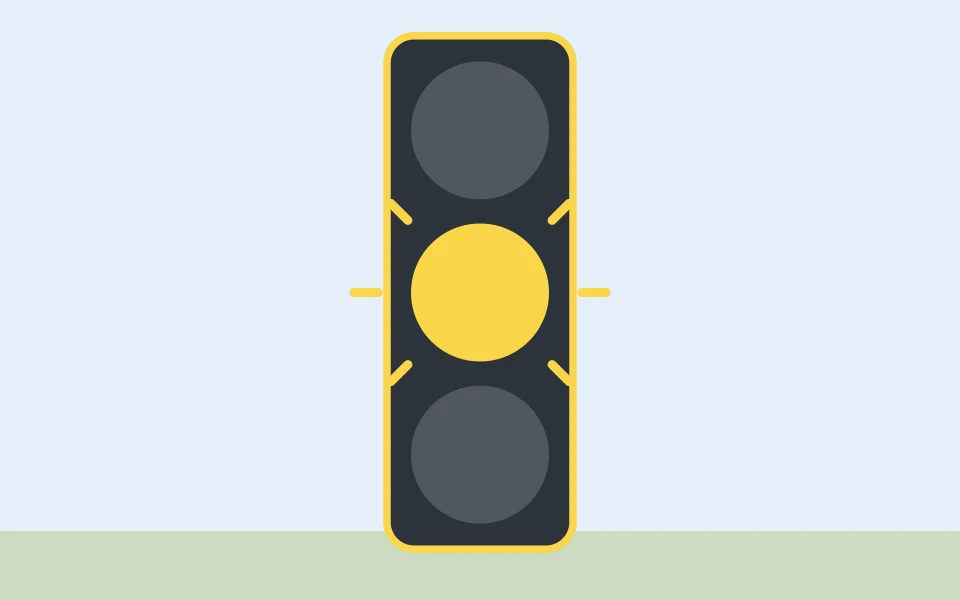
Which statement correctly describes flashing yellow signals?
Answer: Proceed cautiously after slowing and checking conditions.
Proceed cautiously after slowing and checking conditions.
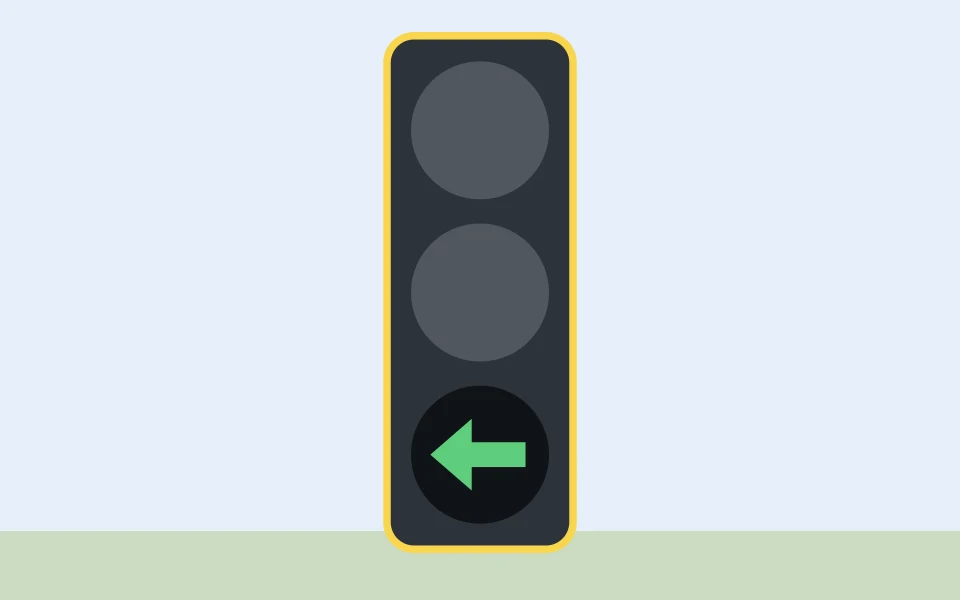
Which statement correctly describes green directional arrows?
Answer: Proceed in the indicated direction while still avoiding people or vehicles in the path.
Proceed in the indicated direction while still avoiding people or vehicles in the path.
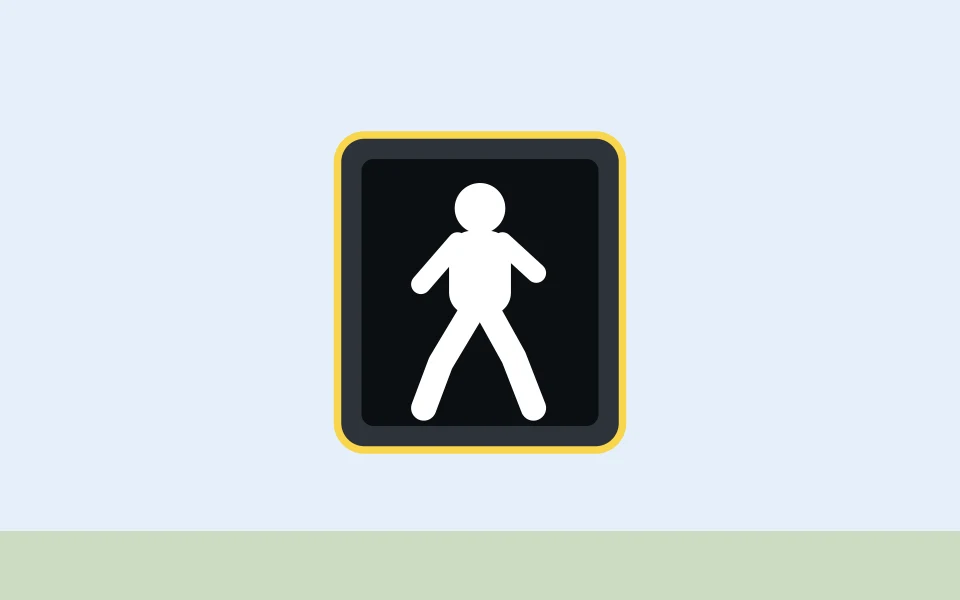
Which statement correctly describes the WALK pedestrian signal?
Answer: It indicates that pedestrians may begin crossing.
It indicates that pedestrians may begin crossing.
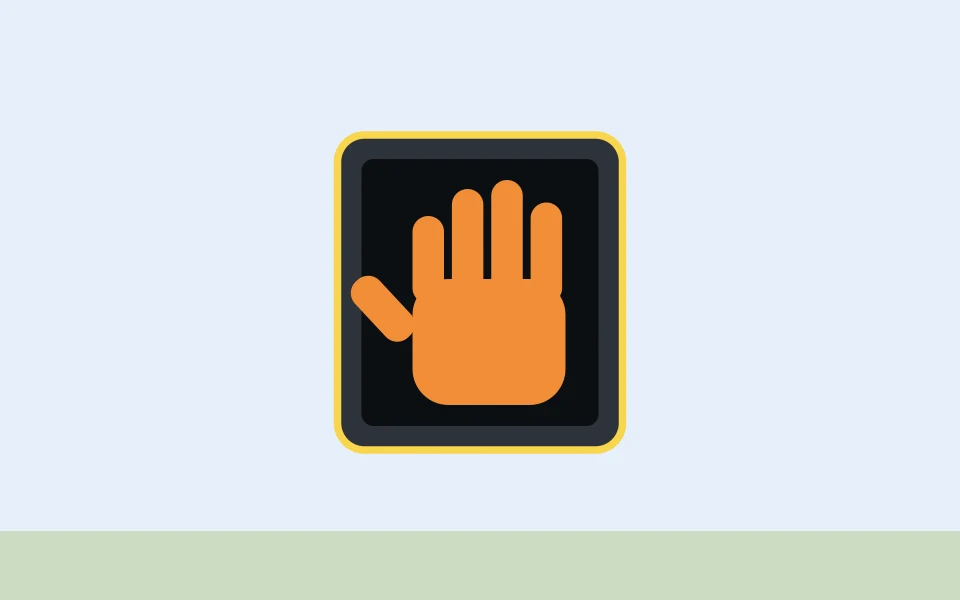
Which statement correctly describes a steady raised-hand pedestrian signal?
Answer: Pedestrians must not start crossing on that signal.
Pedestrians must not start crossing on that signal.

Which statement correctly describes a flashing raised hand without a countdown?
Answer: Do not begin crossing without a countdown; drivers must still yield to pedestrians already crossing.
Do not begin crossing without a countdown; drivers must still yield to pedestrians already crossing.
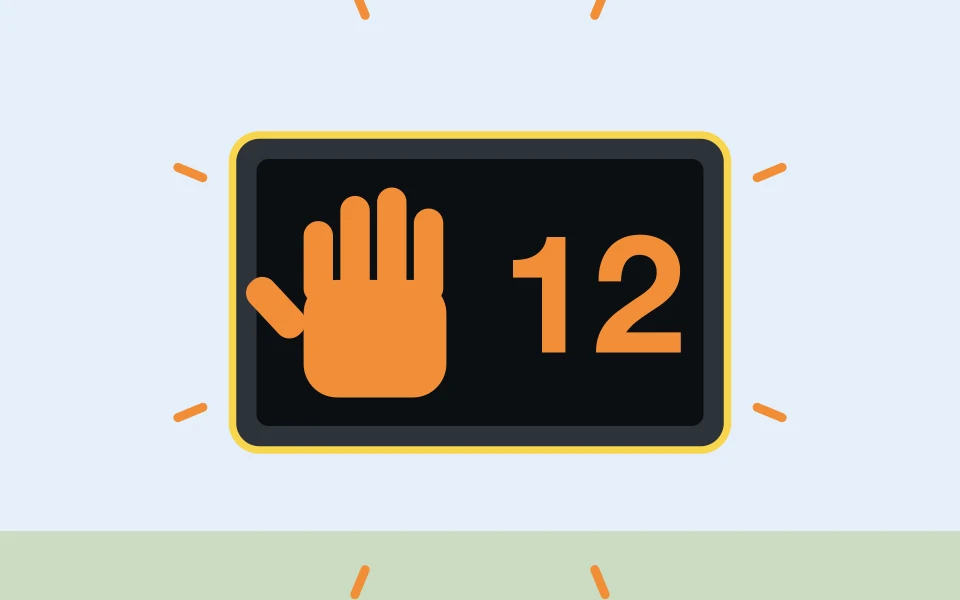
Which statement correctly describes a flashing raised hand with a countdown?
Answer: With a countdown, a pedestrian may start only if they complete crossing before the steady raised hand appears when the countdown ends.
With a countdown, a pedestrian may start only if they complete crossing before the steady raised hand appears when the countdown ends.
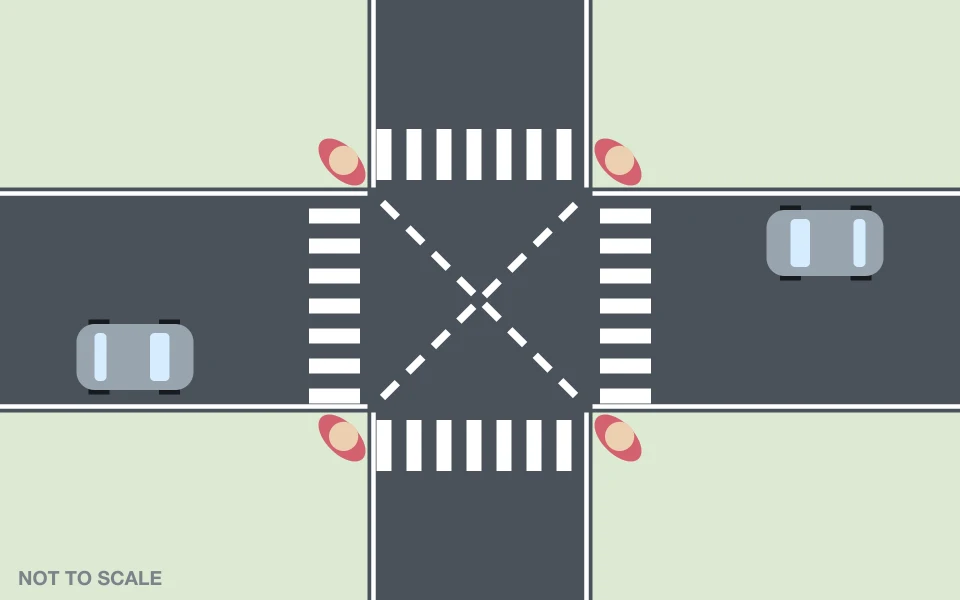
Which statement correctly describes diagonal pedestrian crossings?
Answer: Pedestrians may use the diagonal only when the walk phase allows it.
Pedestrians may use the diagonal only when the walk phase allows it.
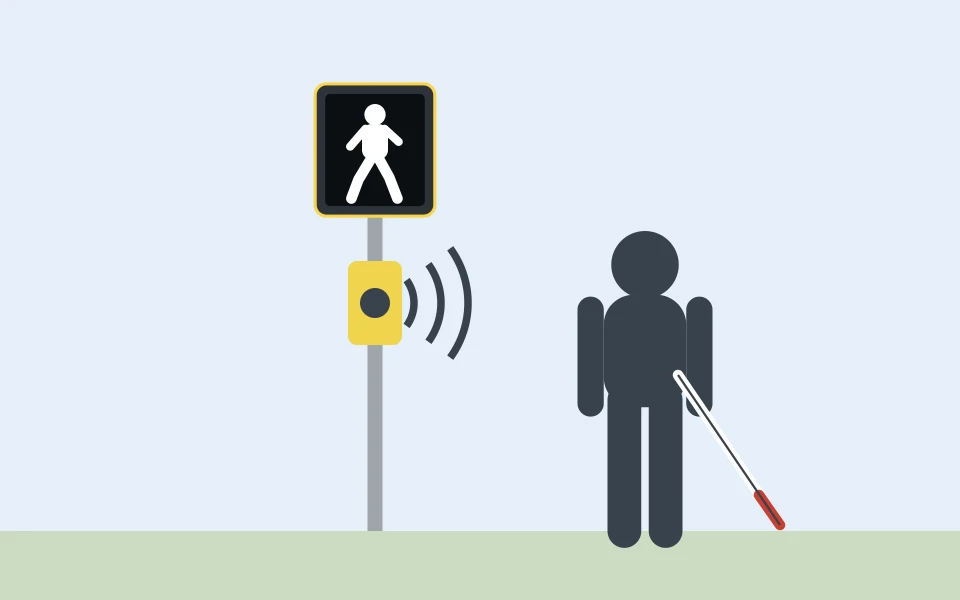
Which statement correctly describes audible pedestrian signals?
Answer: Sounds can assist pedestrians with limited vision.
Sounds can assist pedestrians with limited vision.
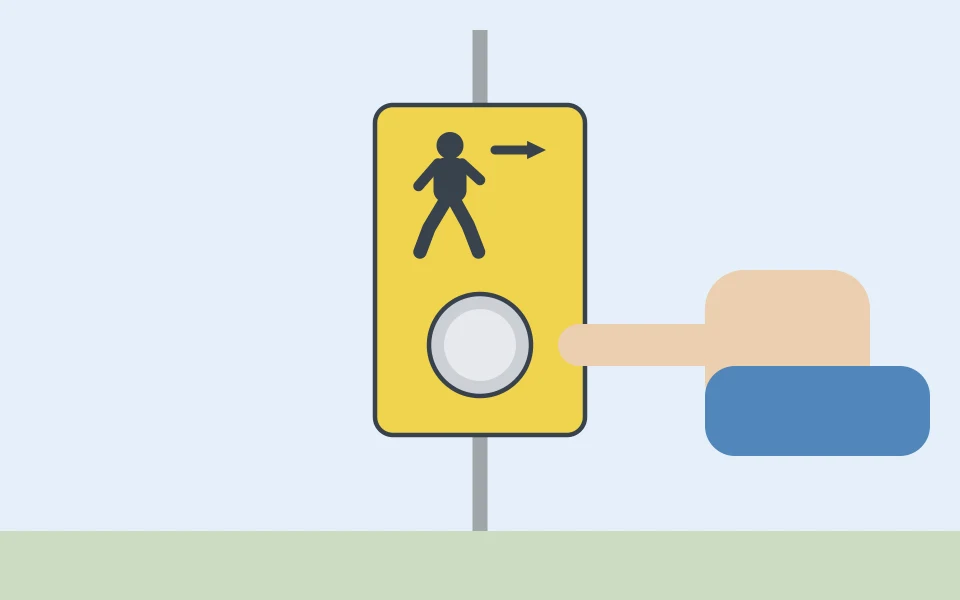
Which statement correctly describes pedestrian push buttons?
Answer: They can request activation of the pedestrian walking signal.
They can request activation of the pedestrian walking signal.
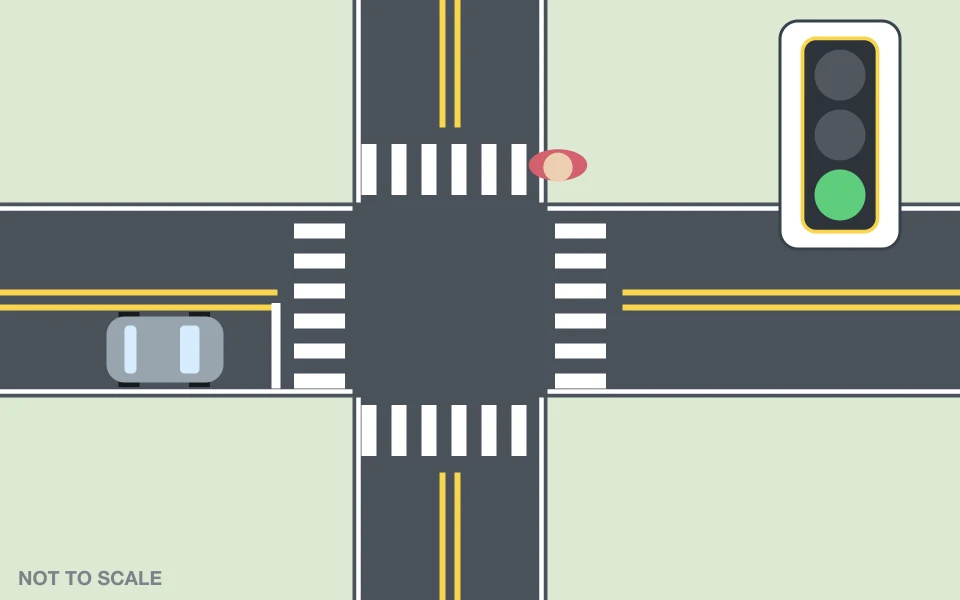
Which statement correctly describes crossings without pedestrian signals?
Answer: Without a separate pedestrian signal, a circular green can permit crossing in a crosswalk after yielding to vehicles already lawfully in the intersection; a green arrow alone does not permit entry.
Without a separate pedestrian signal, a circular green can permit crossing in a crosswalk after yielding to vehicles already lawfully in the intersection; a green arrow alone does not permit entry.
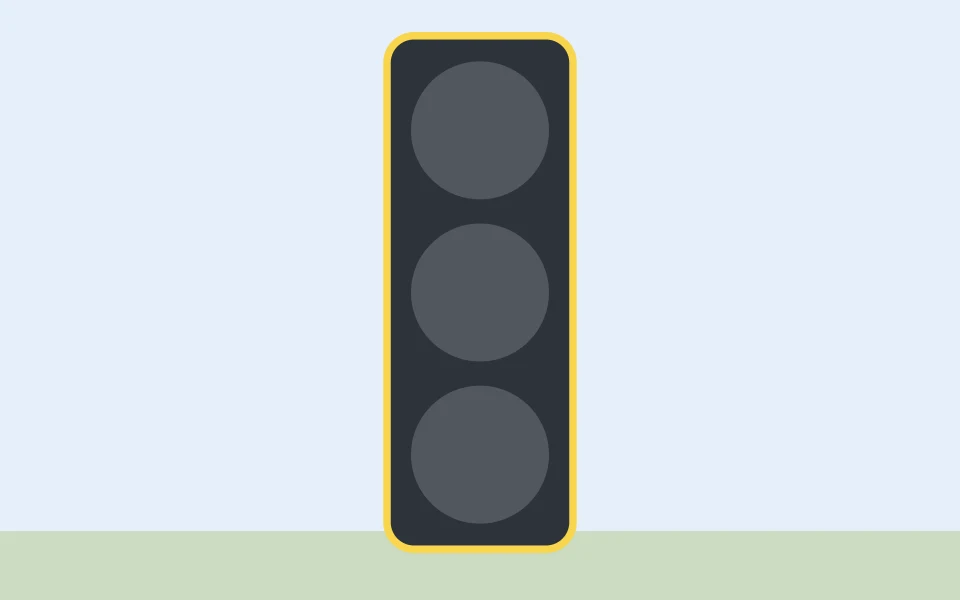
Which statement correctly describes an intersection with failed signals?
Answer: Treat it as stop-controlled in every direction and proceed cautiously.
Treat it as stop-controlled in every direction and proceed cautiously.
DriveRoad is an independent study aid. It is not affiliated with or endorsed by the California DMV, and these pages are not the official exam. Rules change; confirm details in the official California Driver’s Handbook.
© 2026 Paworld Labs LLC. Questions, explanations and illustrations are original to DriveRoad. Personal study use is welcome; reuse needs permission. Content use and copyright